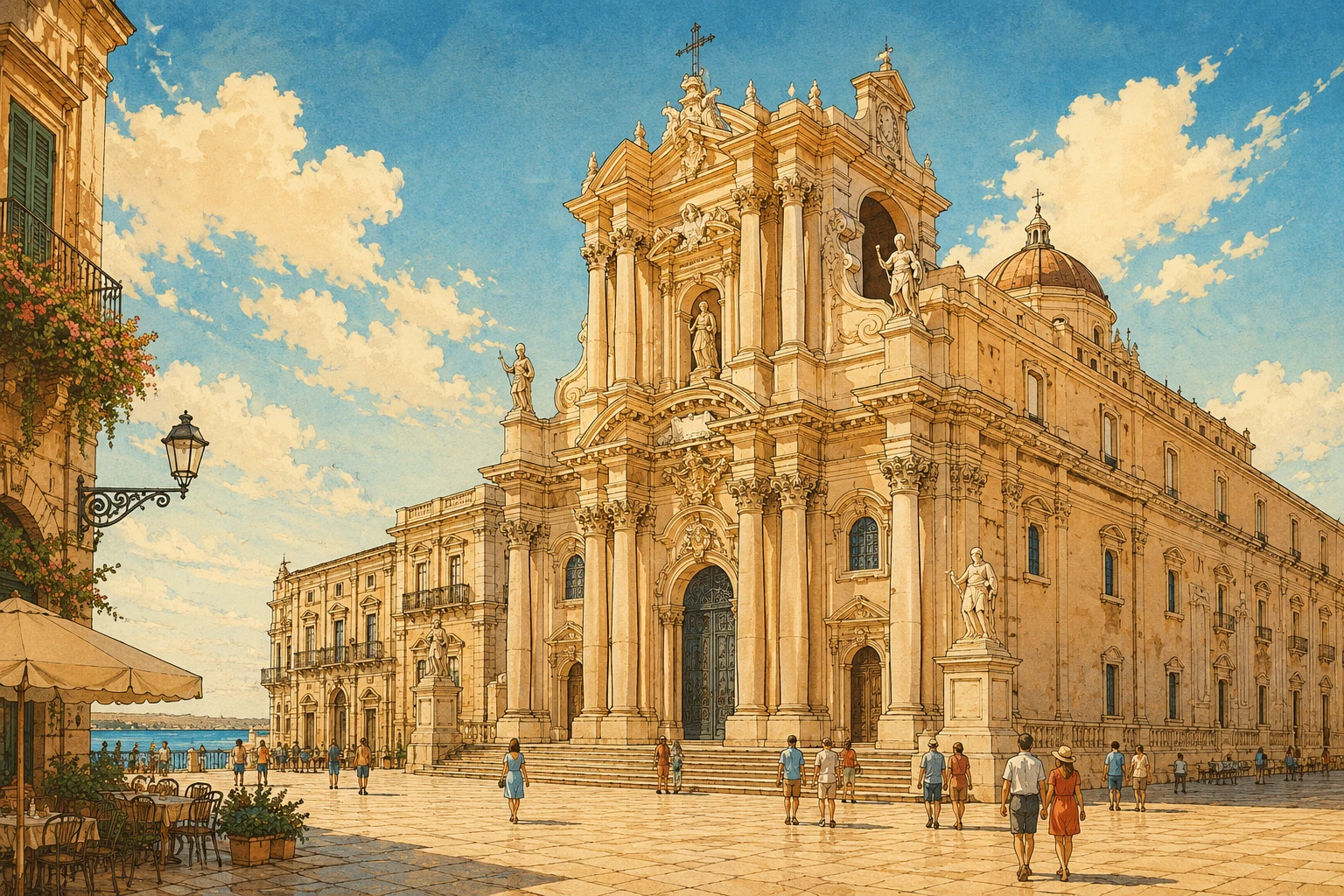
Duomo di Siracusa
A Baroque cathedral rises directly from the columns of an ancient Greek temple, making the building a visible record of Syracuse's layered history.
ITALY CITY GUIDE
Greek foundations, Baroque limestone, papyrus springs, market mornings, and Ortigia wrapped in blue water.
Come for the Greek Theatre. Stay for Piazza Duomo, sea-wall sunsets, market flavors, hidden catacombs, and the long history beneath every Ortigia lane.
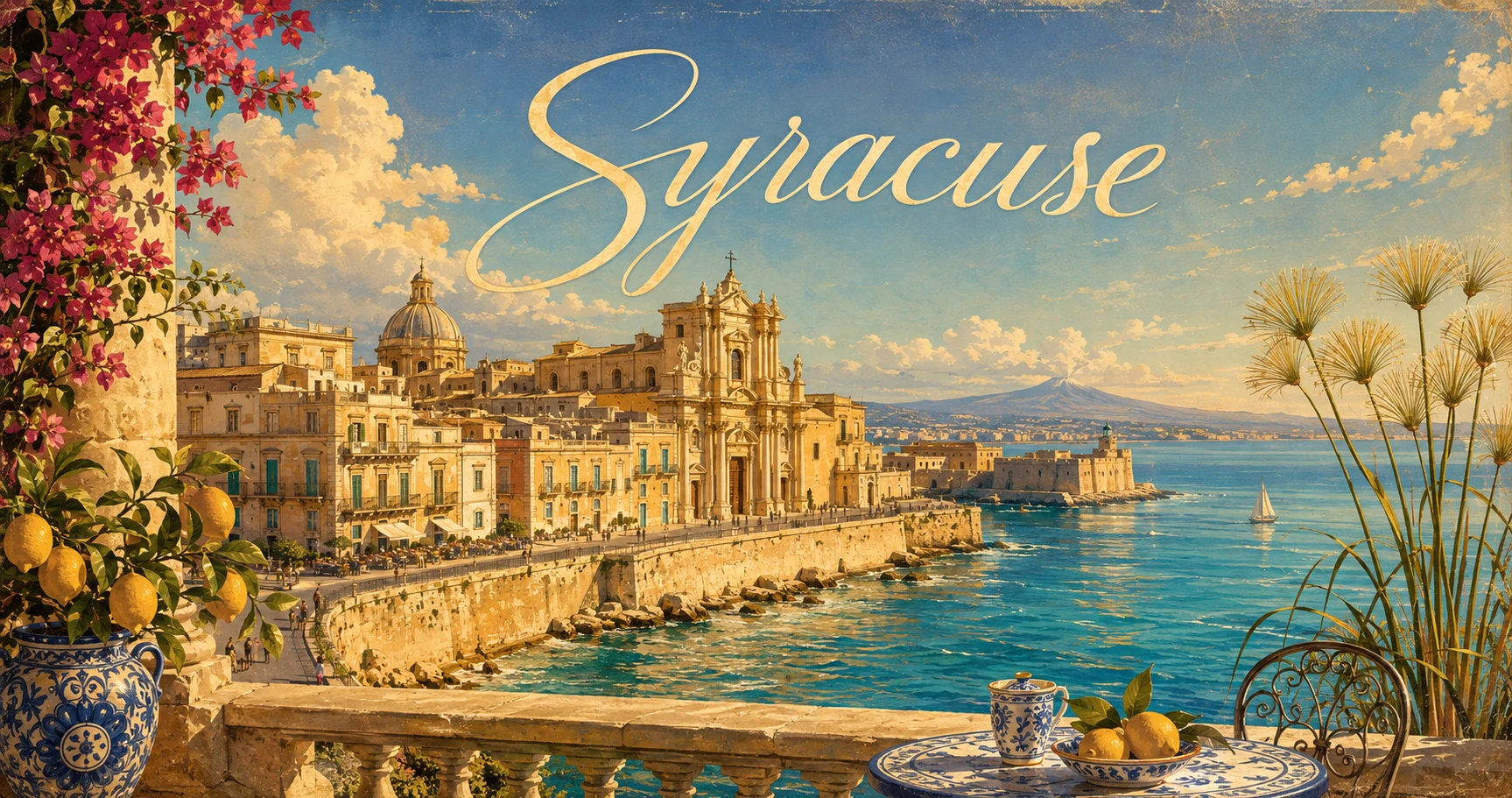
Syracuse moves from a vast Greek theatre and quarry caves to a Baroque cathedral built through an ancient temple and a fortress at the water's edge.
A Baroque cathedral rises directly from the columns of an ancient Greek temple, making the building a visible record of Syracuse's layered history.
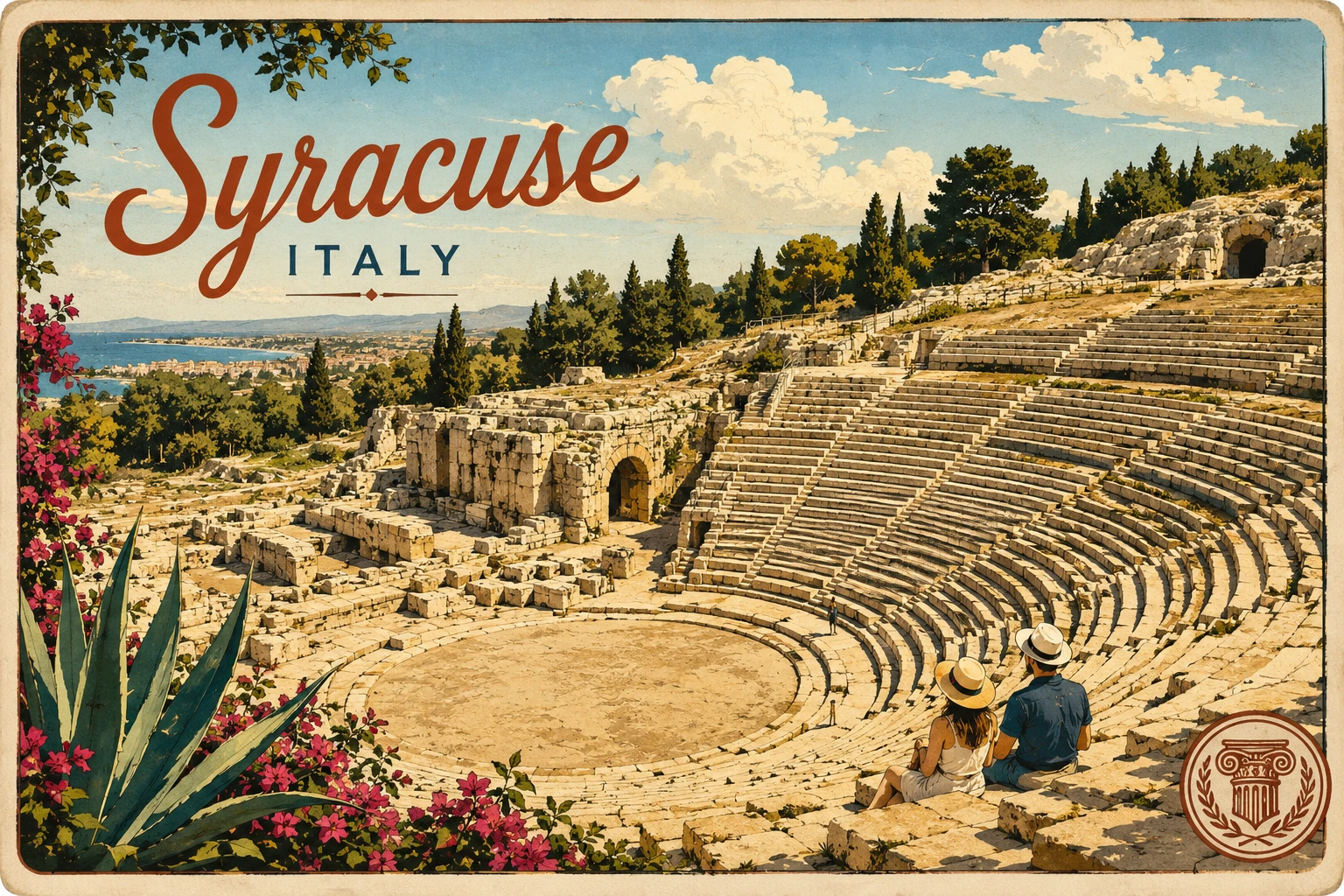
One of the largest theatres of the ancient Greek world anchors the Neapolis Archaeological Park and still hosts performances.
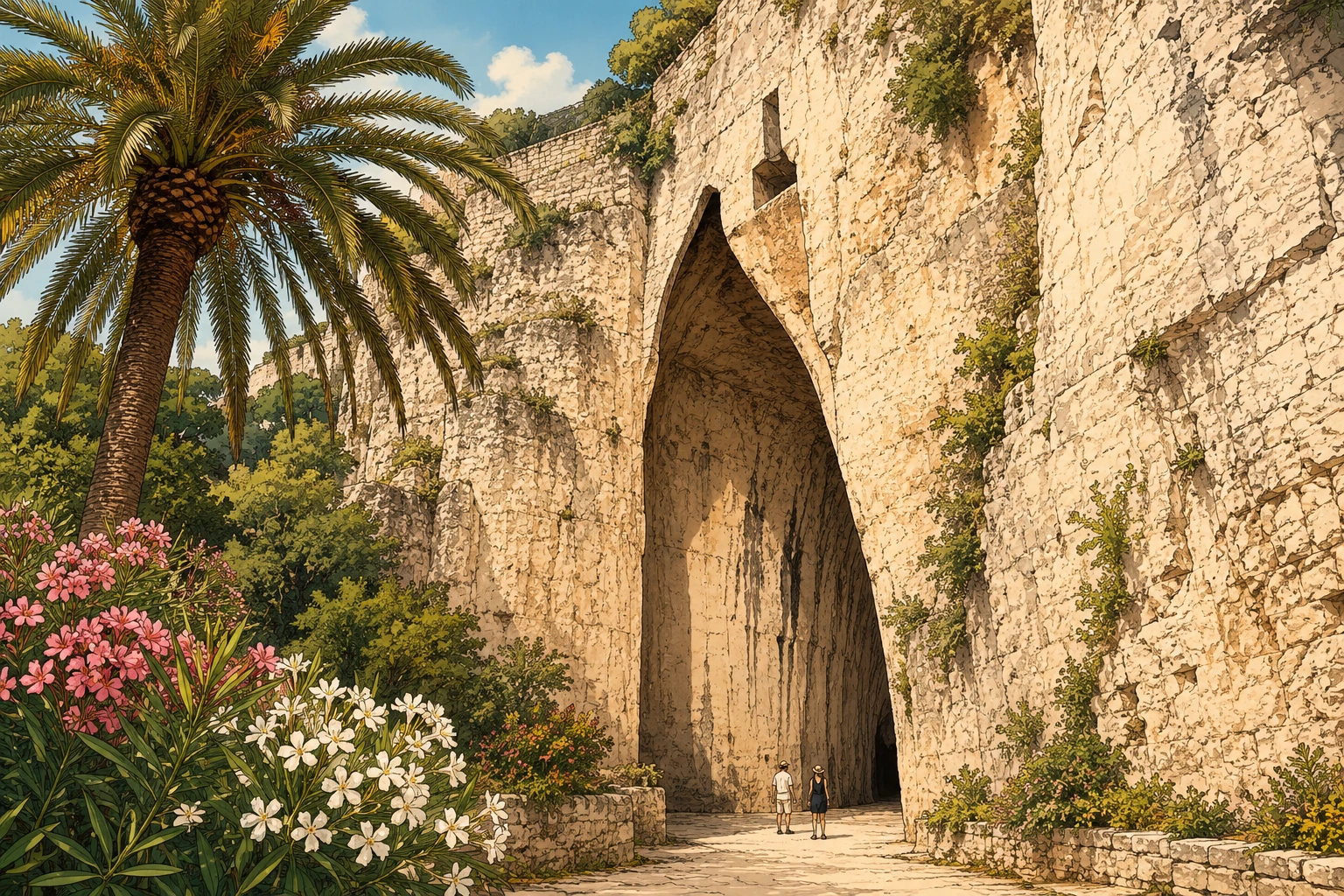
A tall, curved limestone cave inside the ancient quarry is famous for its unusual shape, powerful acoustics, and dramatic legends.
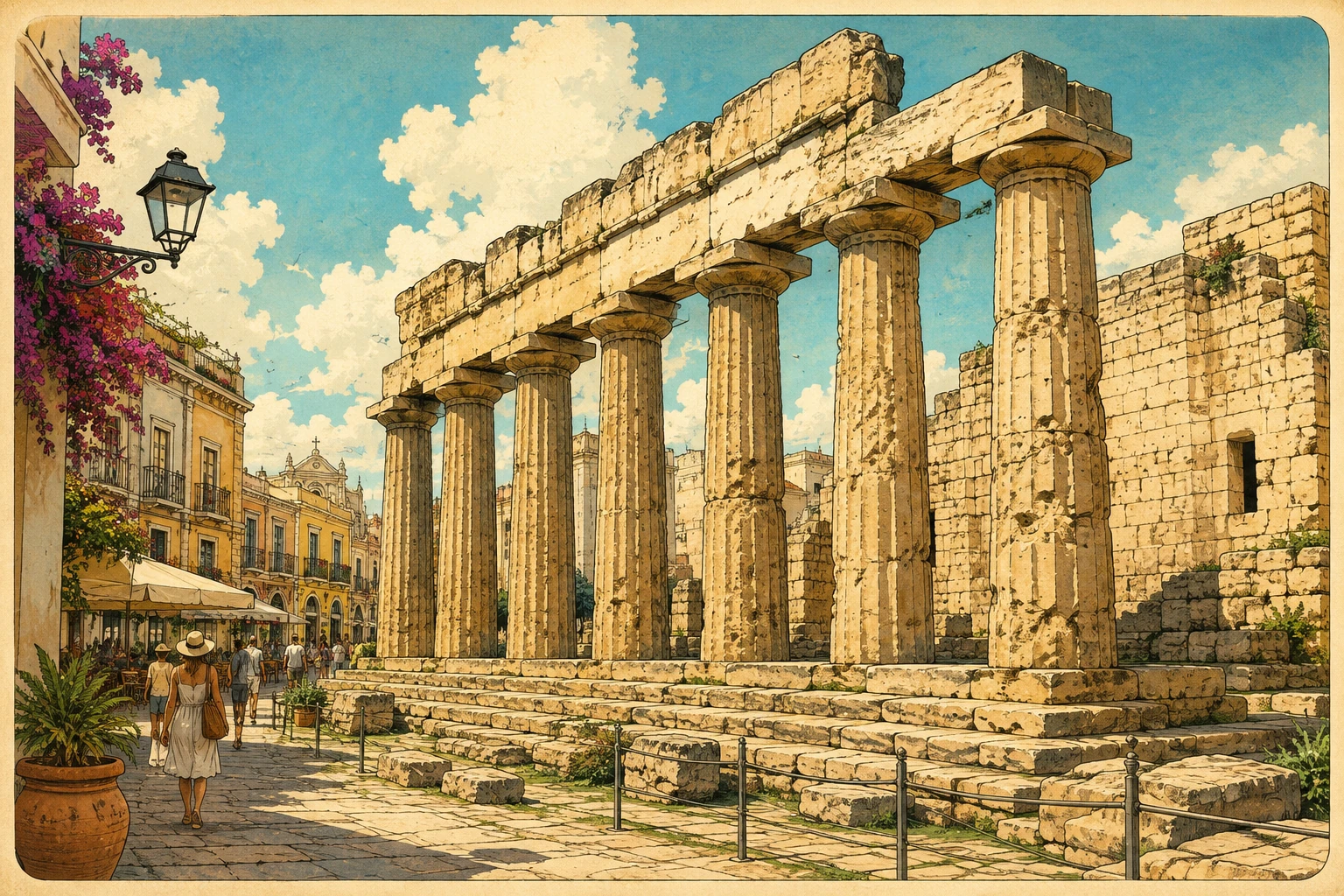
The remains of Sicily's oldest known Doric temple sit openly beside the market and the entrance to Ortigia.
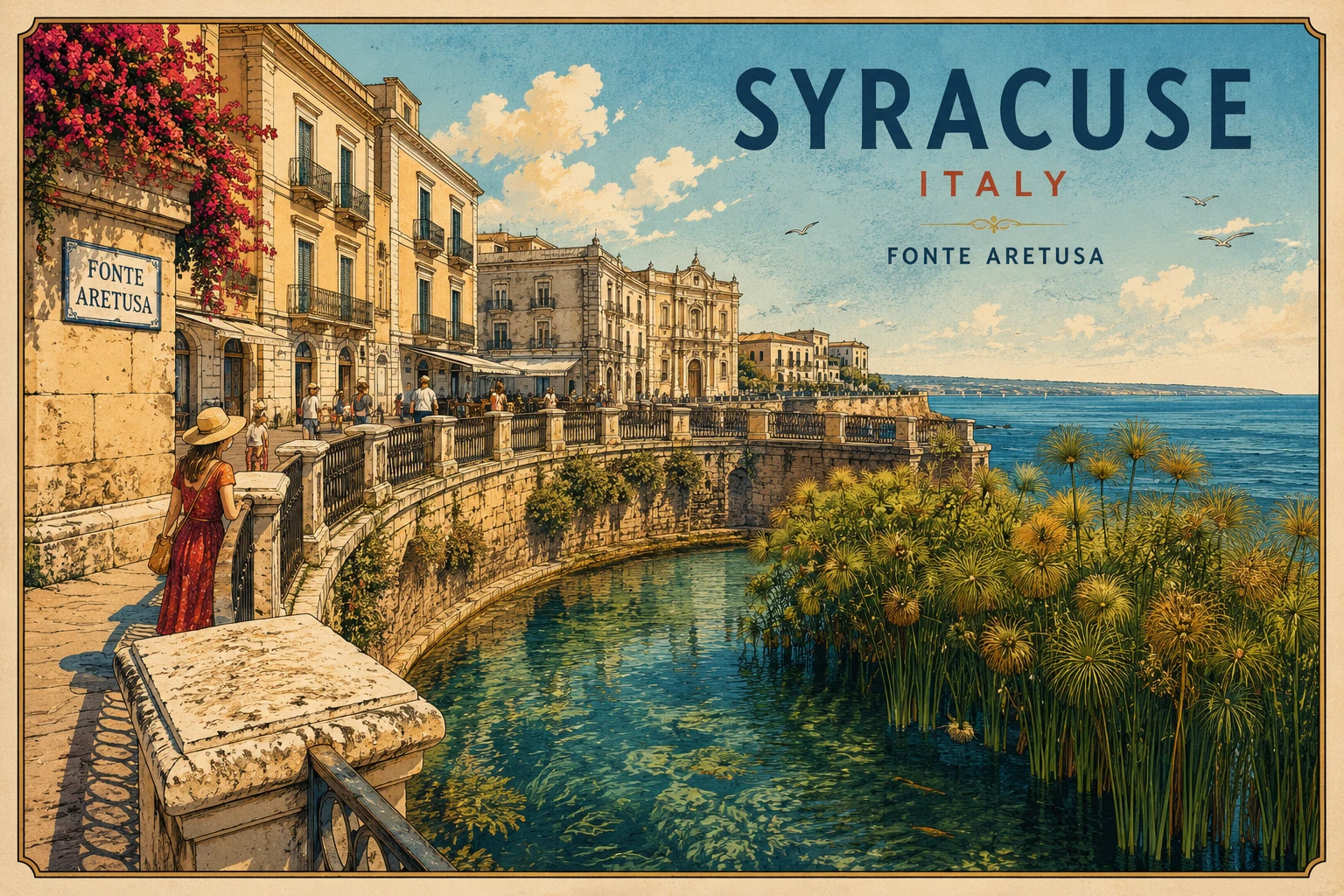
A freshwater spring filled with papyrus sits only meters from the sea, tied to one of Syracuse's best-known classical myths.
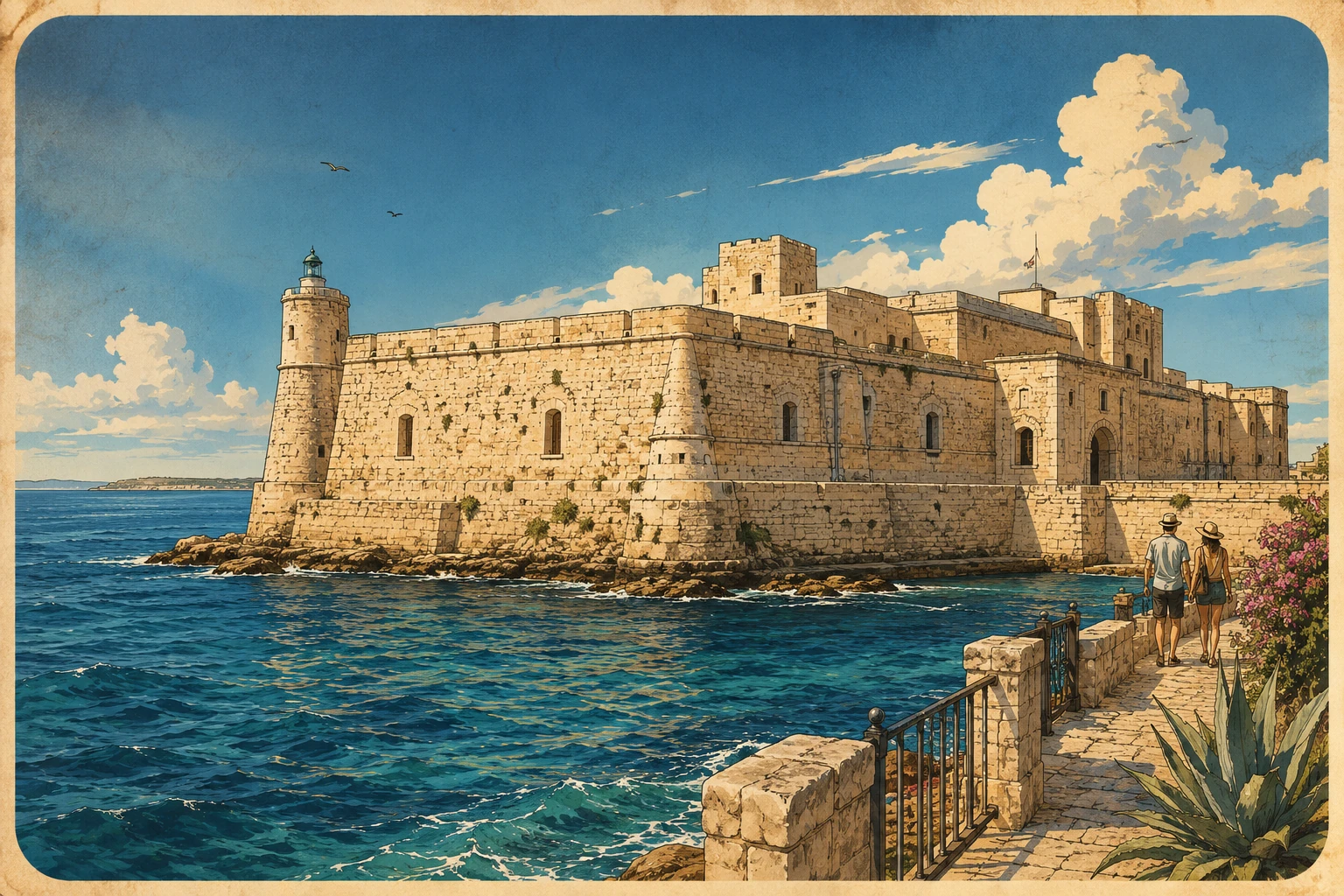
A powerful medieval fortress guards Ortigia's southern point where the two sides of the island meet open water.
Route tip: Keep Neapolis and Ortigia as separate sightseeing clusters and start the exposed archaeological park early.
Four practical routes connect the ancient city, Ortigia's lanes, the seafront, and a carefully chosen Baroque day trip.
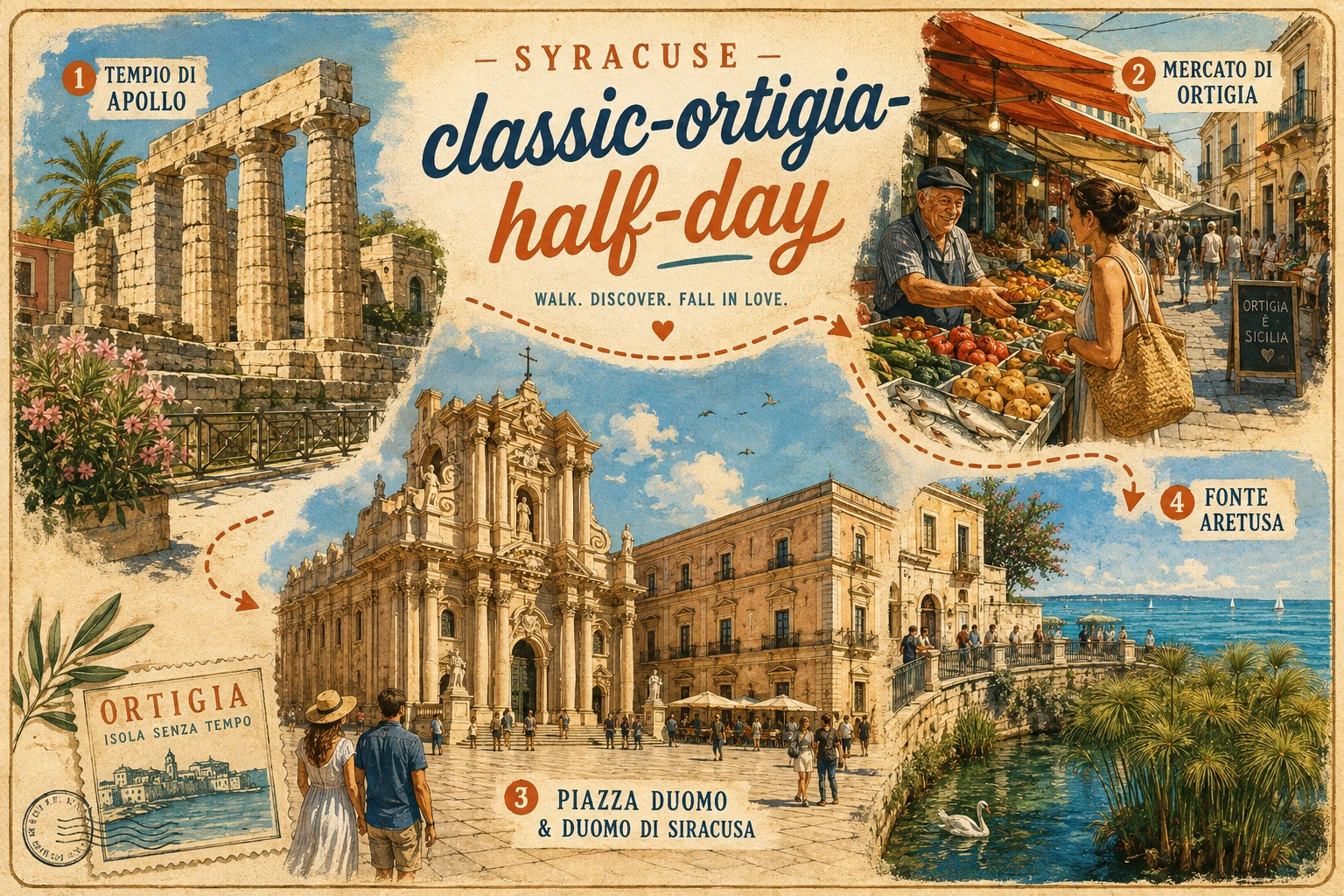
Tempio di Apollo → Ortigia Market → Piazza Archimede → Piazza Duomo → Fonte Aretusa
Best for: First-time visitors
Time: 4–5 hours
Do not miss: Leaving time for the lanes between the headline sights
Book Ortigia walking tour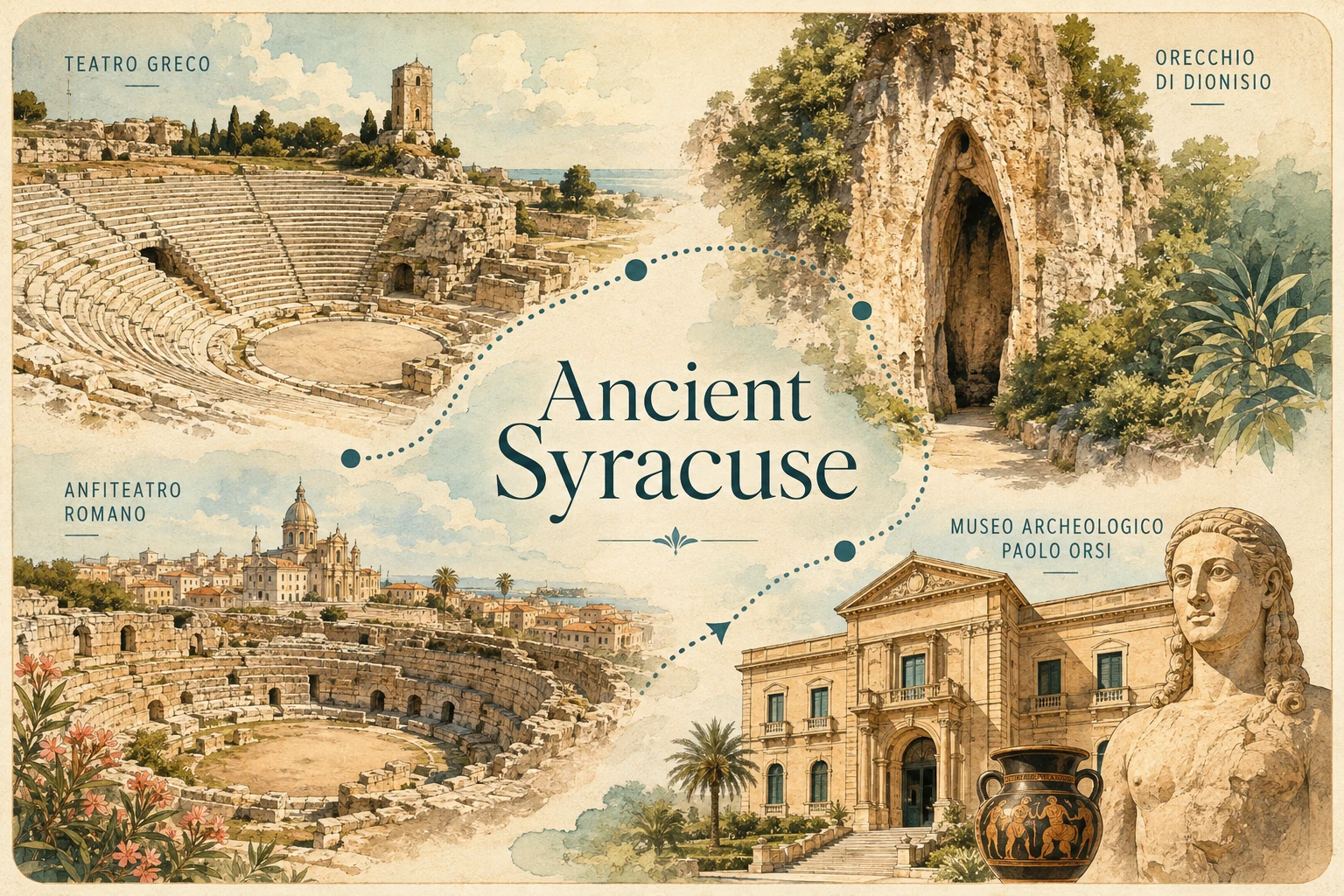
Teatro Greco → Orecchio di Dionisio → Latomia del Paradiso → Roman Amphitheatre
Best for: Greek and Roman archaeology
Time: Half day
Do not miss: Starting before the exposed park becomes hot
Tour Neapolis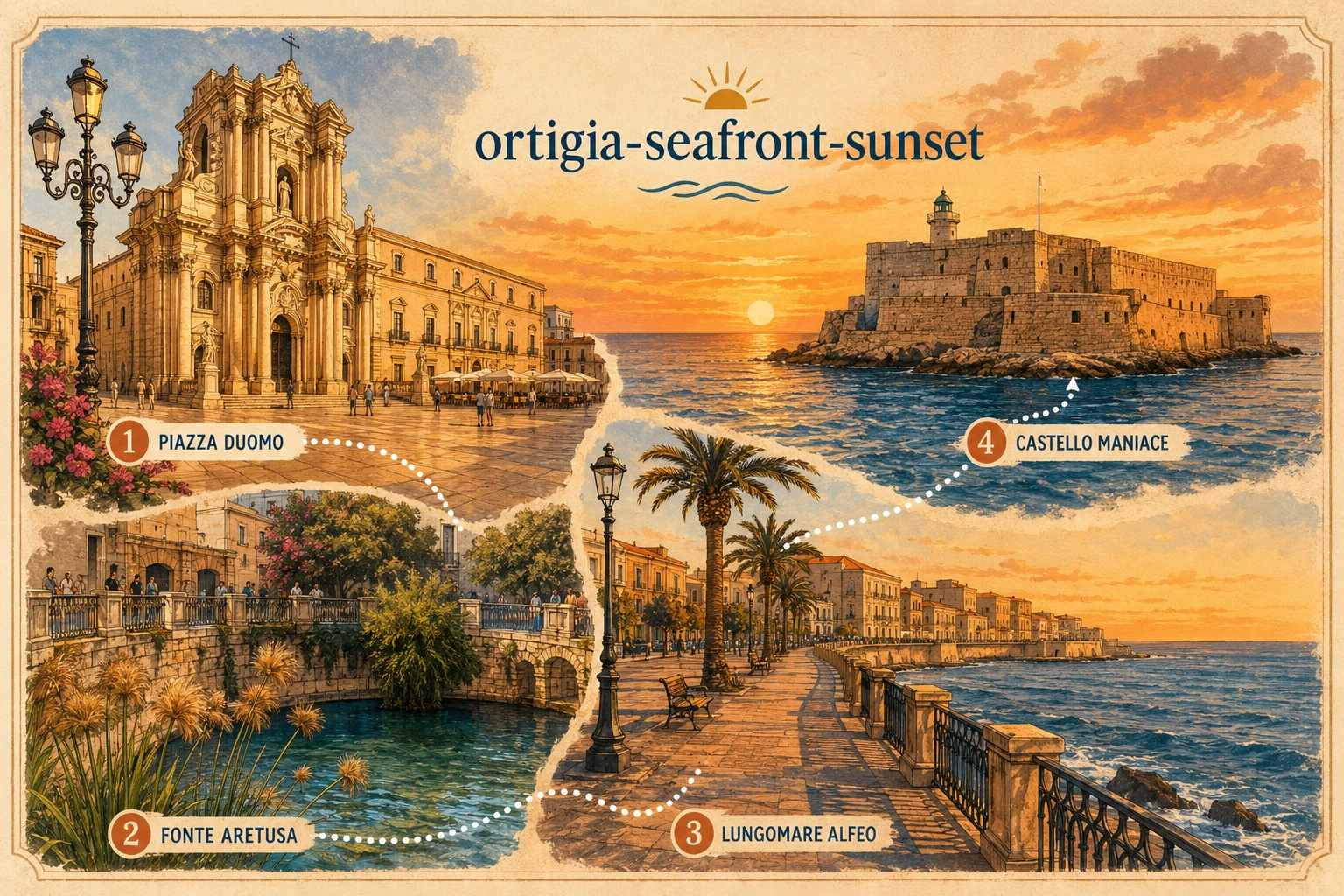
Fonte Aretusa → Lungomare Alfeo → Castello Maniace → eastern sea wall
Best for: Coastal views and a slow evening
Time: 2–3 hours
Do not miss: Checking sunset time before choosing your direction
Book sunset boat tour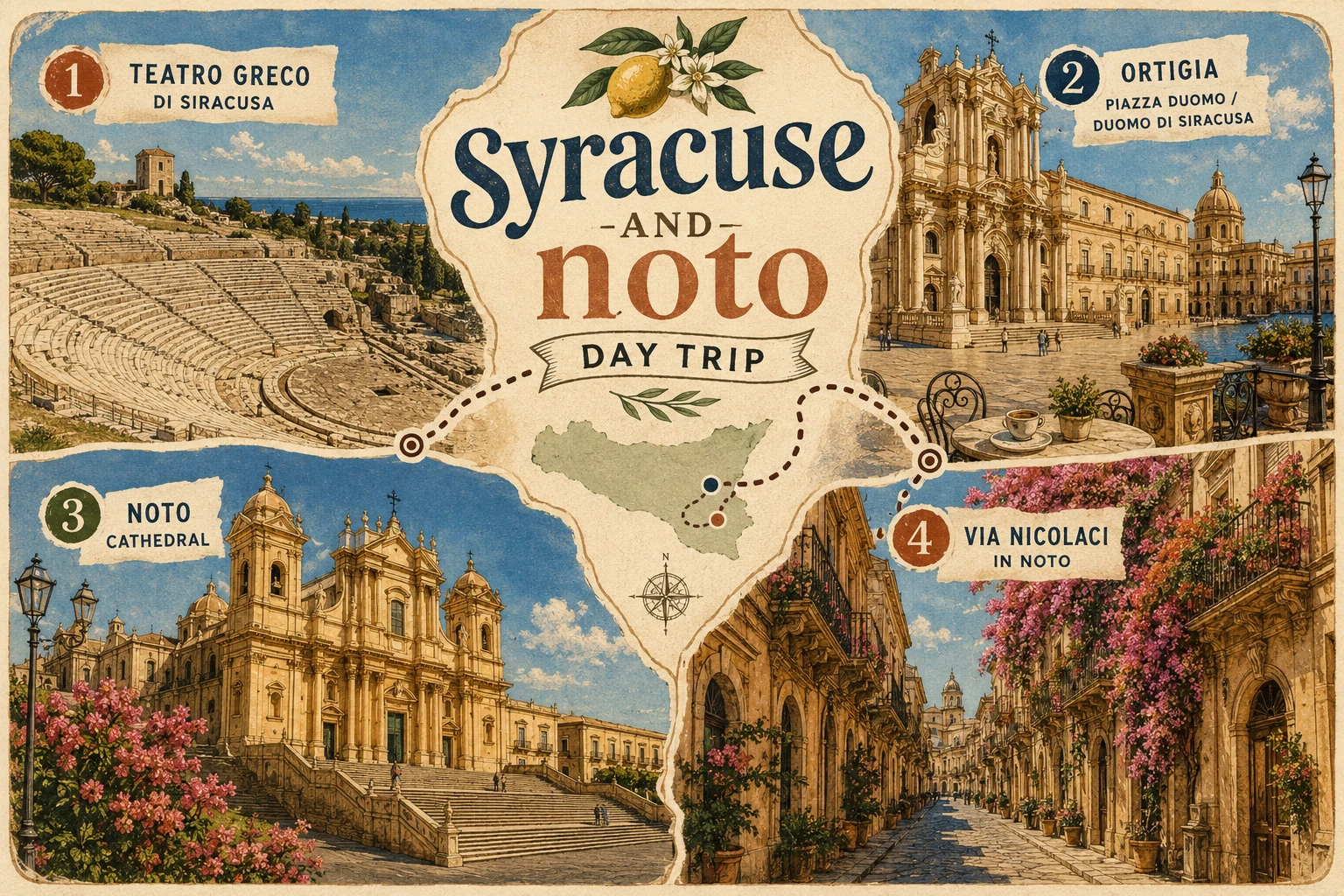
Syracuse morning → Noto Cathedral → Corso Vittorio Emanuele → Baroque balconies
Best for: Combining ancient and Baroque Sicily
Time: Full day
Do not miss: Keeping enough time for a slow Noto walk
See Noto day tripSee Ortigia from the water, taste the market, explore Greek archaeology, follow the sunset, and discover Syracuse's rare papyrus landscape.
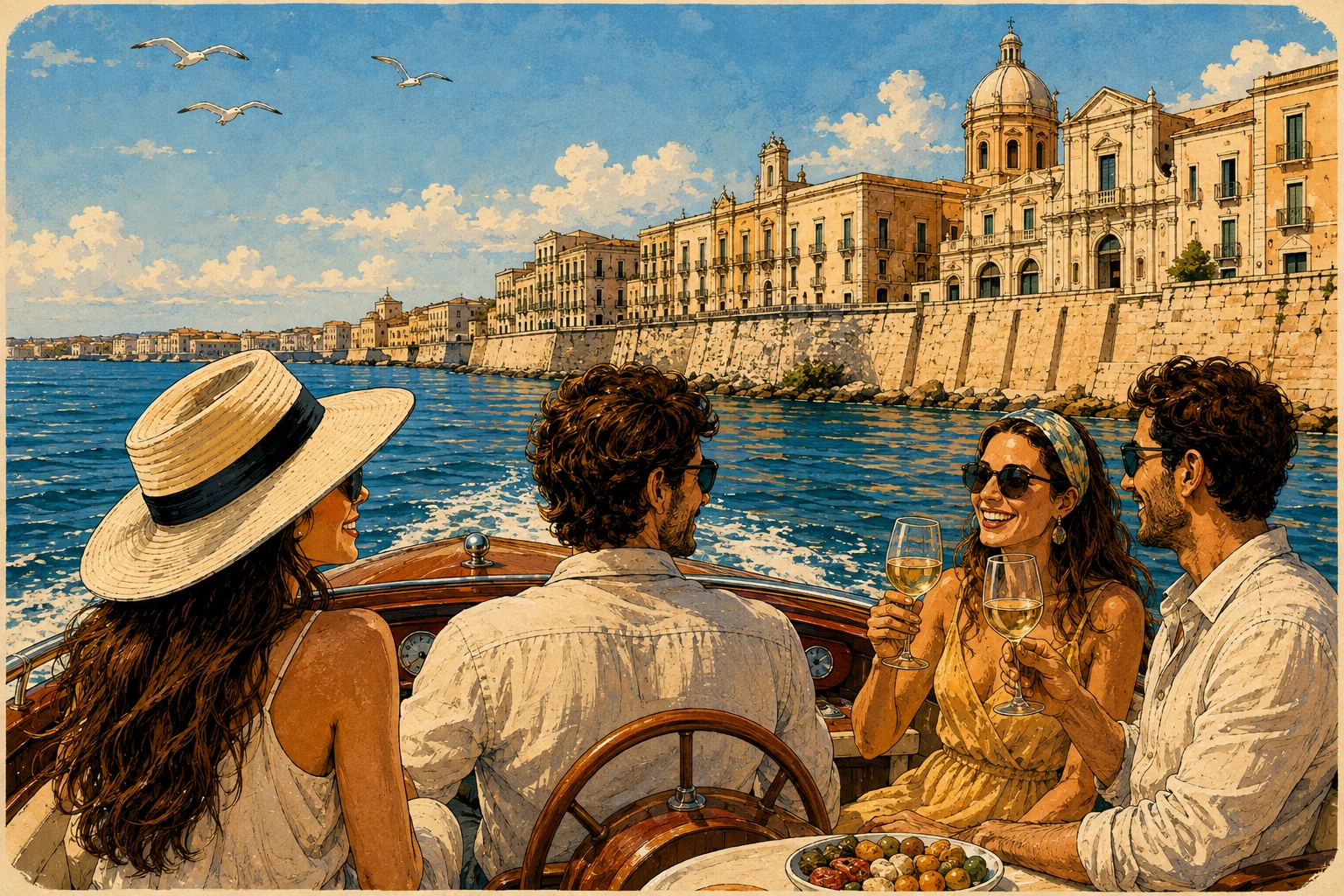
Circle the island from the water, pass Castello Maniace and the sea walls, explore coastal caves, and swim when conditions allow.
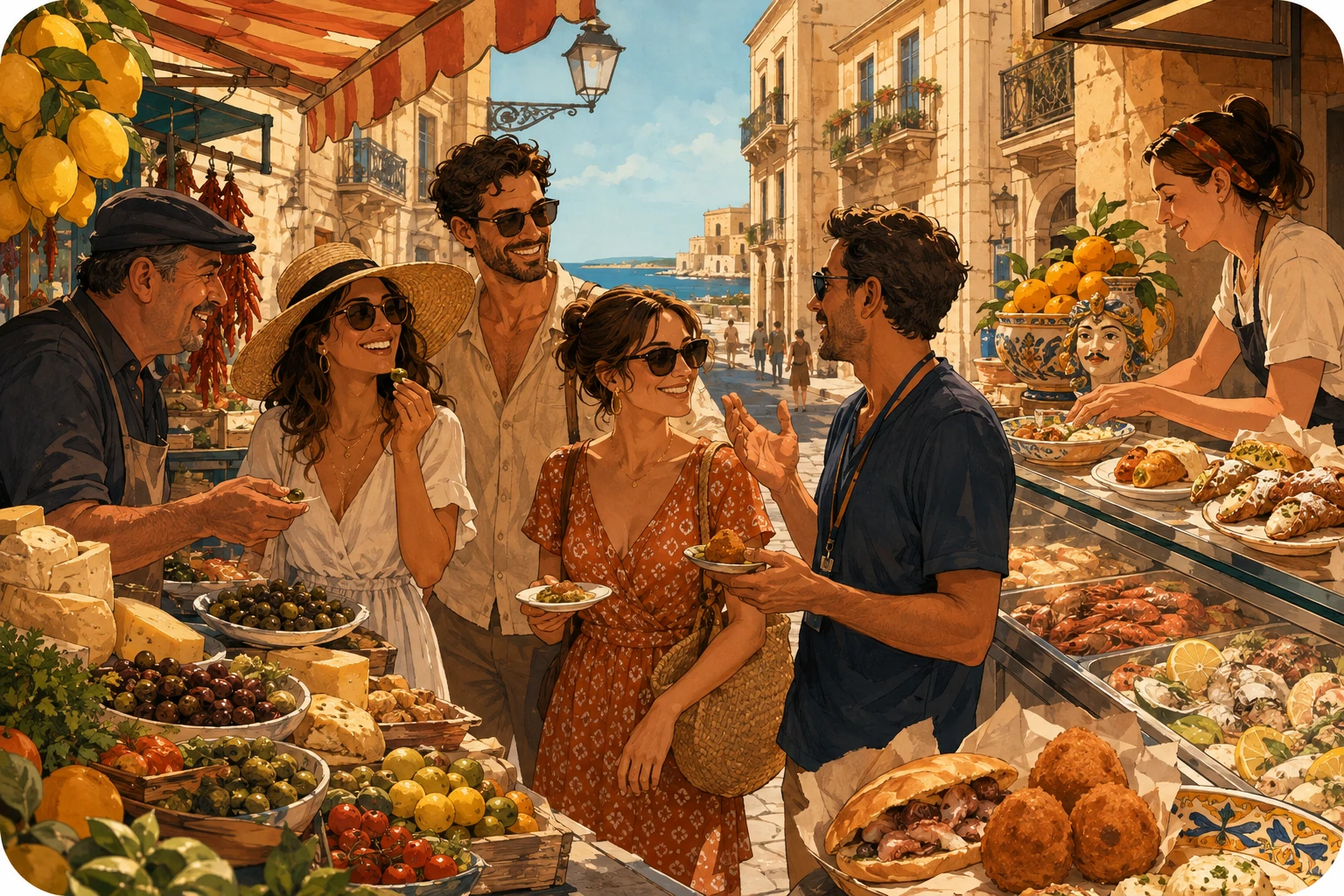
Taste market specialties, seafood, arancini, pastries, wine, and local ingredients while learning how southeastern Sicily eats.
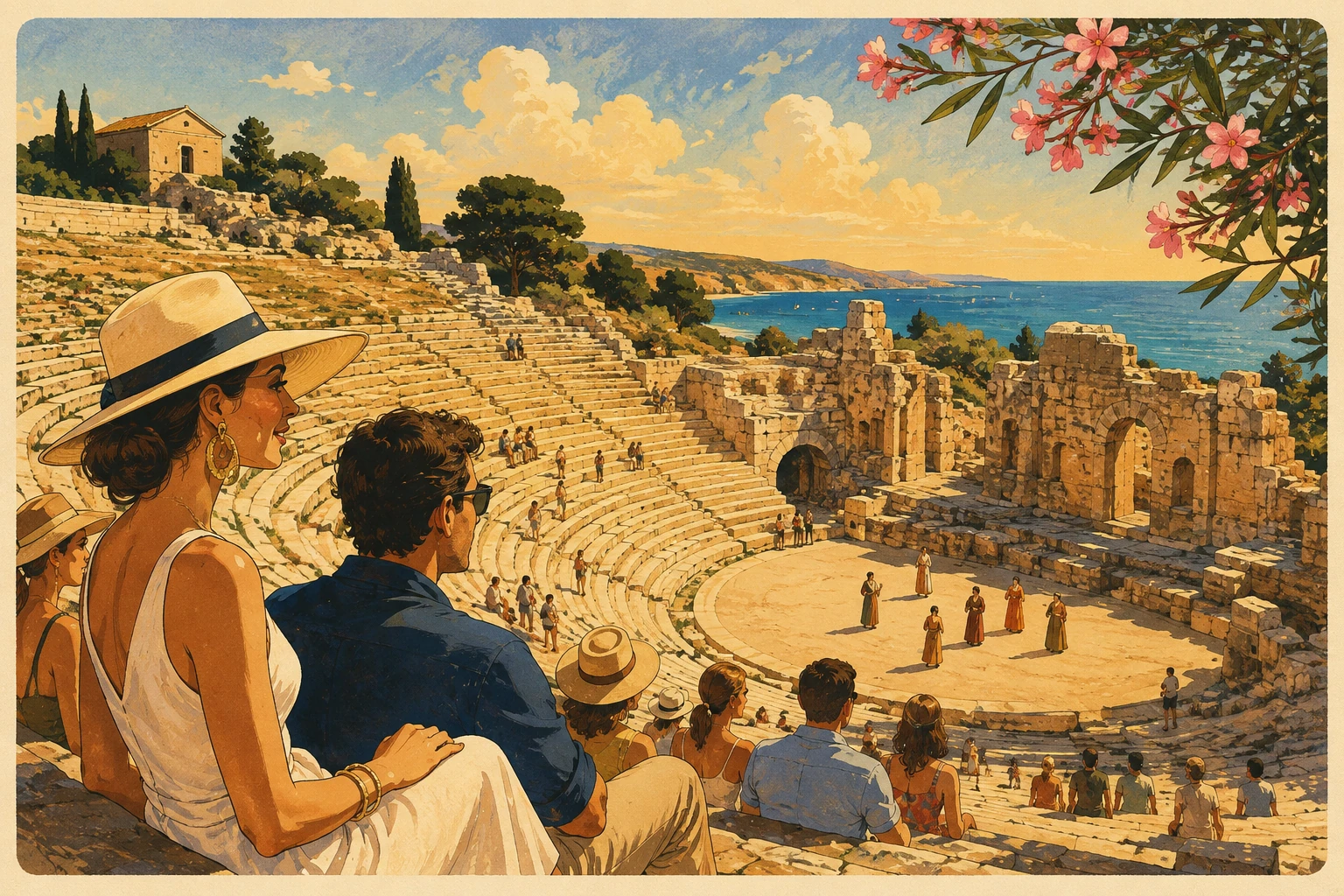
Walk through the Neapolis park with context for its theatre, quarries, caves, water systems, myths, and later Roman additions.

Pause with a drink as warm limestone facades catch the evening light and the cathedral square settles after the daytime crowds.
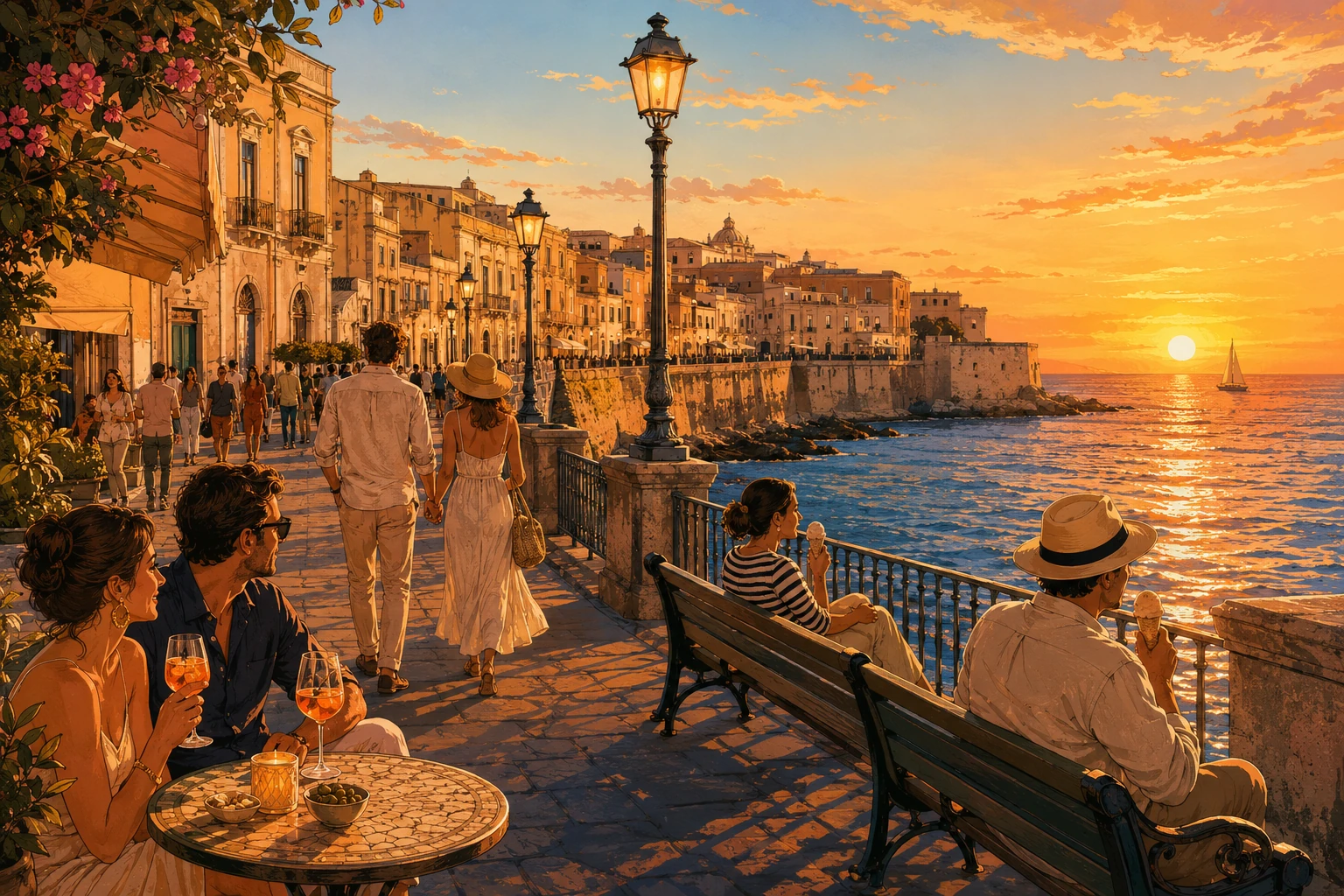
Follow the western waterfront past fishing boats, terraces, the Arethusa spring, and changing harbor light.

See natural papyrus growing along the Ciane River in a green landscape that feels completely different from Ortigia's stone streets.
Local rhythm: Keep archaeology for morning, the hottest hours slower, and Ortigia for late afternoon into evening.
Sort out connectivity and flights first, then leave room for market discoveries, sea views, and an unhurried Ortigia evening.
CONNECTIVITY
Set up mobile data before arrival for maps, bookings, bus updates, and day-trip planning around southeastern Sicily.
GETTING THERE
Compare flights from London to Catania, the most practical airport gateway for Syracuse and Ortigia.
EXPERIENCES
Compare popular tours, tickets and experiences for your trip.
Choose your Syracuse base by atmosphere, parking access, archaeological plans, and how much evening time you want on Ortigia.
Best for: First visits, atmosphere, restaurants, waterfront walks, and car-free evenings
Atmosphere: Historic, luminous, compact, and deeply scenic
Good to know: Parking, luggage access, and central noise require planning
Find hotels in OrtigiaBest for: The archaeological park, easier car access, and quieter nights
Atmosphere: Practical, spacious, historic, and less touristy
Good to know: Evening atmosphere is weaker than Ortigia
Find hotels near NeapolisBest for: Local streets, value, station access, and longer stays
Atmosphere: Residential, convenient, authentic, and well placed
Good to know: Choose the exact street carefully for nighttime comfort
Find hotels in BorgataBest for: Sea views, parking access, and walking into Ortigia
Atmosphere: Open, breezy, practical, and connected
Good to know: It has less old-town intimacy than staying on the island
Find waterfront hotelsBase tip: Ortigia maximizes beauty and evening atmosphere; mainland districts can simplify cars, value, and regional trips.
Six practical choices for balancing Ortigia, ancient Syracuse, and one regional experience.
Enough time to separate Ortigia and Neapolis, enjoy one sea experience, and keep an evening unhurried.
Syracuse combines a deep-history city break with a compact island atmosphere.
Choose between old-town atmosphere, archaeological access, local value, and practical arrival.
The island is compact, but Neapolis and regional excursions require planning.
Reserve limited experiences while keeping sea-dependent plans flexible.
Let heat, opening hours, and the waterfront shape the day.
Small practical habits that make Syracuse's split geography, summer heat, market timing, and waterfront experiences easier to enjoy.
Ortigia and Neapolis have different rhythms and deserve separate blocks of time.
Tip: Use one half-day for each instead of rushing between them.
The archaeological park is exposed and becomes hot and busy.
Tip: Carry water and visit before the strongest midday sun.
Piazzas, sea walls, and limestone lanes become especially atmospheric in the evening.
Tip: Leave at least one night free for an unplanned circuit.
Religious sites may close at midday or during services and events.
Tip: Confirm the cathedral and smaller churches on the day.
Ortigia Market is liveliest before lunch when produce and seafood stalls are active.
Tip: Pair it with the Temple of Apollo before walking south.
Stone streets, the archaeological park, and exposed waterfronts can feel intense.
Tip: Plan a long lunch, shade, or boat time in the hottest hours.
Boat routes and cave access depend on wind and water.
Tip: Keep a flexible land-based alternative ready.
Syracuse's freshwater springs and river landscape support rare European papyrus.
Tip: Notice it at Fonte Aretusa before considering the Ciane River.
Avoid the timing, transport, heat, and itinerary choices that make Syracuse feel more difficult than it needs to be.
A fast circuit misses market life, side lanes, sunset, and the island's evening mood.
Instead: Give Ortigia at least a full half-day and evening.
Heat and limited shade make the archaeological park much harder to enjoy.
Instead: Start early and carry water, a hat, and sun protection.
Restricted streets, parking rules, and narrow lanes can create stress and fines.
Instead: Confirm parking and luggage arrangements before arrival.
Ortigia and the archaeological park are not one compact sightseeing cluster.
Instead: Allow transport time or split them into separate sessions.
Wind and sea conditions can alter departures and cave access.
Instead: Recheck the operator and keep the schedule flexible.
The market loses much of its color and activity after lunch.
Instead: Visit in the morning before the stalls wind down.
Noto, Etna, and other excursions can leave too little time for Syracuse itself.
Instead: Protect one full local day before adding excursions.
Parking, noise, stairs, access, and evening atmosphere vary strongly by area.
Instead: Match the base to how you will arrive and spend your nights.