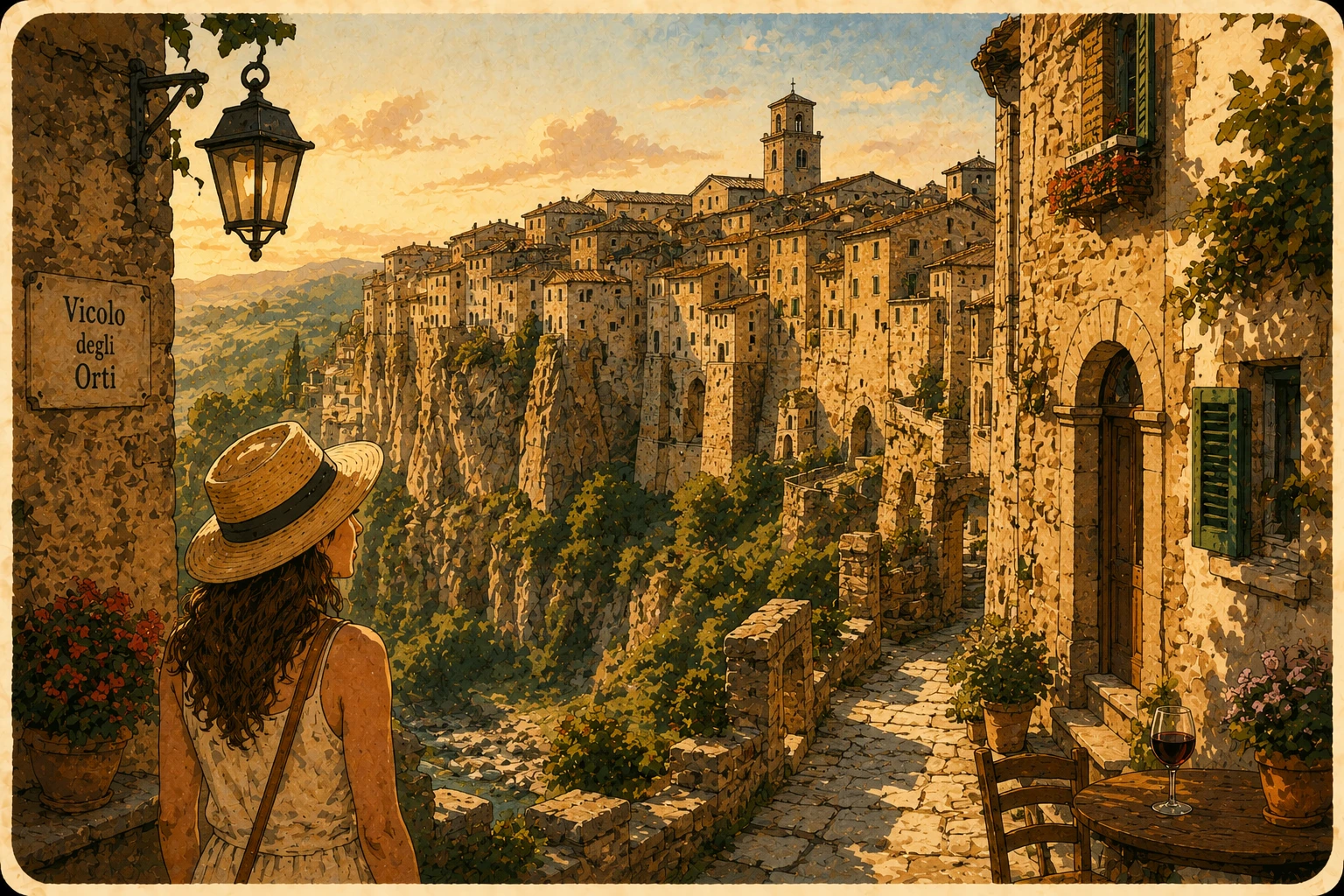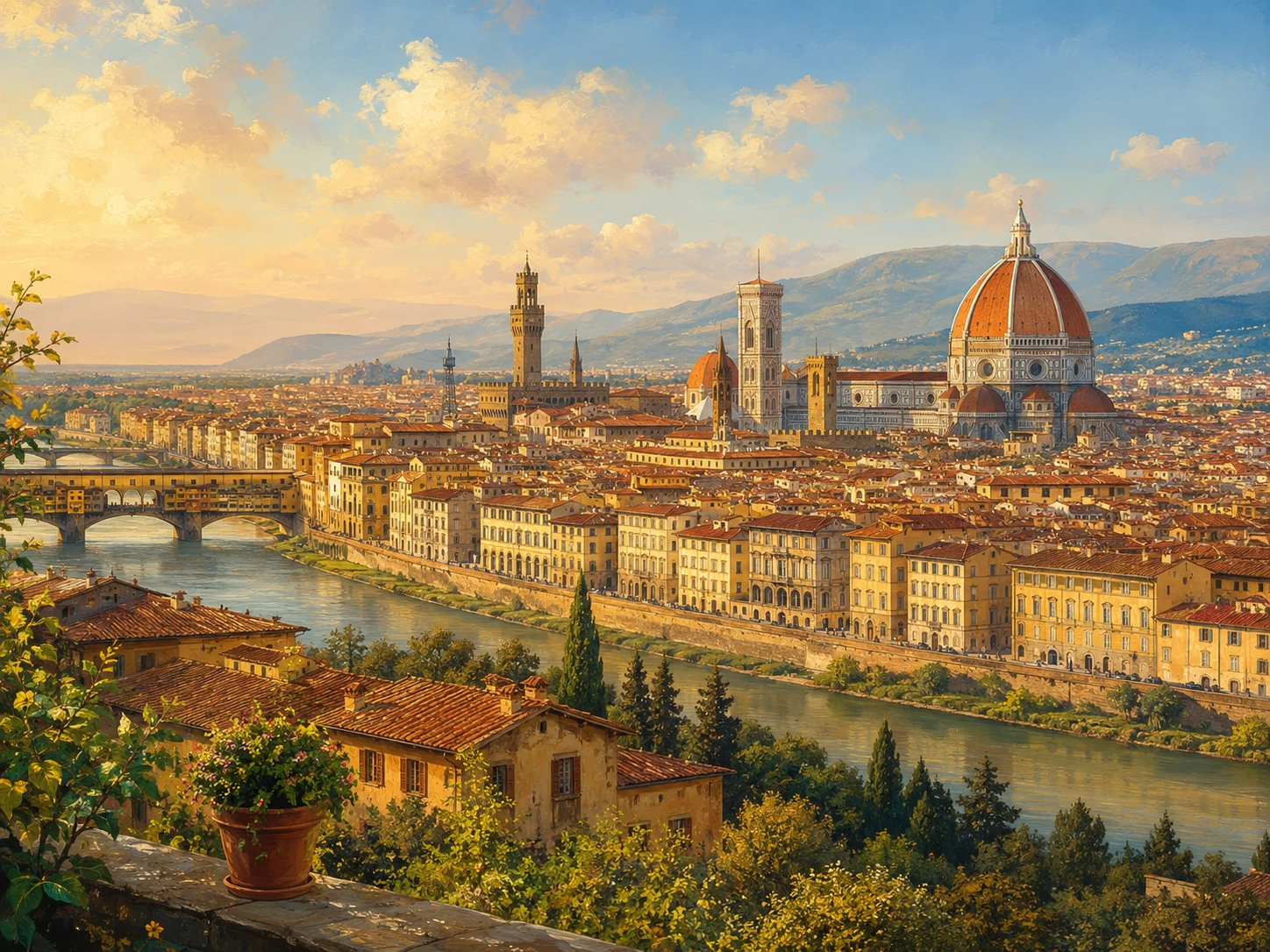
Florence
Tuscany's capital brings together Renaissance masterpieces, the Duomo, Ponte Vecchio, historic markets, churches, palaces, and panoramic viewpoints.
ITALY REGION GUIDE
Renaissance cities. Cypress roads. Wine-country days.
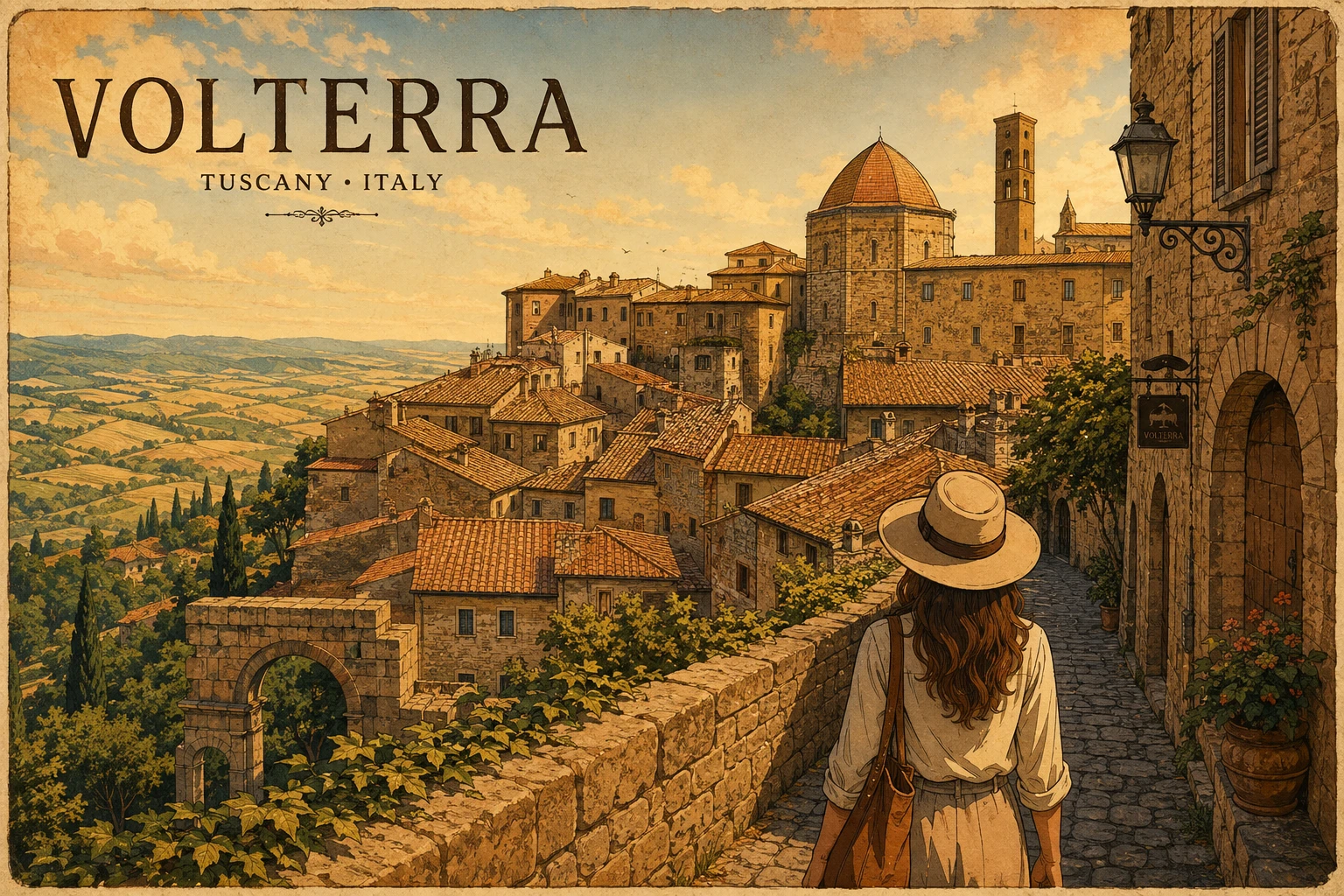
Tuscany combines Florence's artistic wealth, Siena's medieval streets, Val d'Orcia's iconic landscapes, Chianti vineyards, hilltop towns, thermal villages, and a long Mediterranean coast. This guide helps you choose realistic bases, build smarter routes, and experience the region without spending the entire trip inside a car.
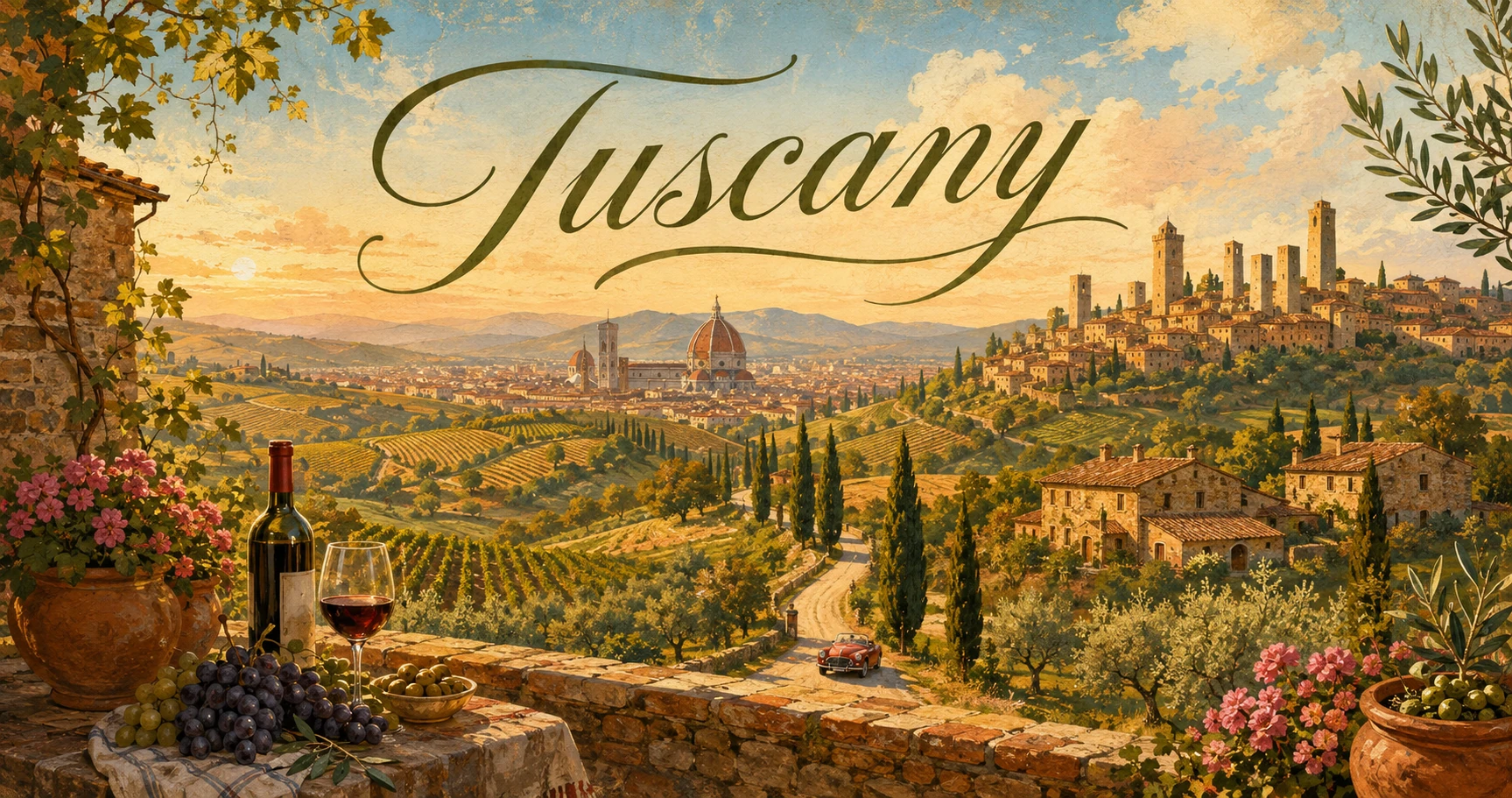
Six classic Tuscany highlights to anchor a first regional itinerary.
Tuscany's capital brings together Renaissance masterpieces, the Duomo, Ponte Vecchio, historic markets, churches, palaces, and panoramic viewpoints.
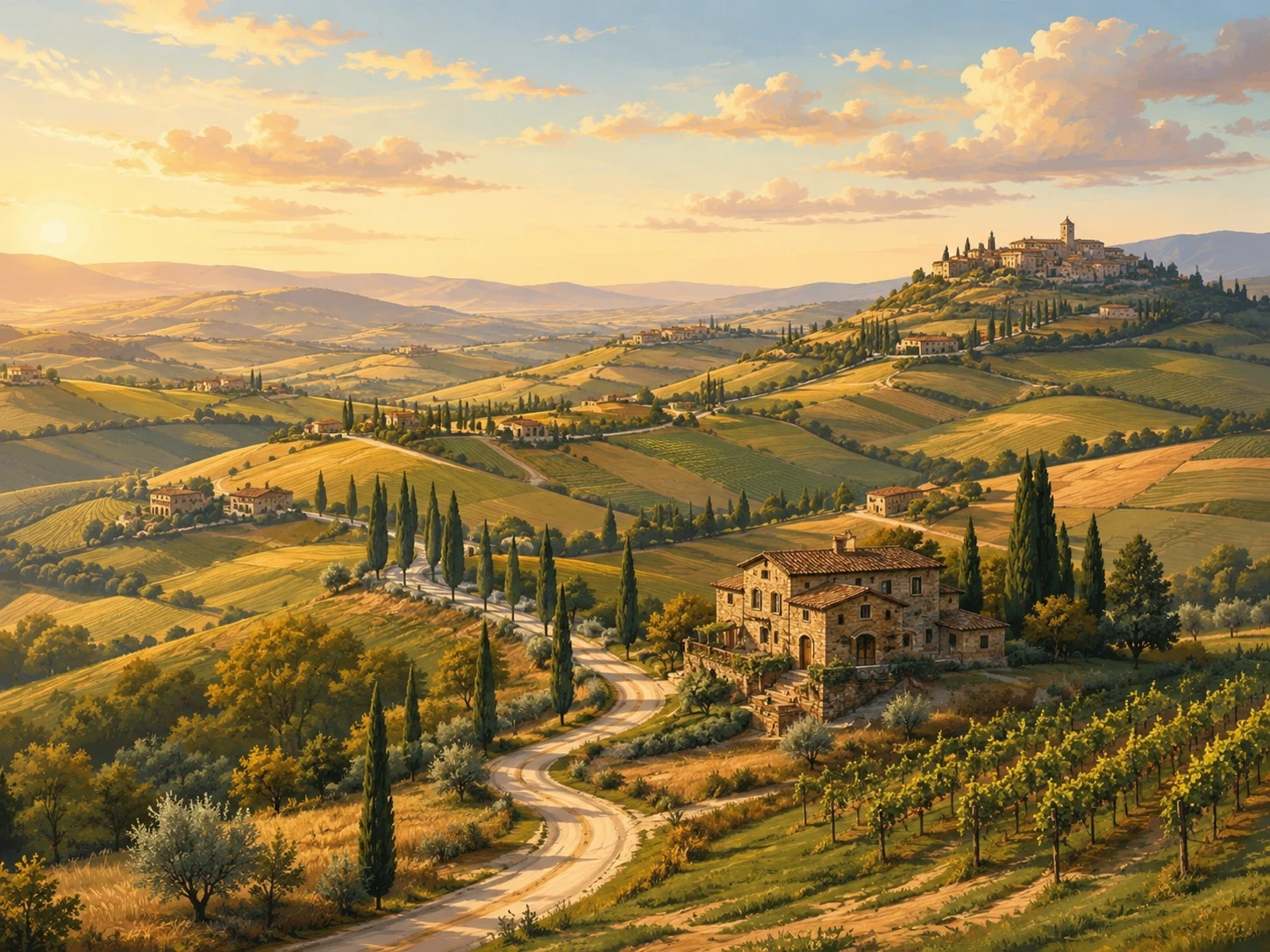
Rolling fields, cypress-lined roads, stone farmhouses, vineyards, thermal villages, and medieval towns form Tuscany's most iconic countryside.
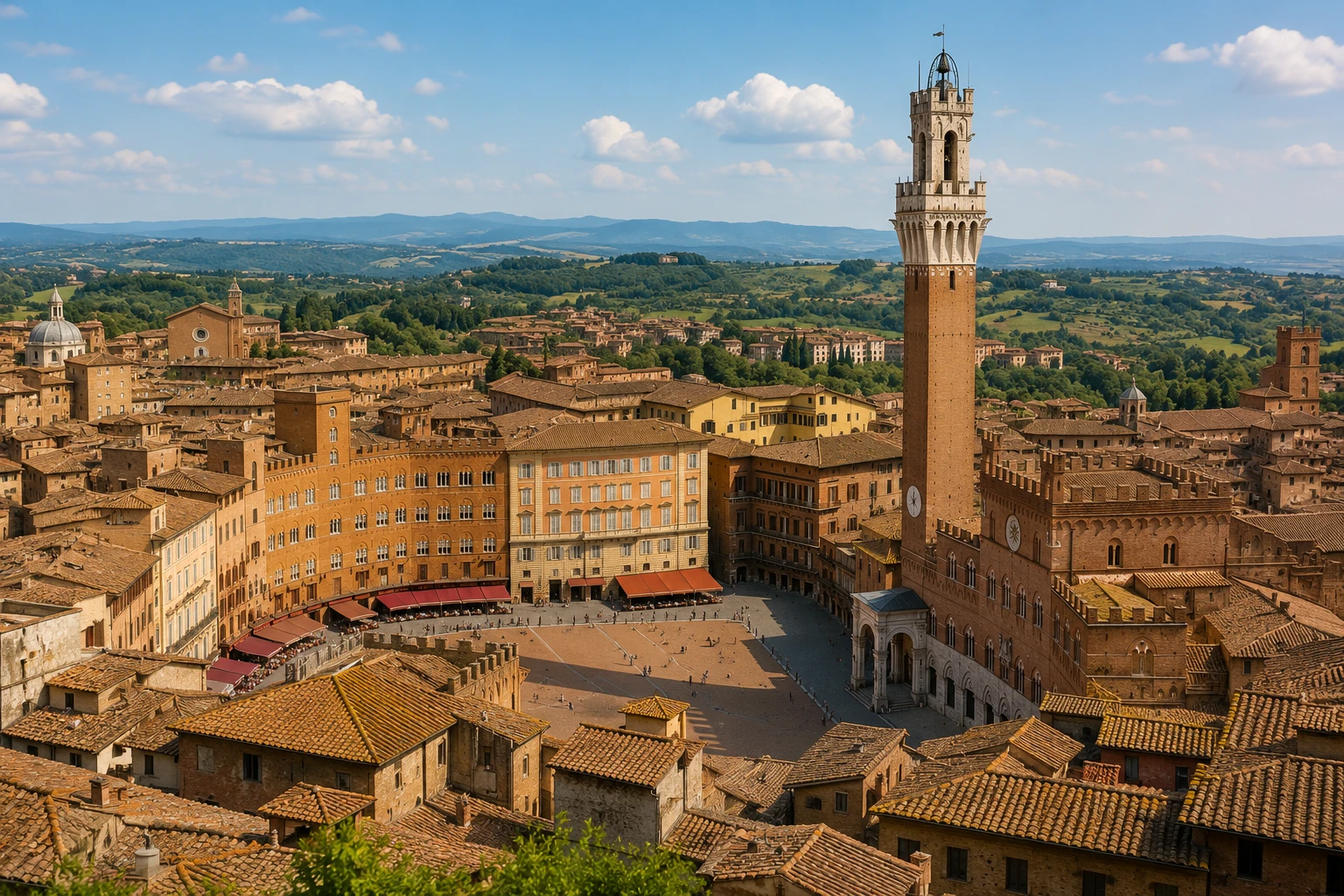
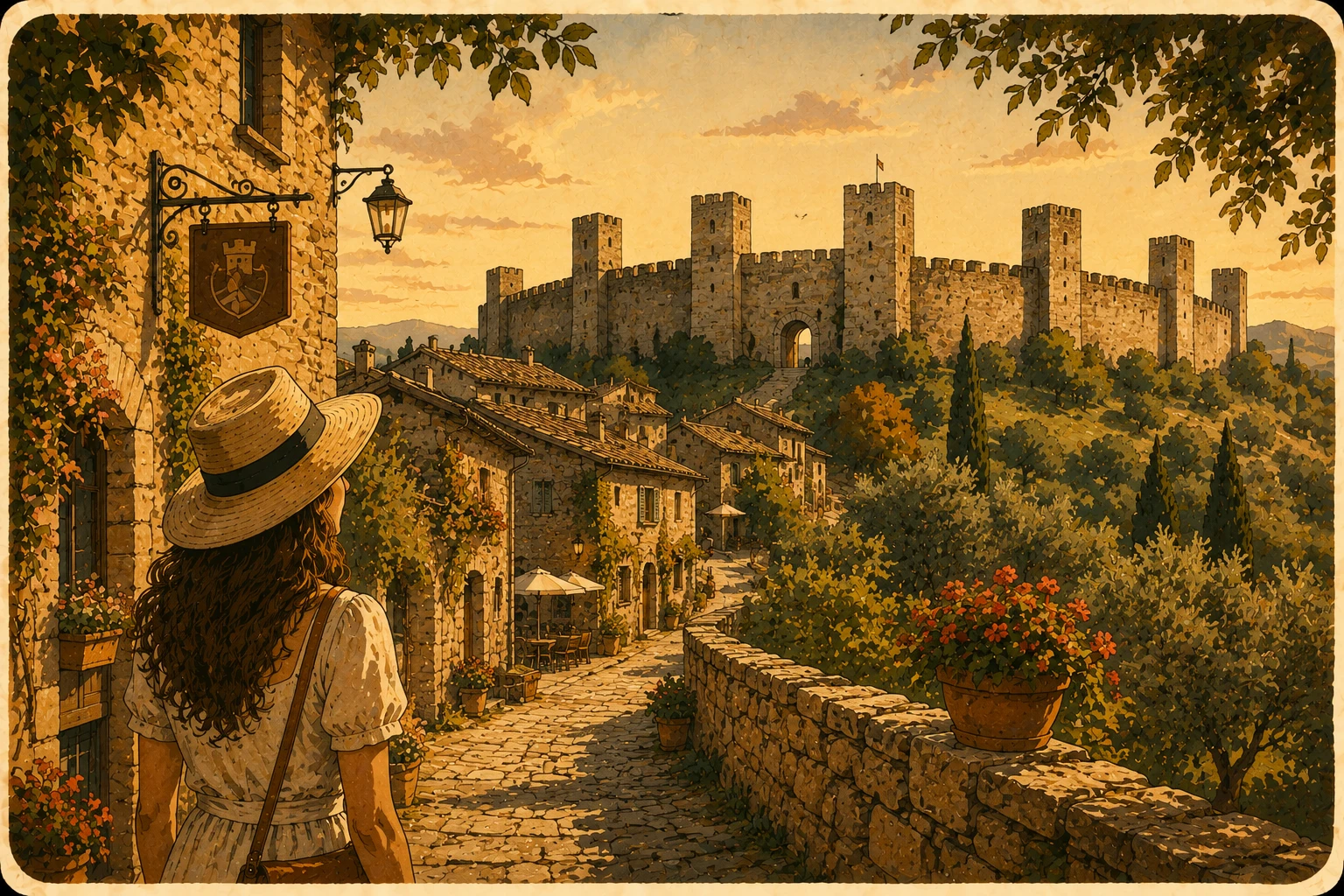
A remarkably preserved medieval city centered on Piazza del Campo, with brick streets, contrada traditions, Gothic architecture, and broad countryside views.
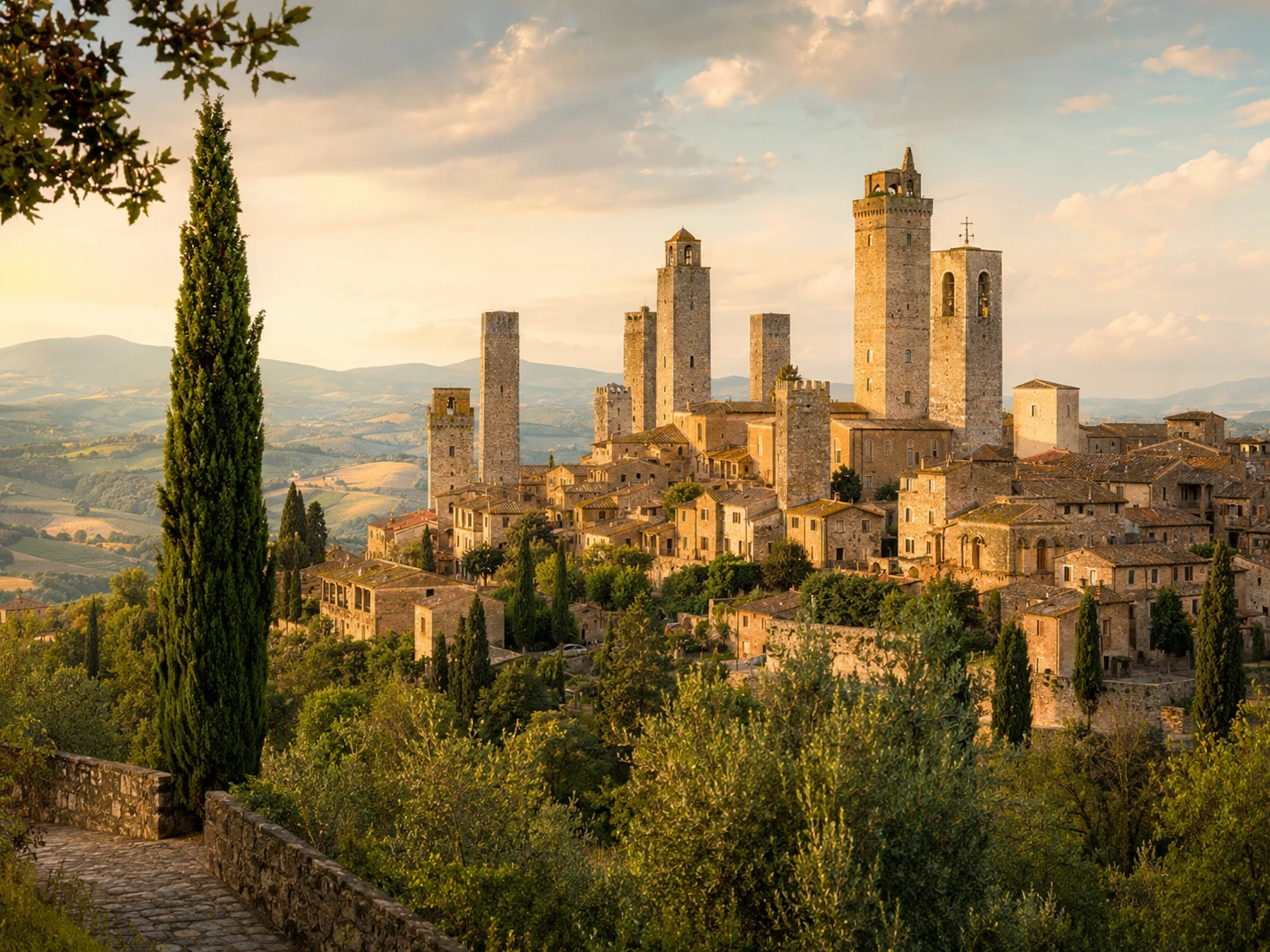
A hill town famous for its surviving medieval towers, stone lanes, panoramic viewpoints, local saffron, and Vernaccia wine.
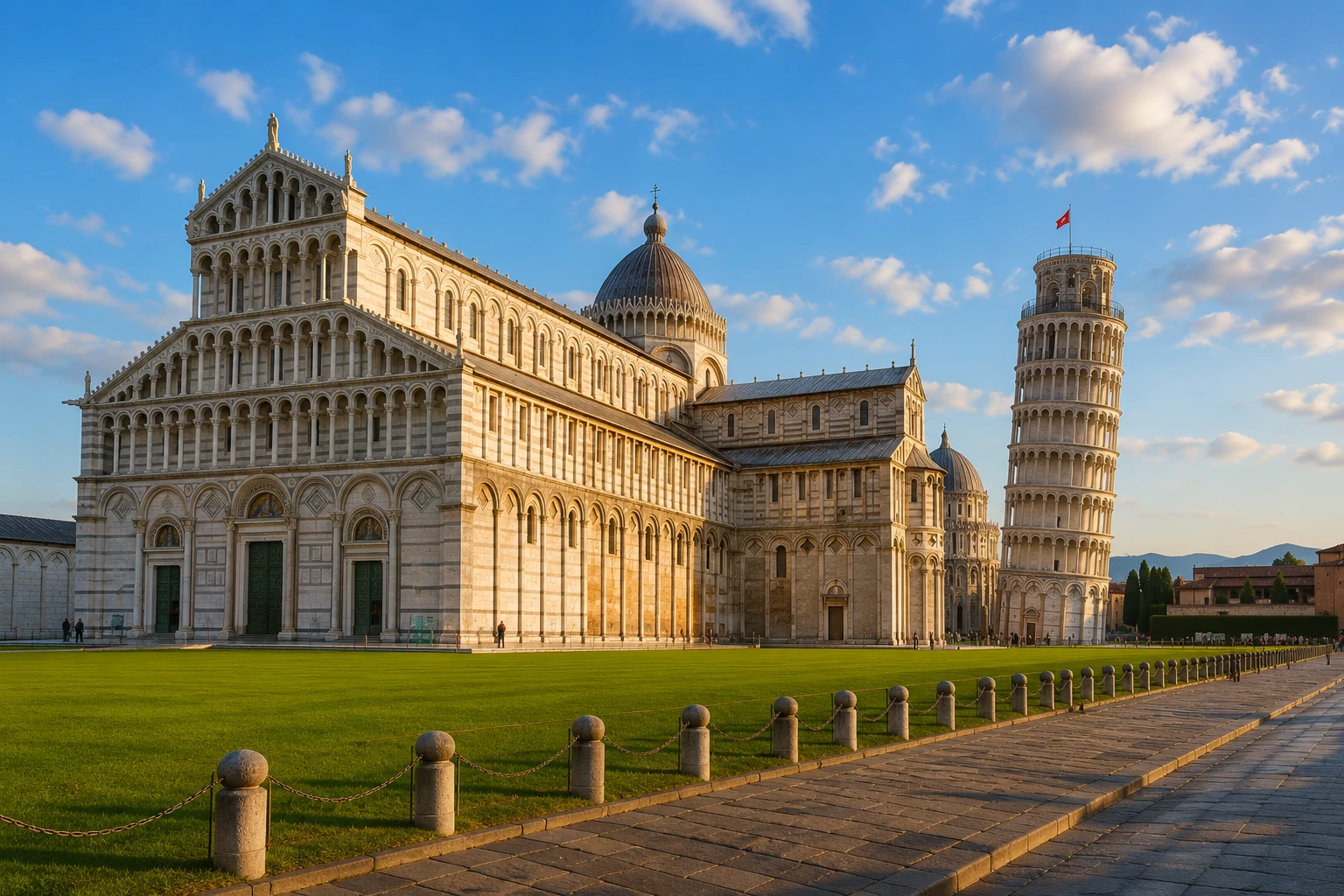
Piazza dei Miracoli brings together the Leaning Tower, Cathedral, Baptistery, monumental cemetery, and one of Italy's most recognizable architectural ensembles.
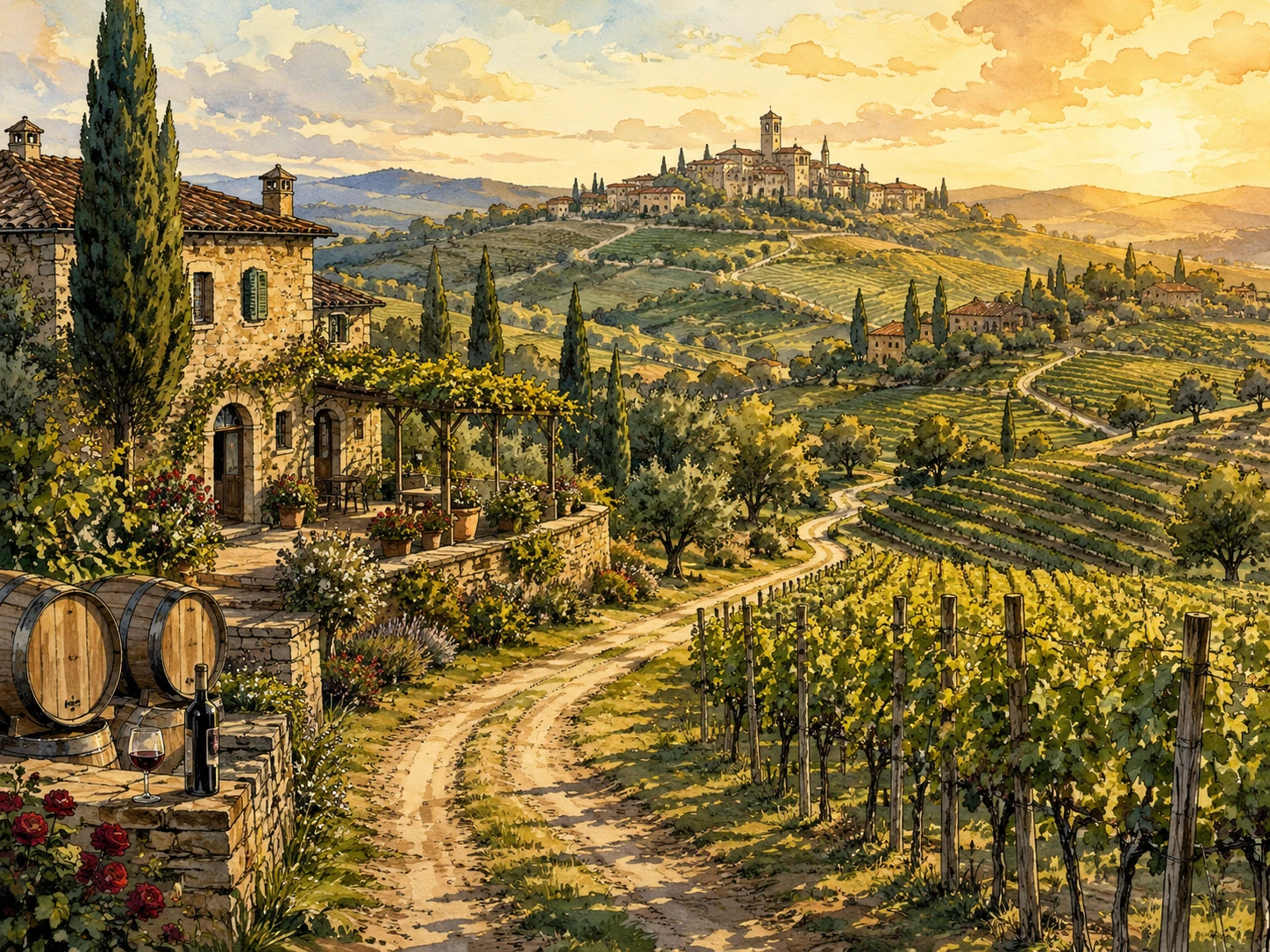
A classic Tuscan landscape of vineyards, olive groves, wine estates, cypress roads, stone villages, and family-run wineries between Florence and Siena.
Route tip: Combine Florence and Pisa by train, then use a car for Chianti, Siena, Val d'Orcia, and smaller towns.
Four smarter Tuscany routes for art cities, wine country, medieval towns, landscapes, and the coast.
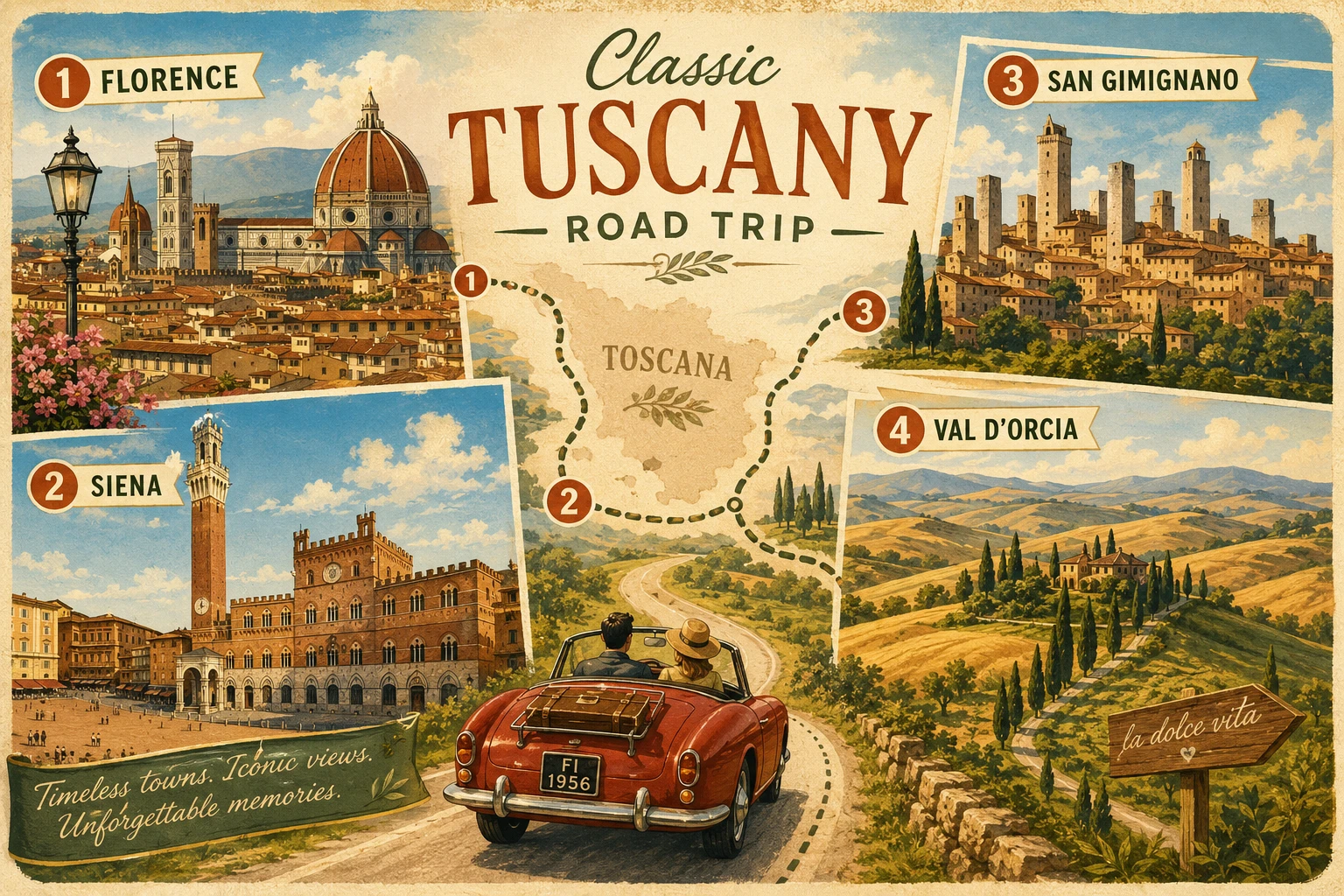
Florence → Chianti → San Gimignano → Siena → Val d'Orcia
Best for: A first regional trip combining art, wine, towns, and countryside
Time: 7-10 days
Do not miss: At least two nights outside Florence
Plan classic Tuscany route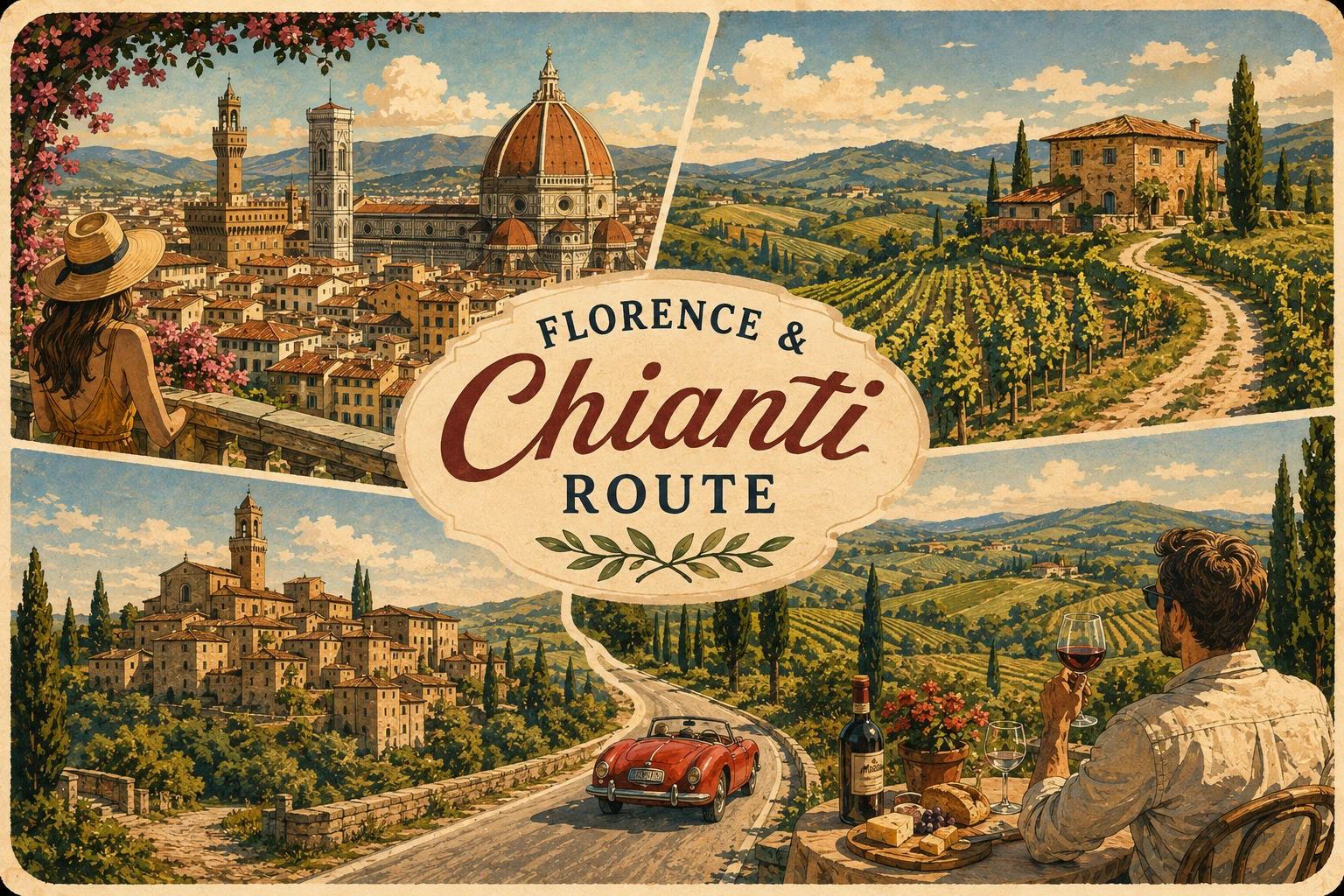
Florence → Greve in Chianti → Panzano → winery visit → countryside stay
Best for: Renaissance art followed by wine-country scenery
Time: 3-5 days
Do not miss: A winery visit that includes the vineyard and cellar
Plan Florence and Chianti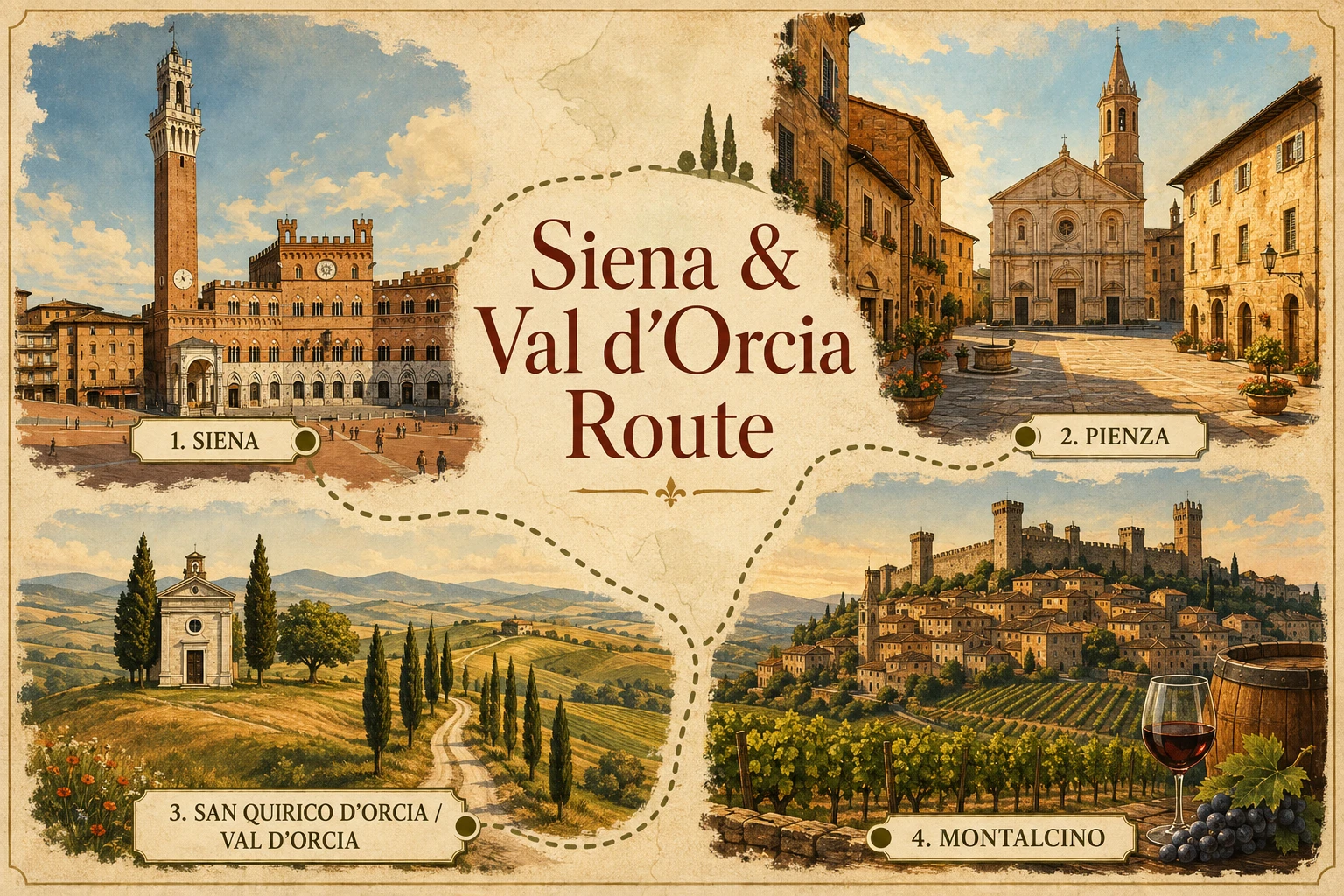
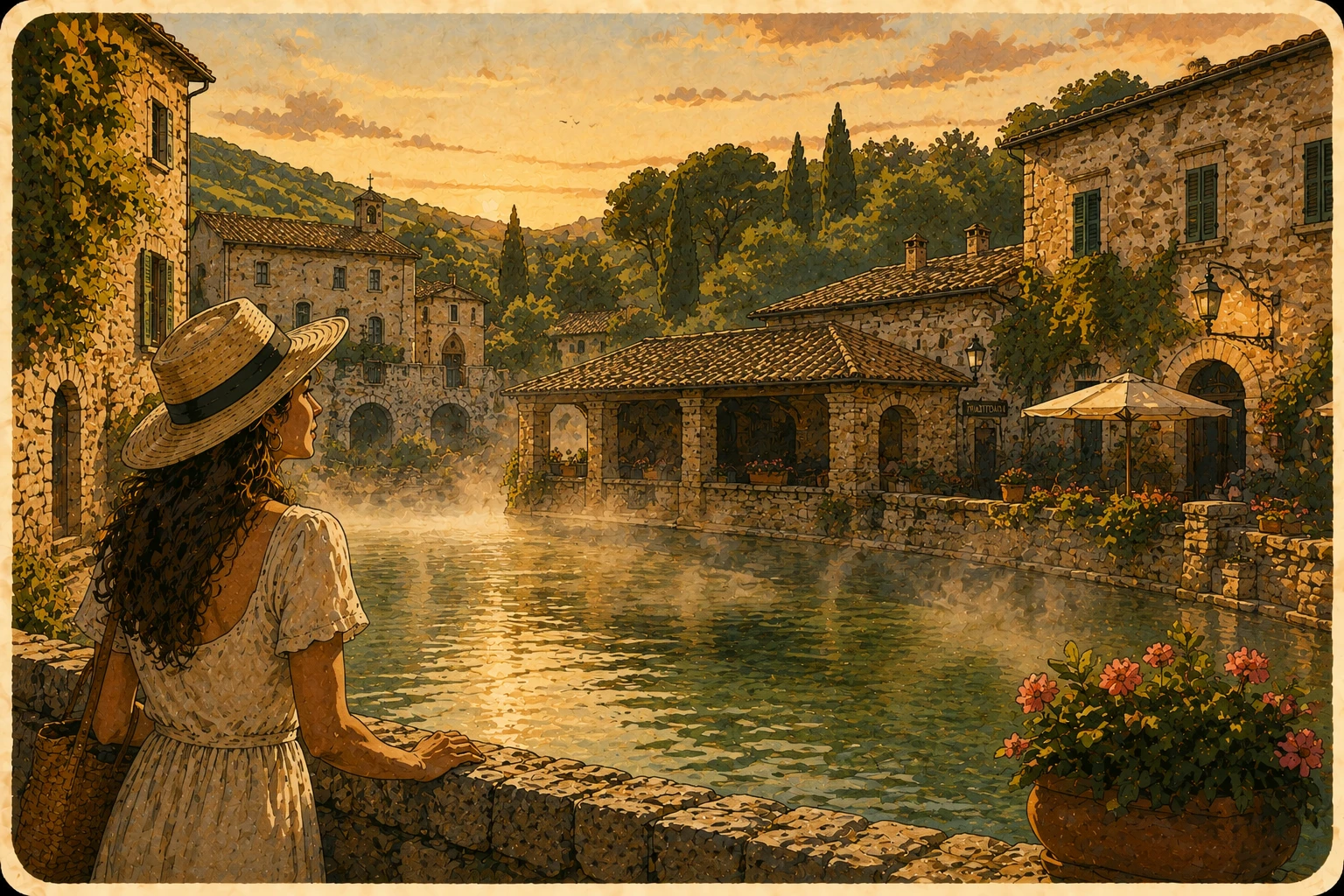
Siena → Monteriggioni → San Quirico d'Orcia → Bagno Vignoni → Pienza → Montalcino
Best for: Medieval towns, landscapes, thermal villages, and wine
Time: 3-5 days
Do not miss: Golden-hour driving between Pienza and San Quirico
Plan Siena and Val d'Orcia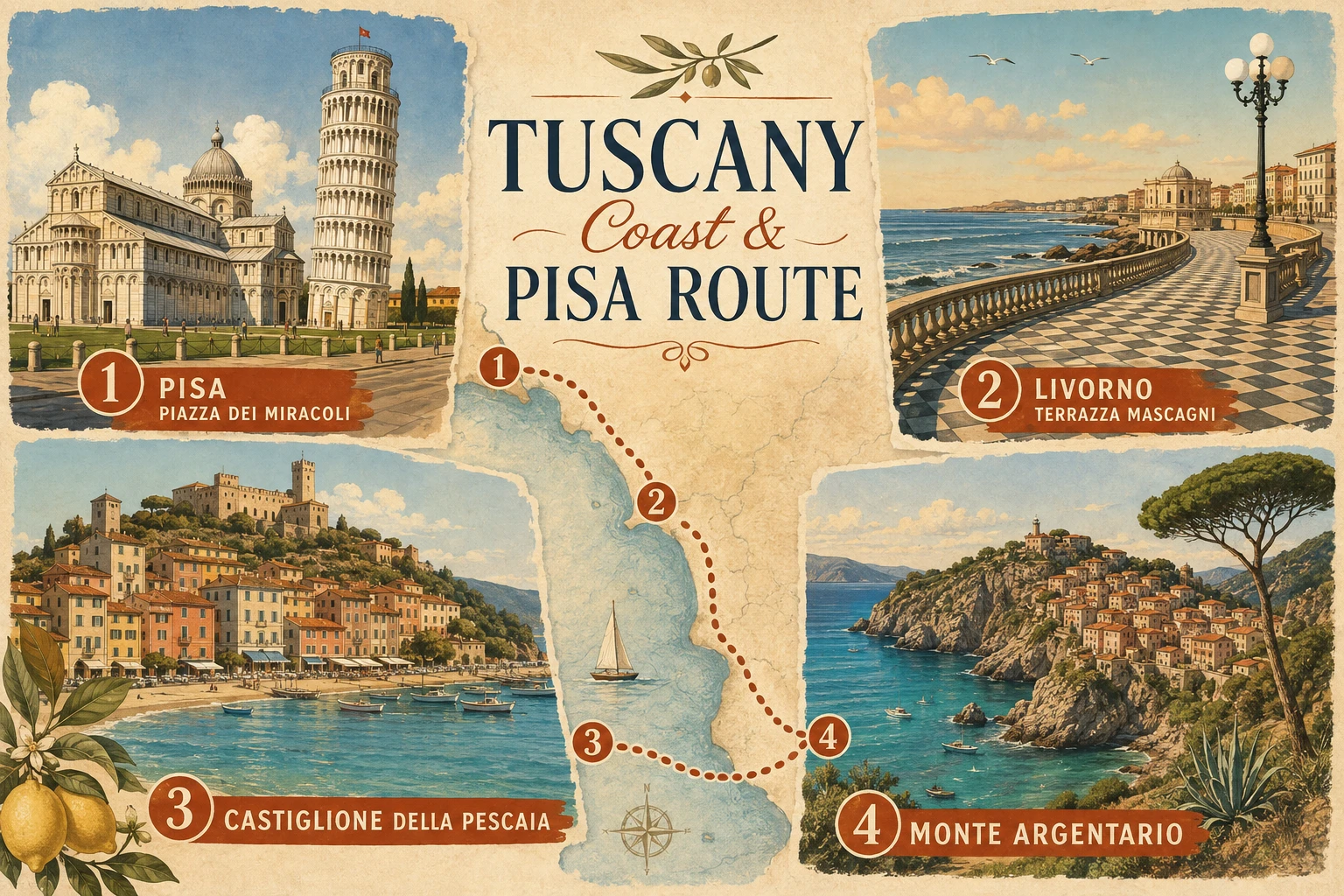
Livorno → Castiglioncello → Bolgheri → coastal towns → Pisa
Best for: Travelers combining beaches, wine, coastal drives, and Pisa
Time: 3-5 days
Do not miss: The cypress-lined road into Bolgheri
Plan coast and Pisa routeExperience Tuscany through guided art, wine, cooking, scenic drives, day trips, and sunrise views.
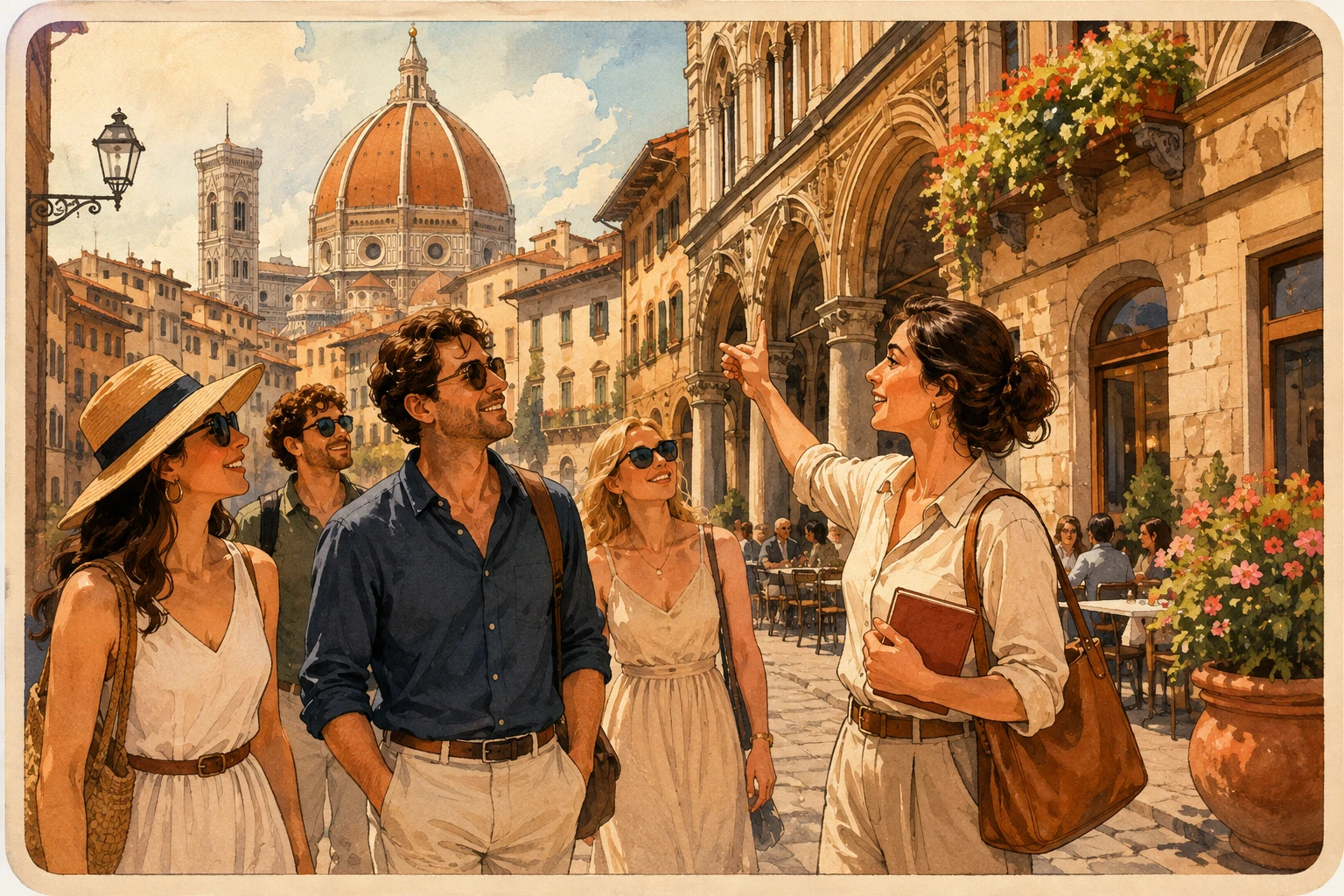
Explore the Duomo area, Piazza della Signoria, the Uffizi district, Ponte Vecchio, and major Renaissance stories with a local guide.
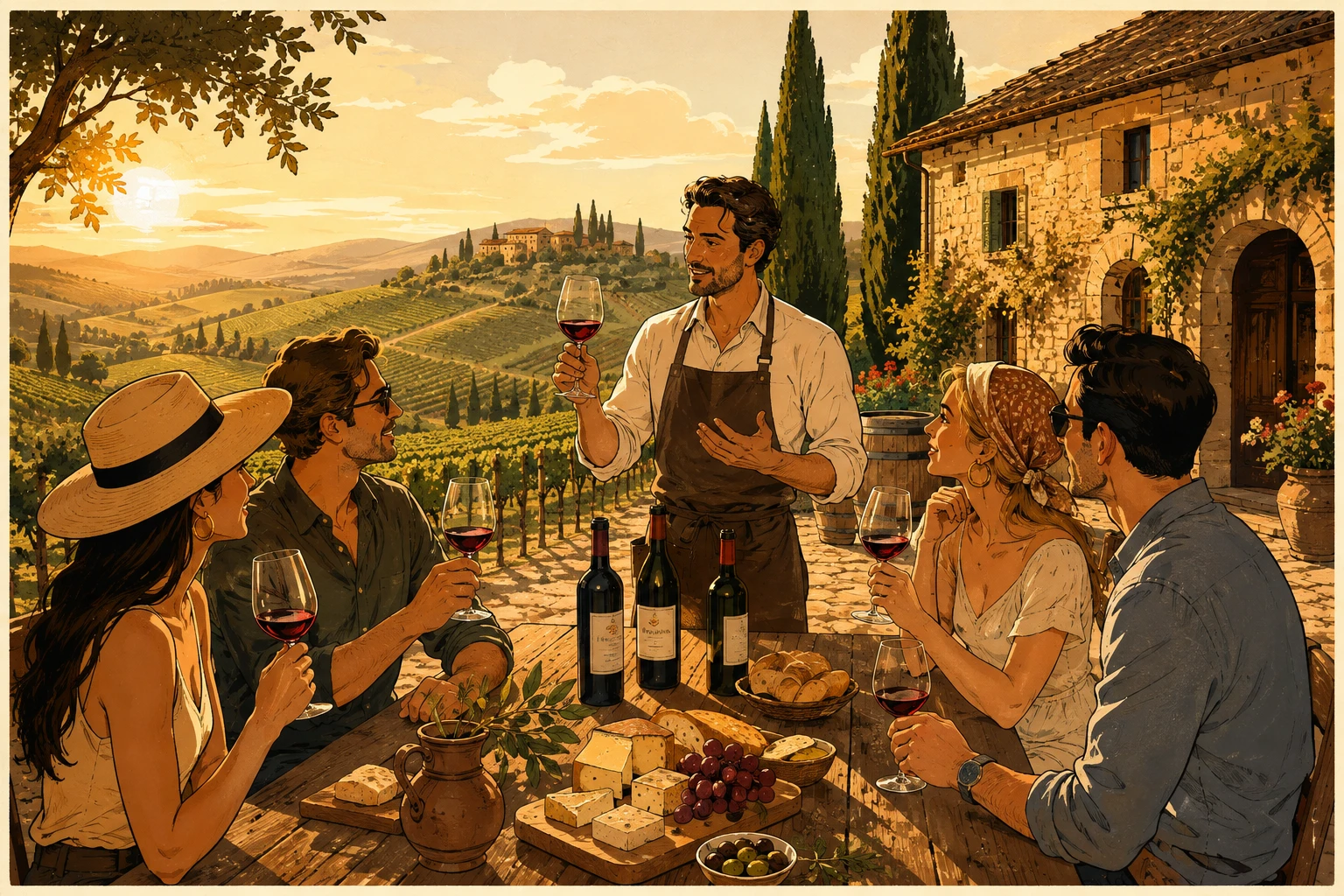
Visit wineries, walk through cellars and vineyards, meet producers, taste regional wines, and enjoy local food pairings.
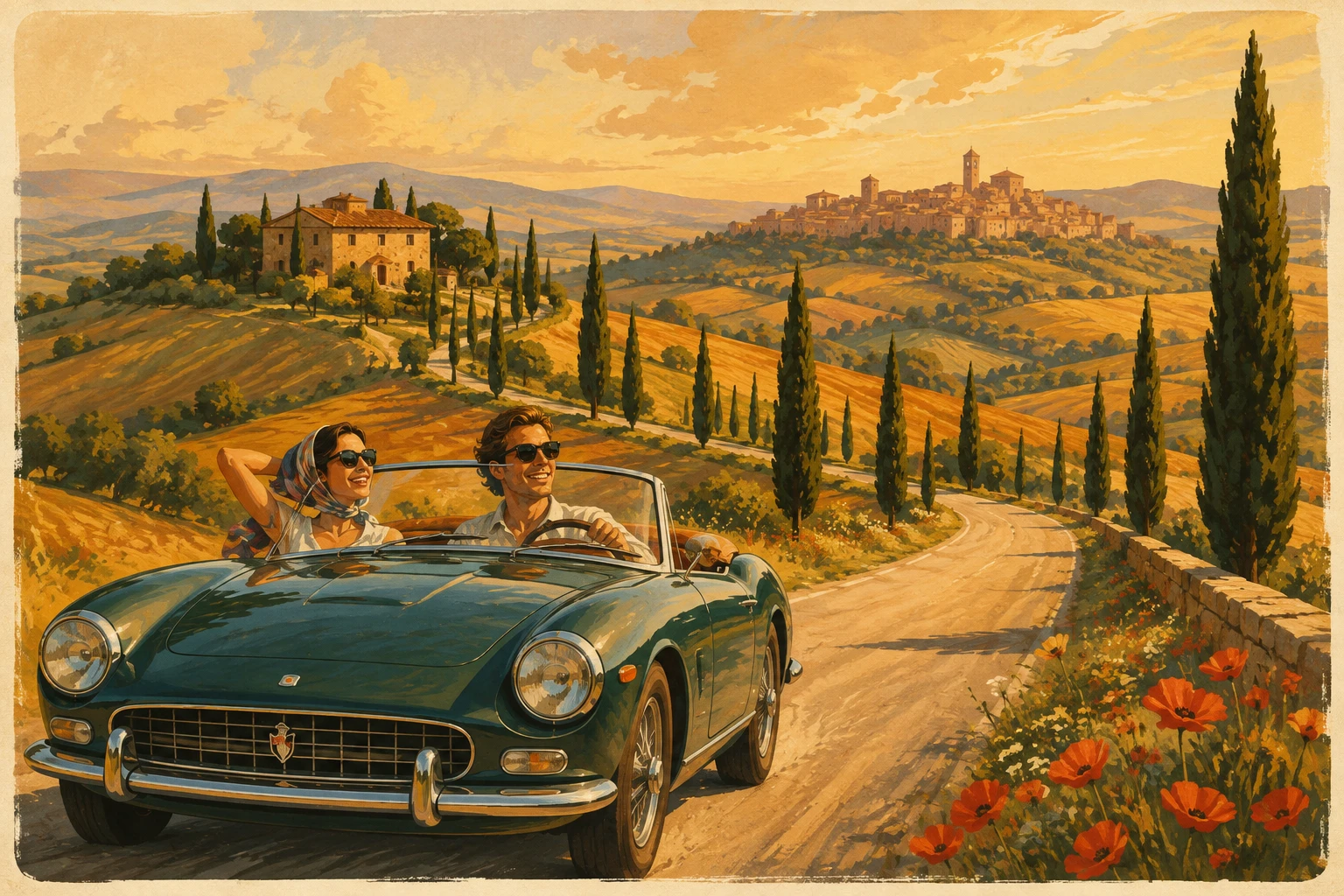
Follow scenic roads between Pienza, Monticchiello, San Quirico, Bagno Vignoni, Castiglione d'Orcia, and Montalcino.
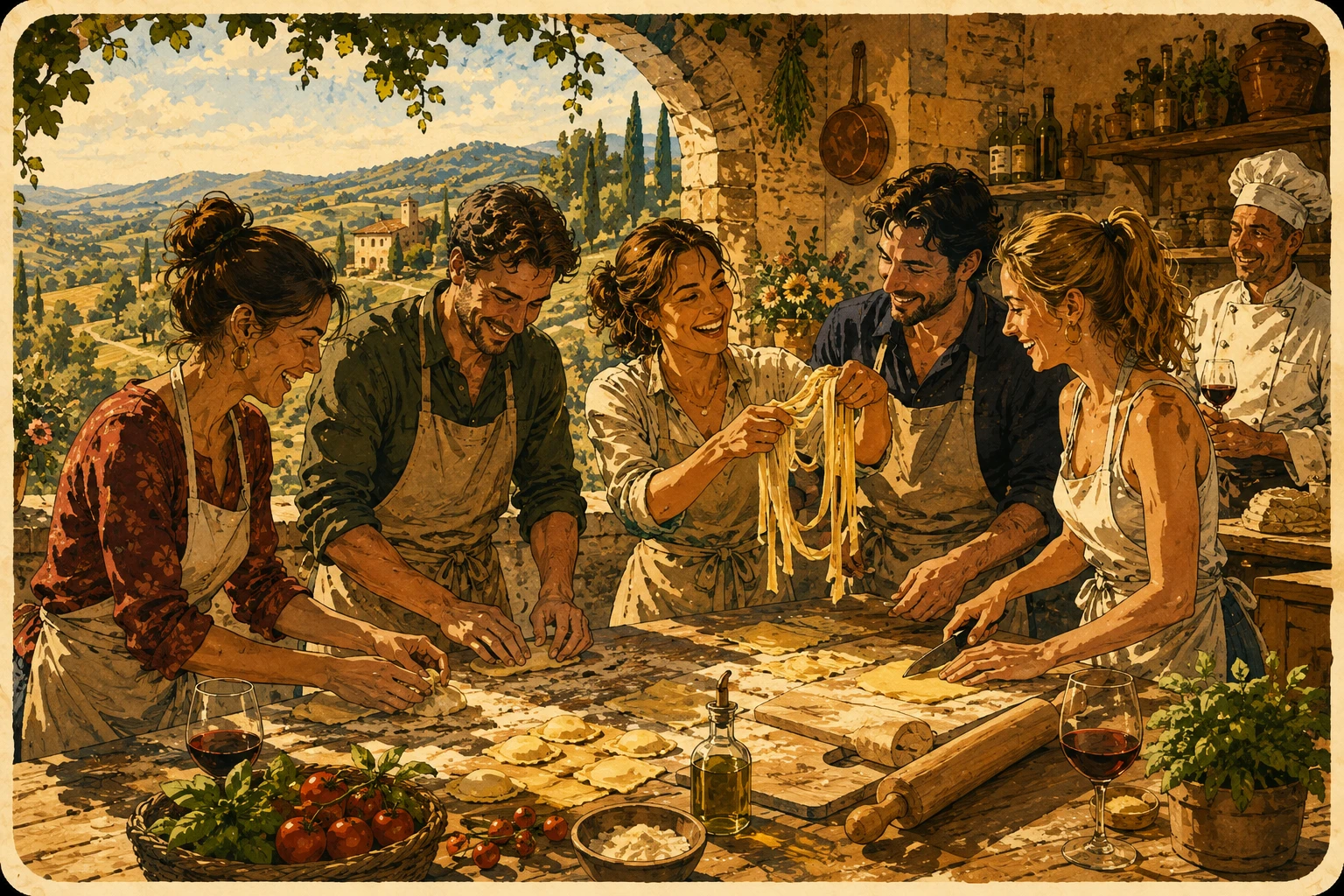
Prepare fresh pasta and traditional dishes with a local chef, then share the meal with wine in a farmhouse setting.
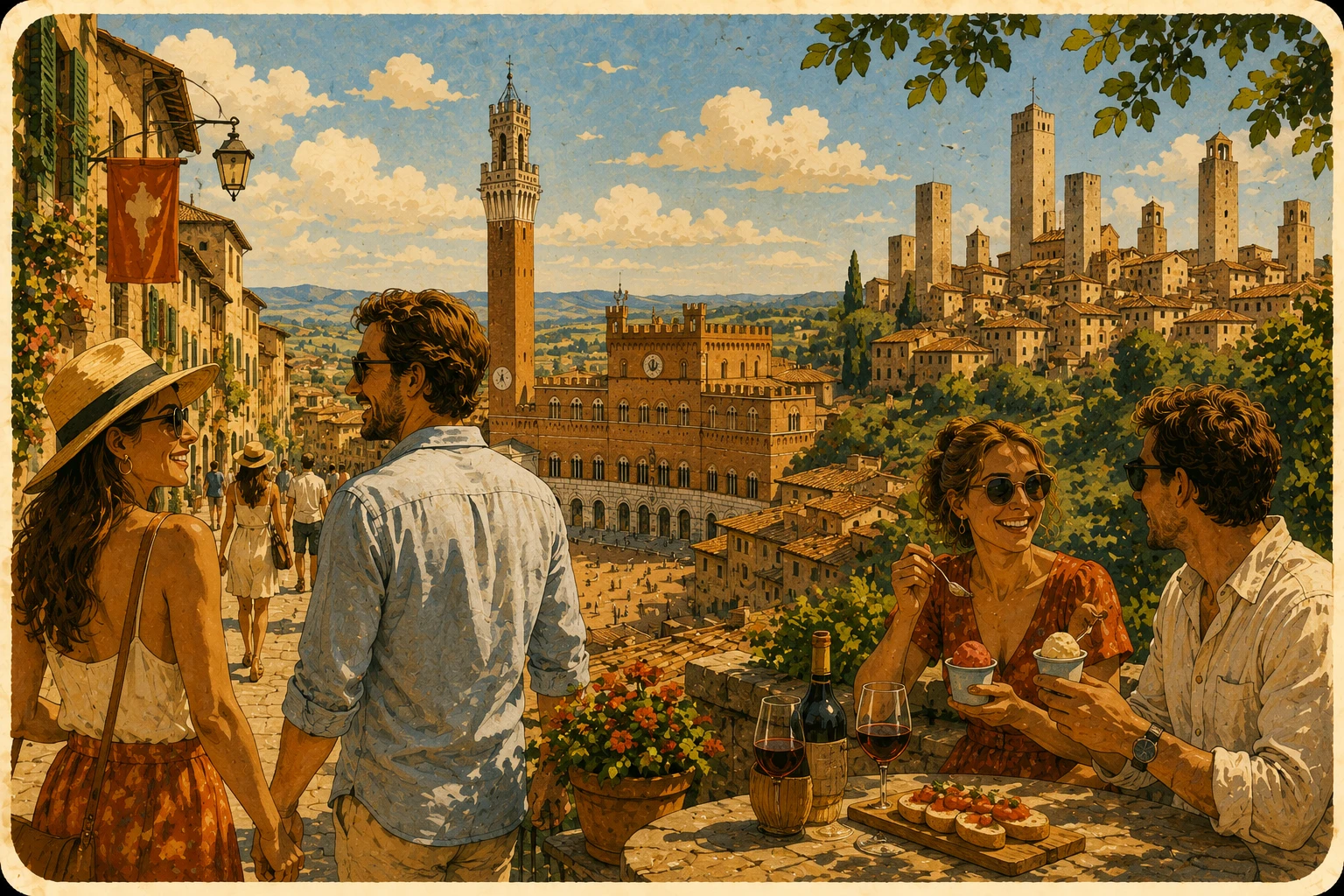
Combine Siena's Piazza del Campo and cathedral with San Gimignano's towers, medieval streets, views, and local specialties.

Float above vineyards, cypress roads, hill towns, and rolling countryside during a weather-dependent early-morning balloon flight.
Slow travel tip: Tuscany is not a checklist. Leave space for lunches, viewpoints, village wandering, and country roads.
Set up the practical essentials first — connectivity, flights, city transport, a rental car, and Florence access — then build your regional route.
CONNECTIVITY
Set up mobile data before arrival for maps, parking information, hotel bookings, and countryside route updates.
GETTING THERE
Compare connections to Florence and Pisa before choosing the best gateway for your Tuscany itinerary.
SIGHTSEEING
Use a flexible sightseeing route for Florence viewpoints and outer districts before continuing into the wider region.
DRIVING
A car is most useful for Chianti, Val d'Orcia, hill towns, wineries, and countryside accommodation.
CITY PASS
Compare a city pass when your regional itinerary includes several Florence museums, attractions, and sightseeing services.
EXPERIENCES
Compare popular tours, tickets and experiences for your trip.
Choose bases that match your route: city sights, medieval atmosphere, countryside drives, or northwest connections.
Best for: First-time visitors, museums, architecture, and transport connections
Why stay here: The strongest base for Renaissance art, city sightseeing, train travel, and organized Tuscany day trips.
Downside: Busy, expensive, and not ideal for relaxed countryside evenings.
Find hotels in FlorenceBest for: Medieval atmosphere and central Tuscany
Why stay here: A beautiful historic base for Siena itself, Chianti, Monteriggioni, San Gimignano, and northern Val d'Orcia.
Downside: Driving and parking near the center require planning.
Find hotels in SienaBest for: Landscapes, road trips, slow travel, and countryside stays
Why stay here: Ideal for Pienza, Montalcino, Bagno Vignoni, San Quirico, scenic drives, wineries, and farm accommodation.
Downside: A car is usually necessary.
Find hotels in Val d'OrciaBest for: Northwestern Tuscany, rail travel, and the coast
Why stay here: Useful for Pisa, Lucca, the Tyrrhenian coast, and onward travel toward Cinque Terre or Liguria.
Downside: Far from Siena and Val d'Orcia.
Find Hotels in PisaBase tip: Two or three bases usually work better than changing hotels every night.
The practical choices that make a Tuscany road trip feel calm instead of overpacked.
Enough time to combine Florence, Siena, countryside bases, wine roads, and hill towns without racing.
Comfortable weather, stronger light, and a calmer rhythm than peak summer.
A balanced trio for art, medieval streets, landscapes, wineries, and road-trip days.
The Uffizi, Accademia, Duomo complex, winery visits, and cooking classes are easier with reservations.
Use rail for major cities and a car for Chianti, Val d'Orcia, villages, wineries, and rural stays.
Tuscany works beautifully for travelers who want culture, scenery, food, and slower regional routes.
Small habits that make Tuscany easier, safer, and more rewarding.
Tuscany feels calmer when you build outward from a few well-chosen bases.
Tip: Choose two or three bases and explore outward from each.
Driving into famous historic centers adds parking and ZTL stress.
Tip: Florence, Pisa, Lucca, and other urban destinations are often easier without a car.
The most memorable landscapes and small places are not always easy by rail.
Tip: Val d'Orcia, Chianti wineries, small villages, and agriturismi are much easier by road.
Many towns protect their old streets with restricted-traffic zones.
Tip: Many Tuscan towns have restricted-traffic zones and clearly marked external parking areas.
Florence rewards planning, especially for the biggest art sights.
Tip: Florence's most famous museums and monuments can sell out.
Wine days are better when transport is planned clearly.
Tip: Use an organized wine tour or appoint a driver when visiting wineries.
The famous towns are loveliest before the main tour flow arrives.
Tip: San Gimignano, Siena, Pisa, and Pienza are calmer before the main day-trip crowds.
A rushed Tuscany itinerary misses one of the region's real pleasures.
Tip: Lunch, wine tastings, and farmhouse dinners are part of the experience, not interruptions to sightseeing.
Avoid the planning errors that turn a beautiful regional trip into a rushed driving marathon.
The region is broad, layered, and slower than it looks on a map.
Instead: Choose one city and one countryside area for a short trip.
Florence is wonderful, but it does not replace hill towns, wine country, and rural landscapes.
Instead: Add Siena, Chianti, Val d'Orcia, or another base if you want Tuscany beyond the city.
ZTL zones can bring fines and stressful navigation.
Instead: Use marked parking outside old centers and walk in.
Hill towns need time for parking, walking, views, meals, and detours.
Instead: Plan fewer stops and enjoy them properly.
Many estates work by appointment and may not accept walk-ins.
Instead: Reserve tastings or book a guided wine tour.
Curving roads, parking, and photo stops make transfers longer than expected.
Instead: Add buffer time between towns and bases.
Multiple tastings and country roads are a bad mix.
Instead: Use a driver, a guided tour, or appoint someone who does not drink.
Harsh light flattens the landscapes that make Tuscany special.
Instead: Aim for early morning or golden hour.
Each town has its own pace, food, views, and history.
Instead: Pick towns that match your route rather than collecting names.
Restaurants, shops, and attractions may pause during parts of the afternoon.
Instead: Check hours and keep a flexible middle of the day.