CONNECTIVITY
Get an eSIM
Set up mobile data before arrival for maps, bookings, translations, and transport updates across northern Thailand.
THAILAND CITY GUIDE
Art temples, tea mountains, river landscapes, border history, and a calm northern rhythm.
Plan Chiang Rai as a real northern base: start with its extraordinary art temples, keep one day for the city and Mae Kok River, and give the tea mountains or Golden Triangle enough travel time.
Sort out mobile data, the Bangkok–Chiang Rai flight, and airport arrival first — then spend your time on temples, tea country, rivers, and markets.
CONNECTIVITY
Set up mobile data before arrival for maps, bookings, translations, and transport updates across northern Thailand.
GETTING THERE
Compare Bangkok to Chiang Rai flights before arranging your CEI airport transfer and first-day plans.
ARRIVAL
Book the connection from Chiang Rai International Airport to the Clock Tower, riverside, or Ban Du area.
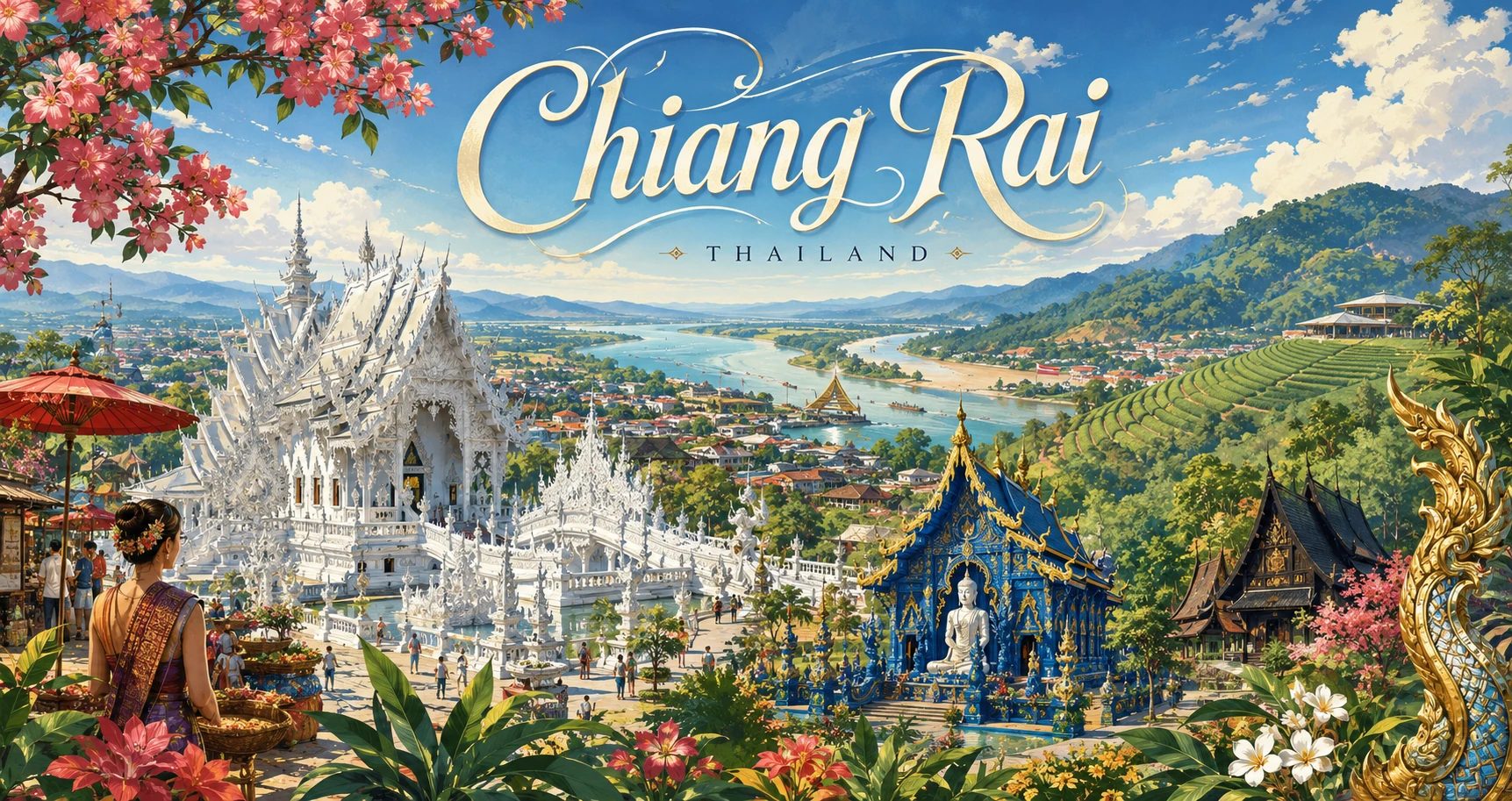
Chiang Rai pairs bold contemporary art temples with tea-covered hills, border landscapes, traditional religious sites, and the meeting of three countries.
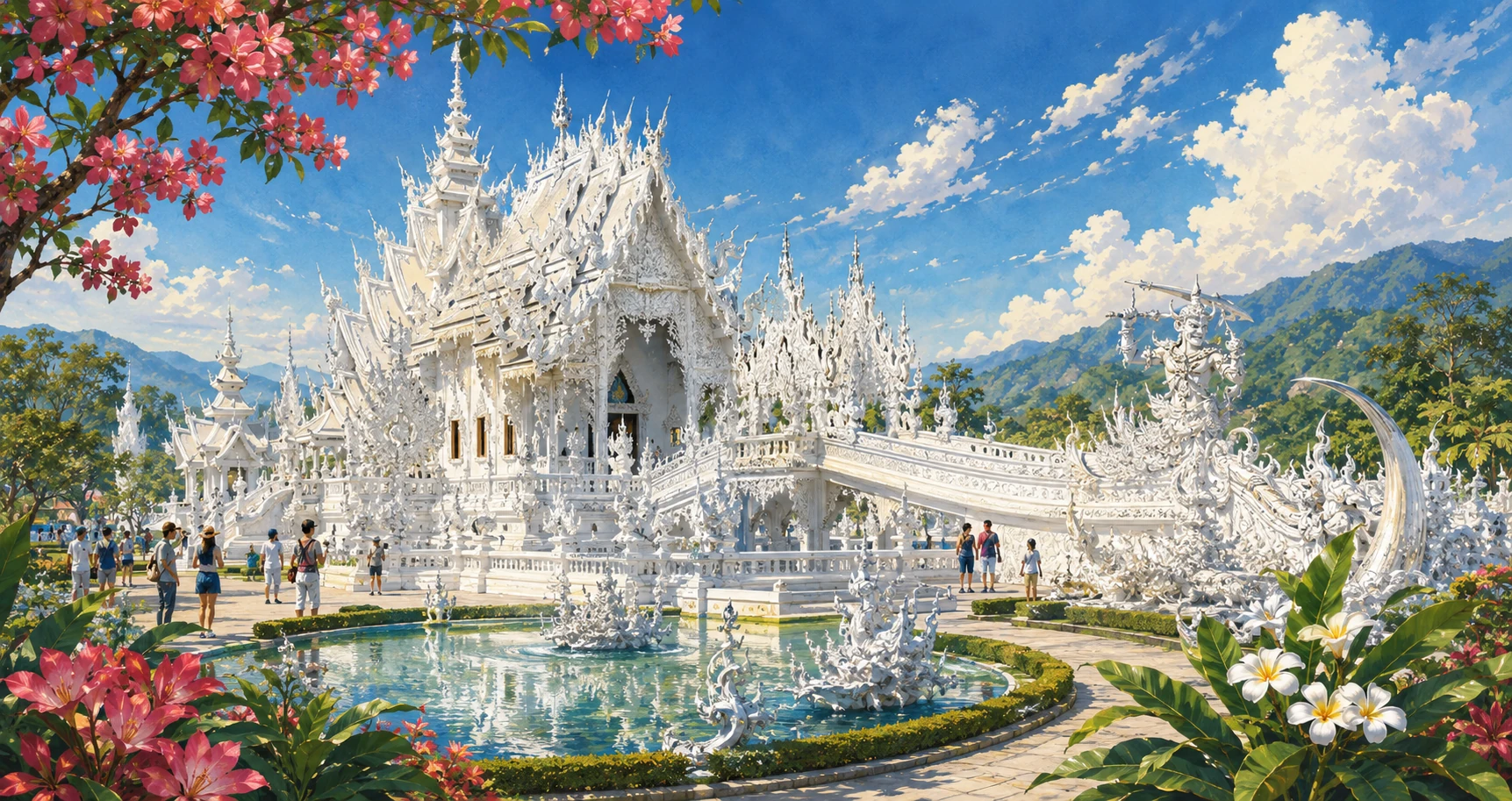
Chalermchai Kositpipat's dazzling contemporary temple turns Buddhist symbolism, mirrored mosaics, and surreal details into Chiang Rai's most recognizable landmark. Arrive early for calmer light and fewer groups.
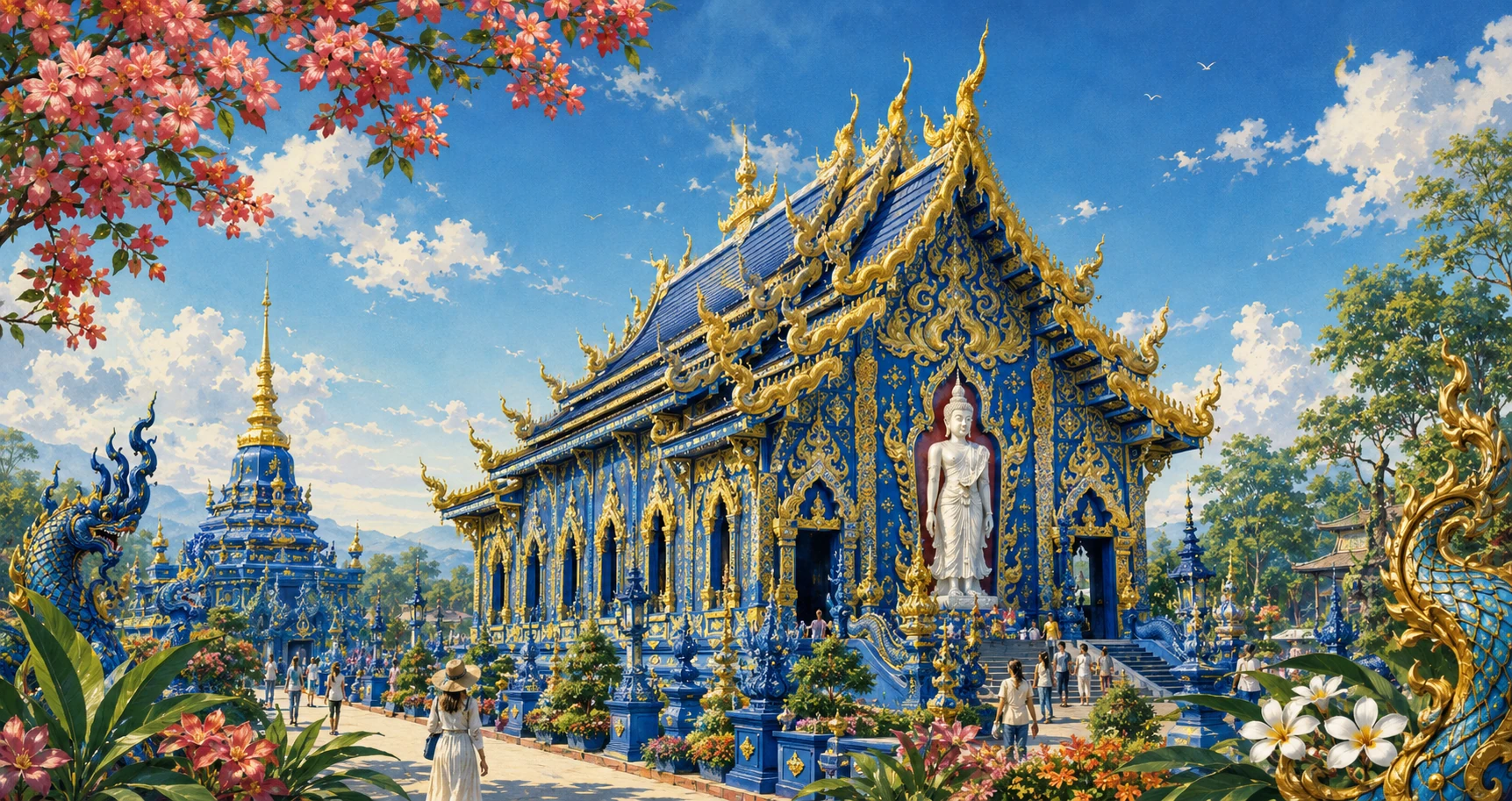
Deep cobalt walls, gold ornament, vivid murals, and a serene white Buddha give this active temple a completely different character from Wat Rong Khun.
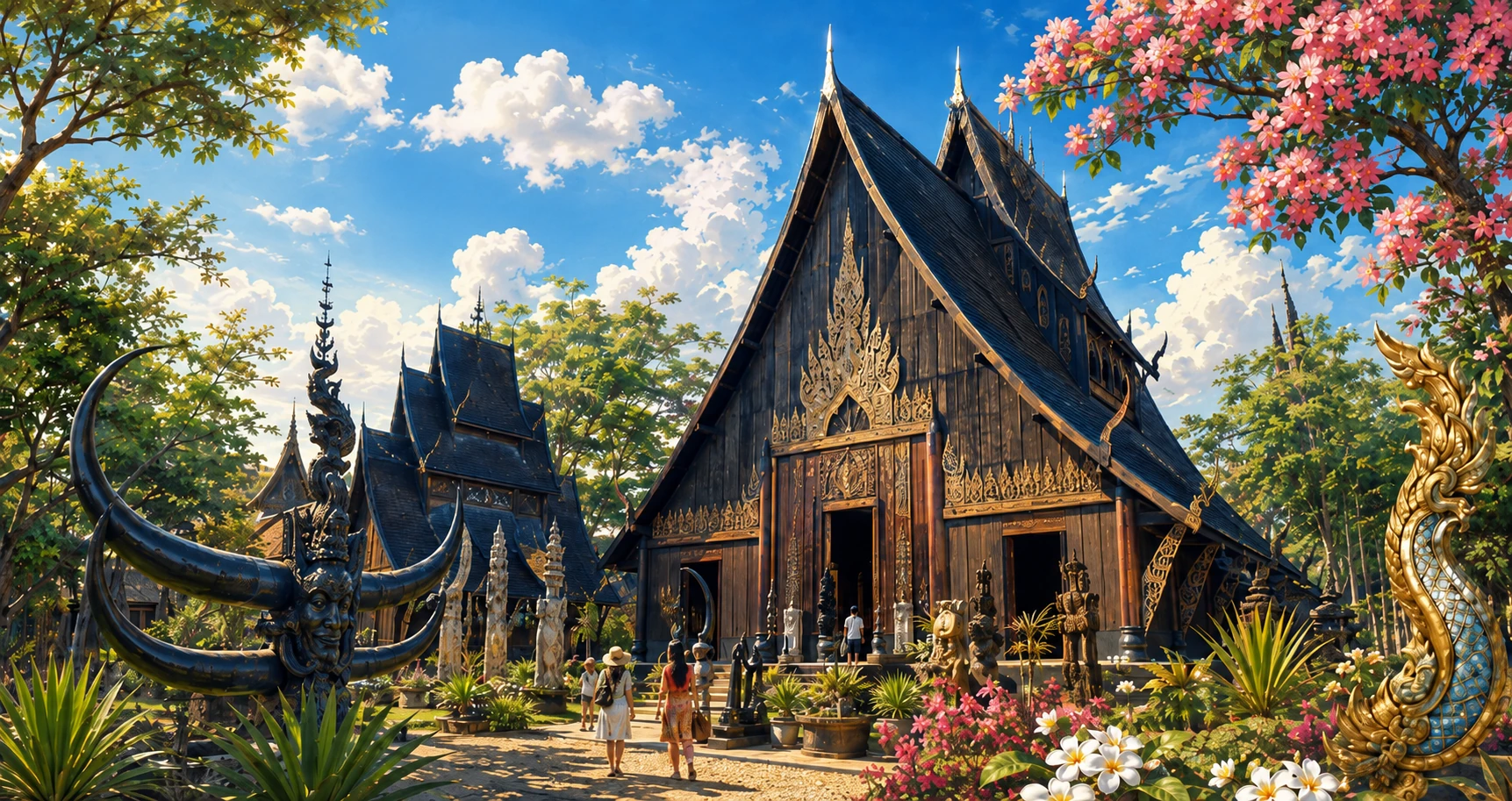
Artist Thawan Duchanee's dark timber complex combines monumental Lanna-inspired buildings, sculpture, furniture, animal forms, and provocative contemporary art.
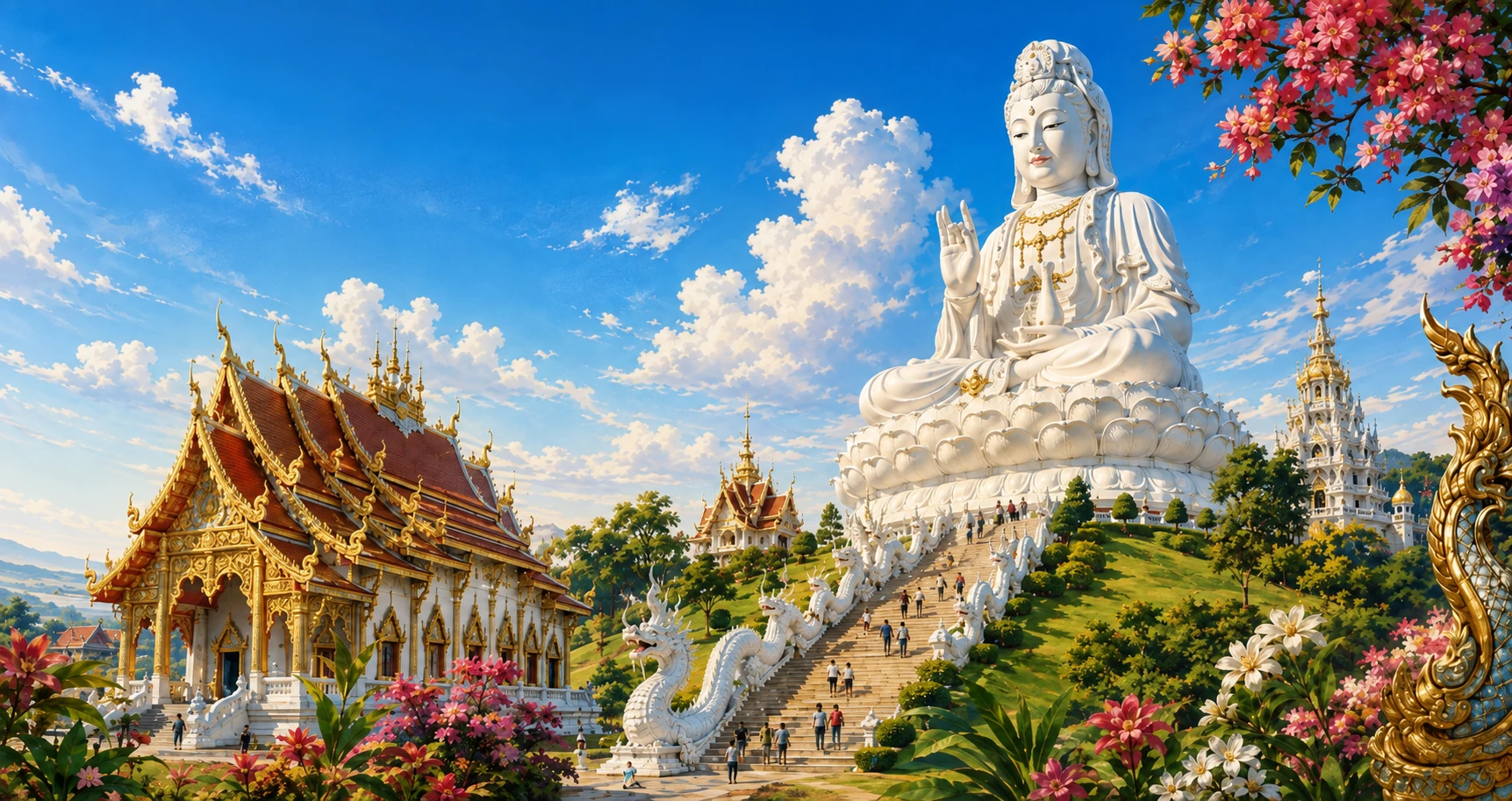
A vast Guanyin statue, nine-tier pagoda, and hilltop setting create one of northern Chiang Rai's most dramatic religious ensembles, especially in softer late-afternoon light.
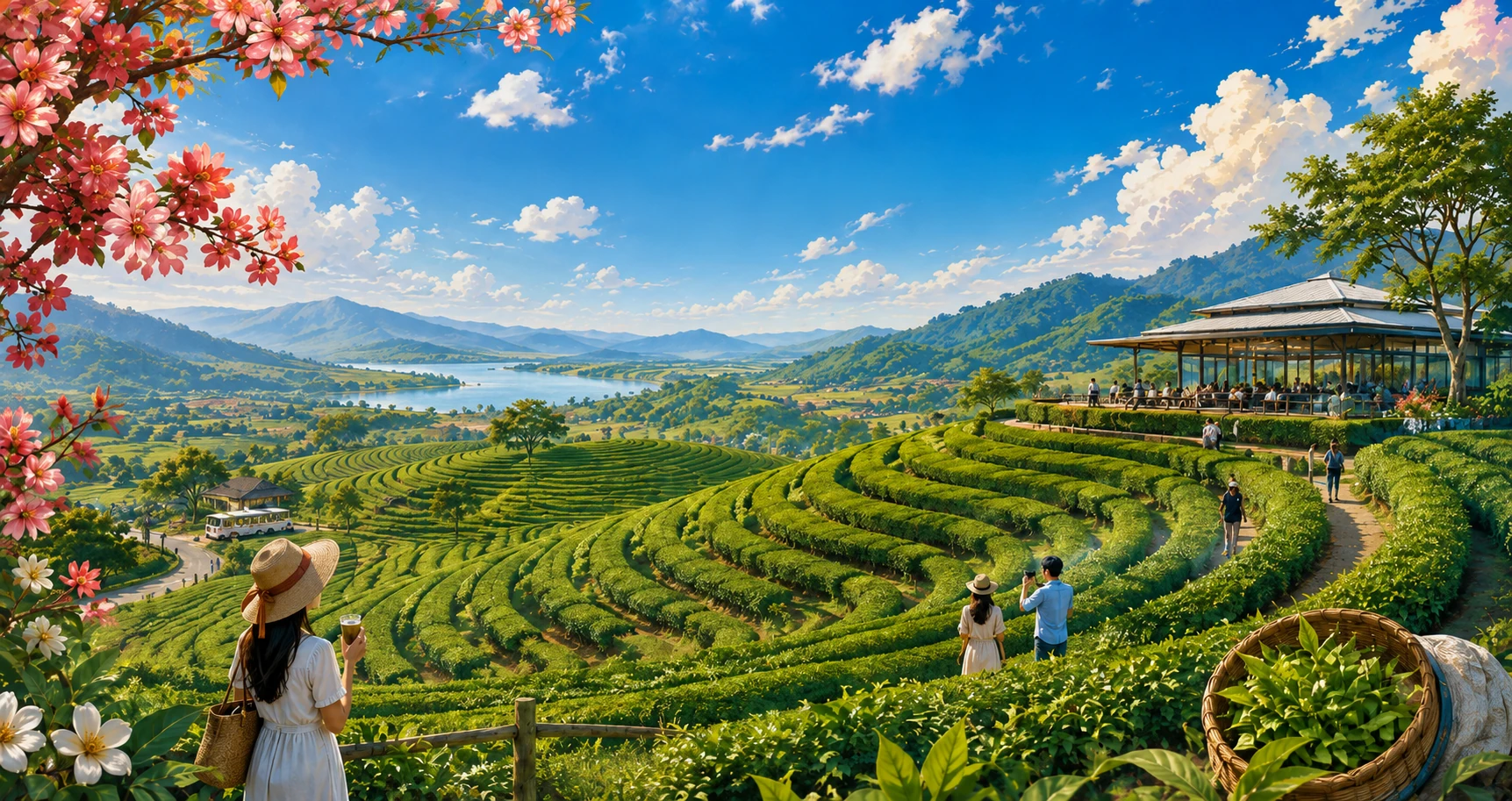
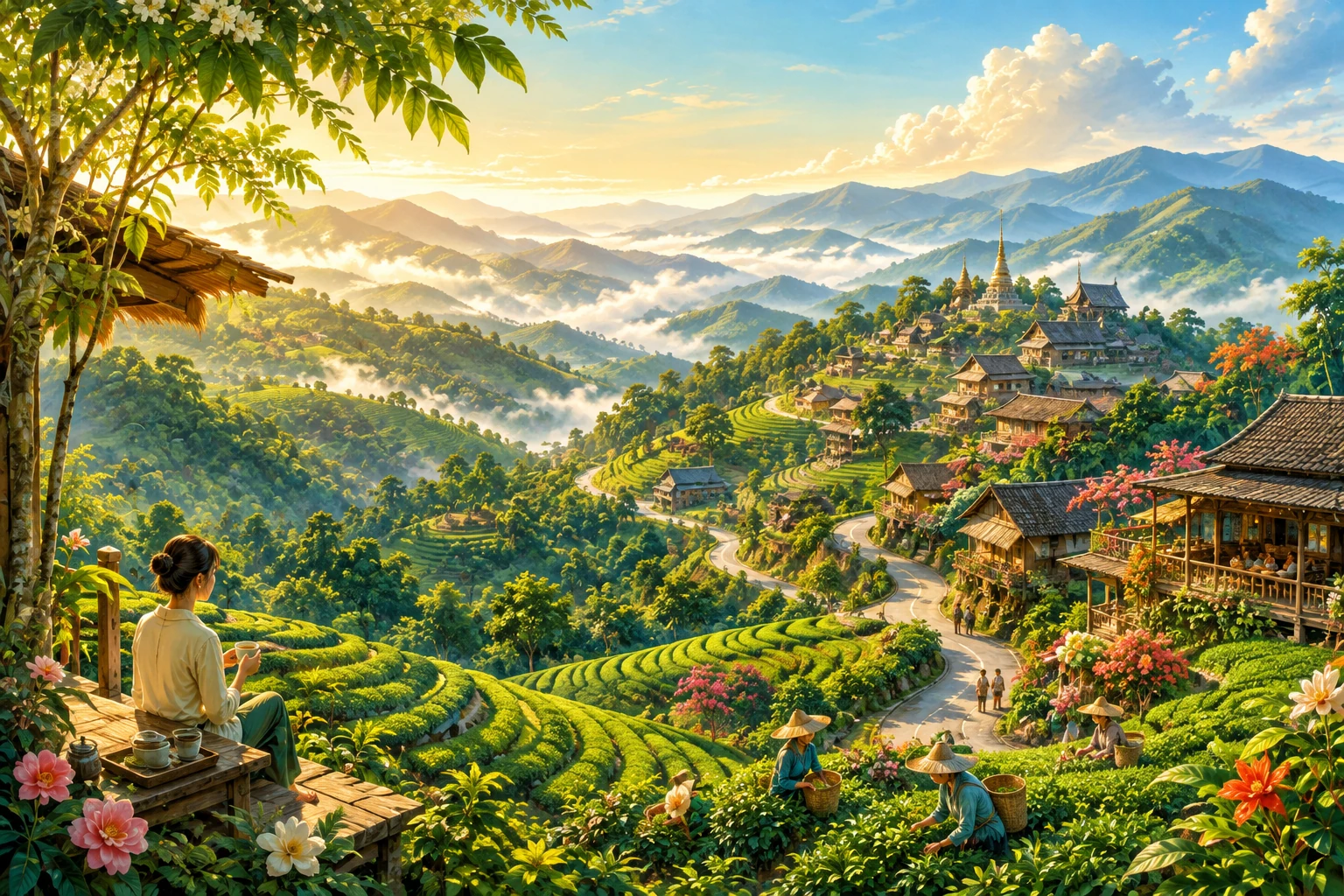
Curving green tea rows and mountain horizons make Choui Fong an easy scenic stop between Chiang Rai, Mae Chan, and Mae Salong. Pair the view with a focused tasting rather than a rushed photo.
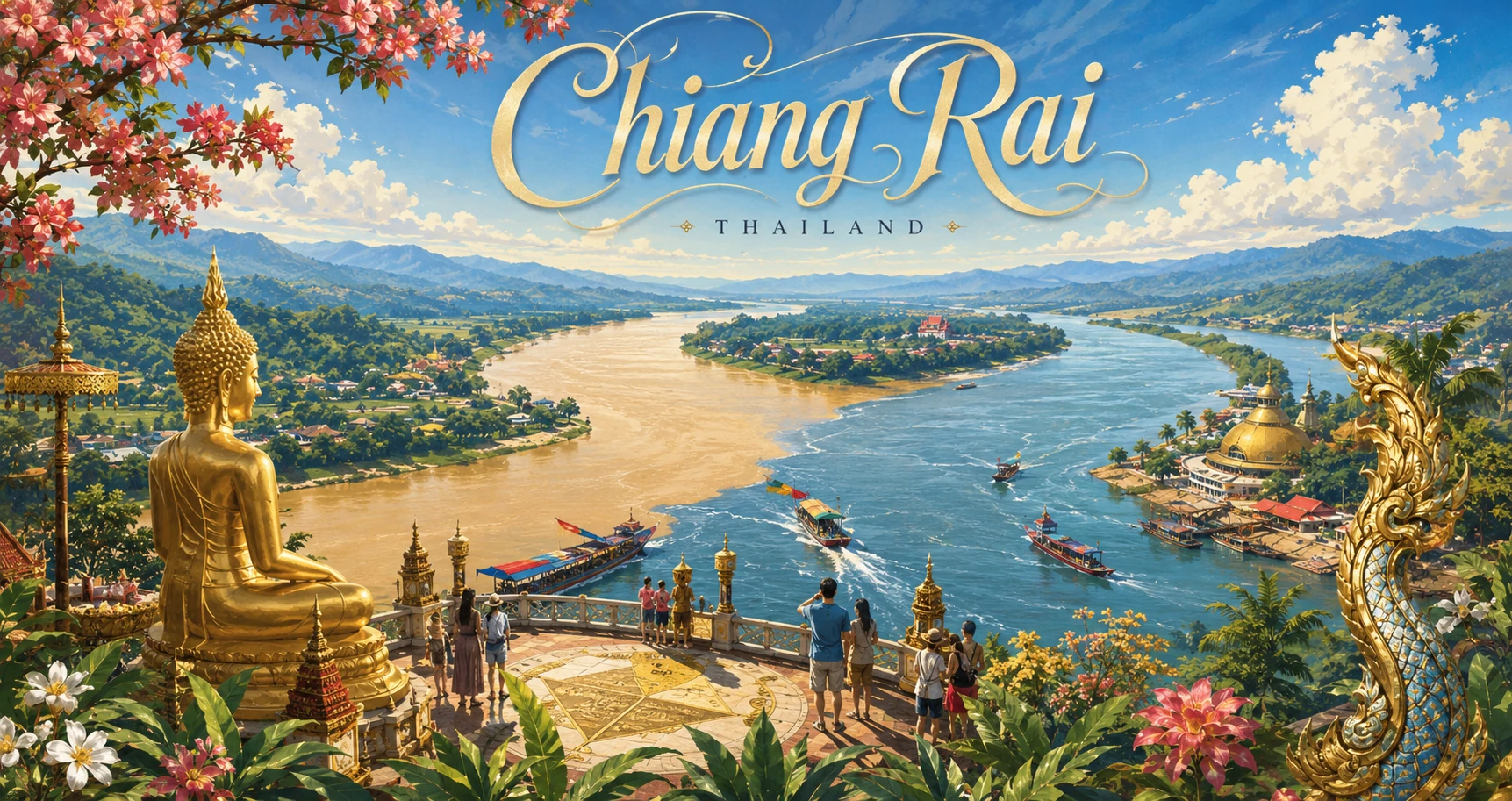
At Sop Ruak, Thailand faces Laos and Myanmar across the Mekong and Ruak rivers. The viewpoint, museum context, and optional boat ride make the long drive more meaningful.
Route tip: Group the White Temple with southern sights, then keep the Golden Triangle or Mae Salong for a separate northern day.
Four practical routes for Chiang Rai's art landmarks, compact center, tea country, borderlands, and scenic south.
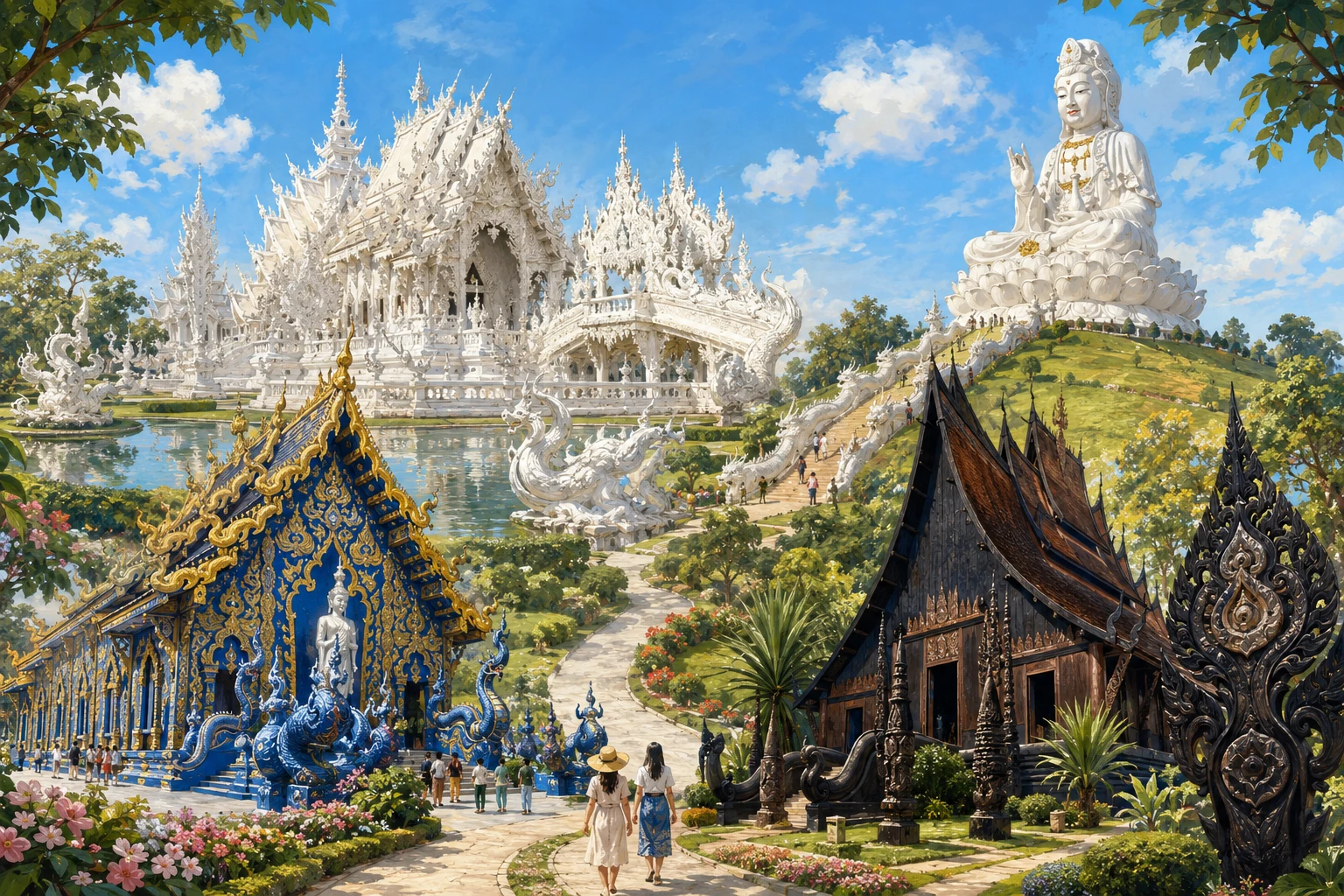
White Temple → Blue Temple → Baan Dam → Wat Huay Pla Kang
Best for: First-time visitors and artistic landmarks
Time: Full day
Do not miss: Starting early at Wat Rong Khun
Book temple route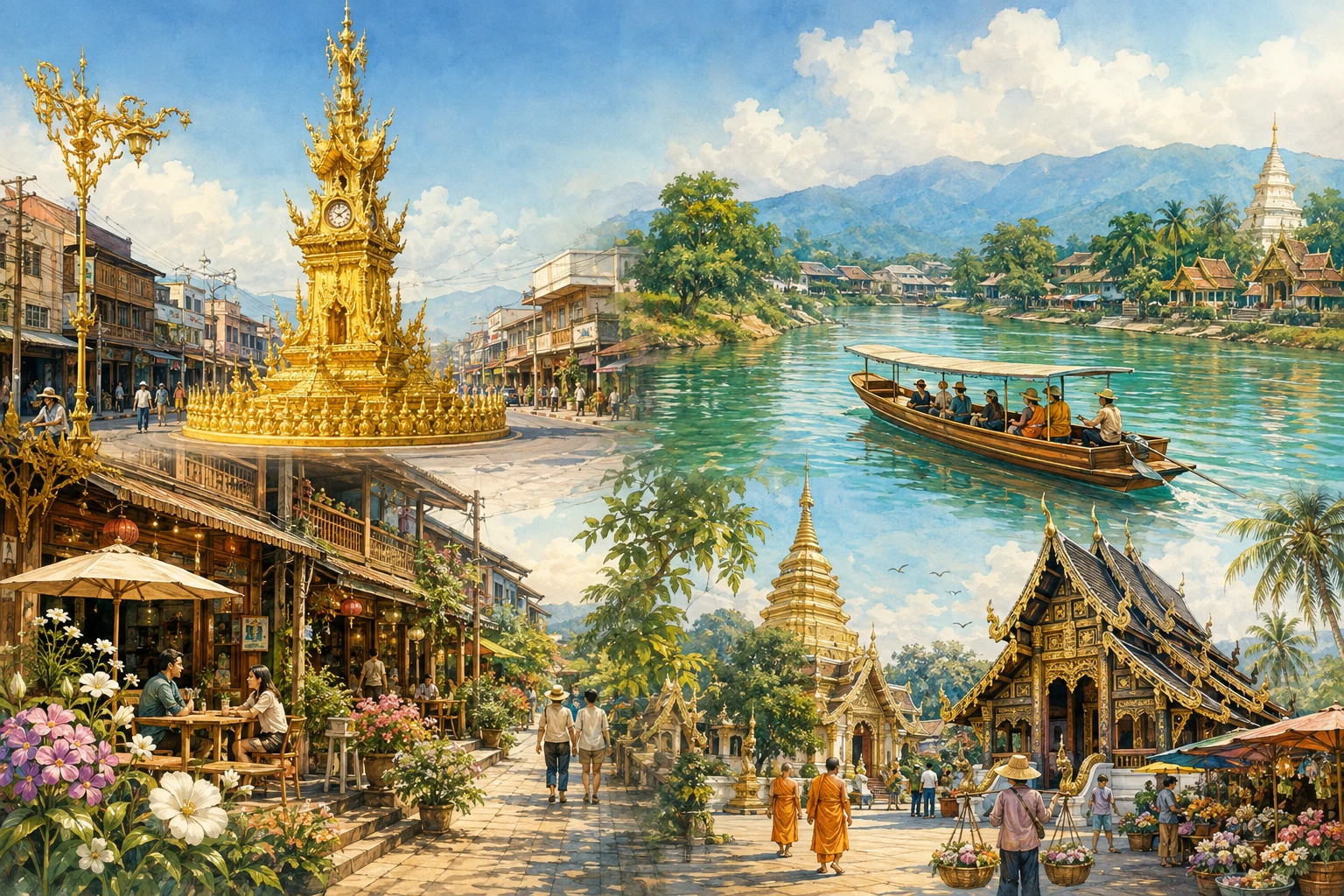
Clock Tower → Wat Phra Kaew → riverside → Blue Temple → Night Bazaar
Best for: A relaxed city day without long transfers
Time: Half day + evening
Do not miss: The Clock Tower light show after dark
Plan a private city tour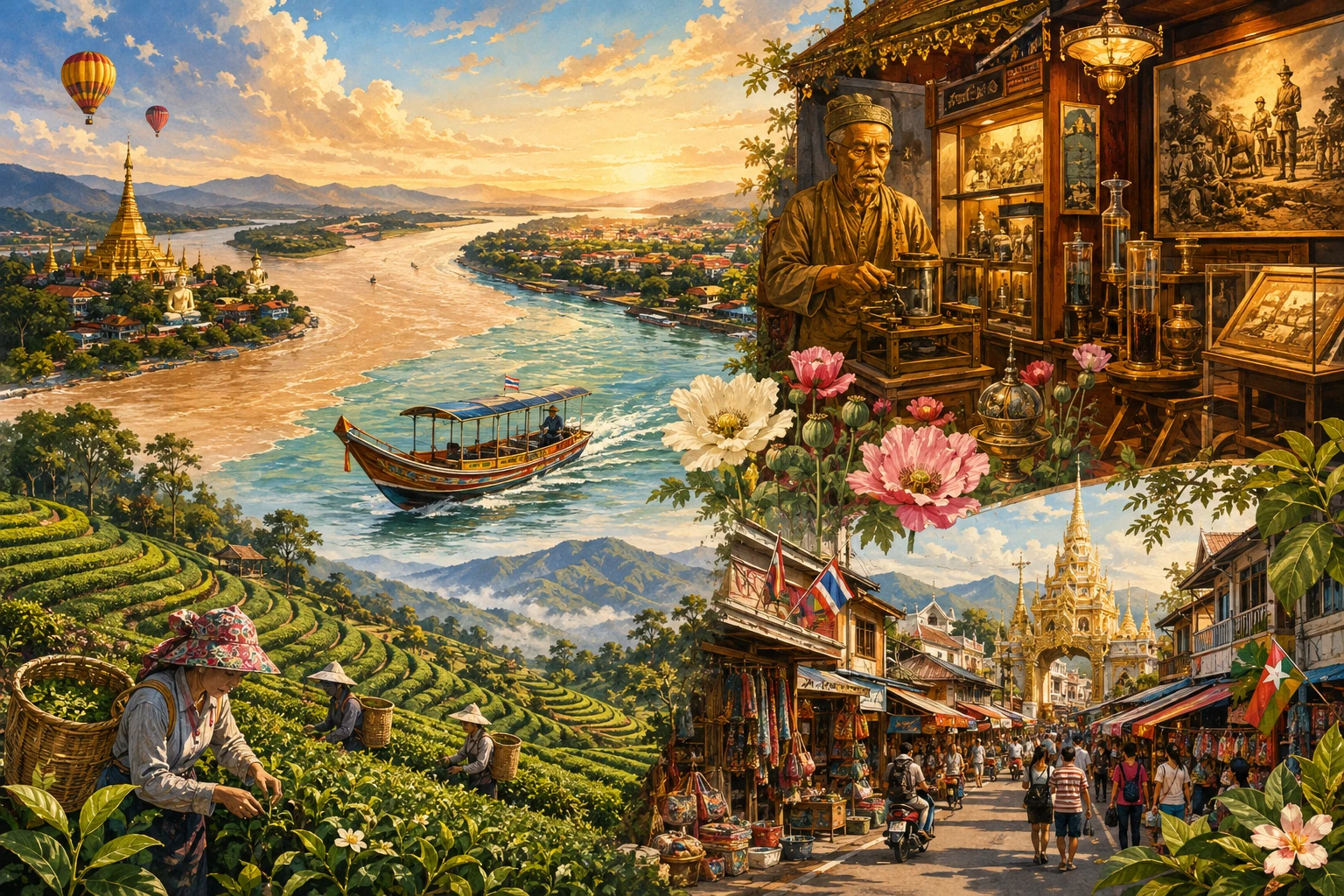
Chiang Rai → Choui Fong → Mae Sai → Golden Triangle → Chiang Saen
Best for: Tea landscapes, border history, and the Mekong
Time: Full day
Do not miss: Leaving enough time for museum context
Book Golden Triangle day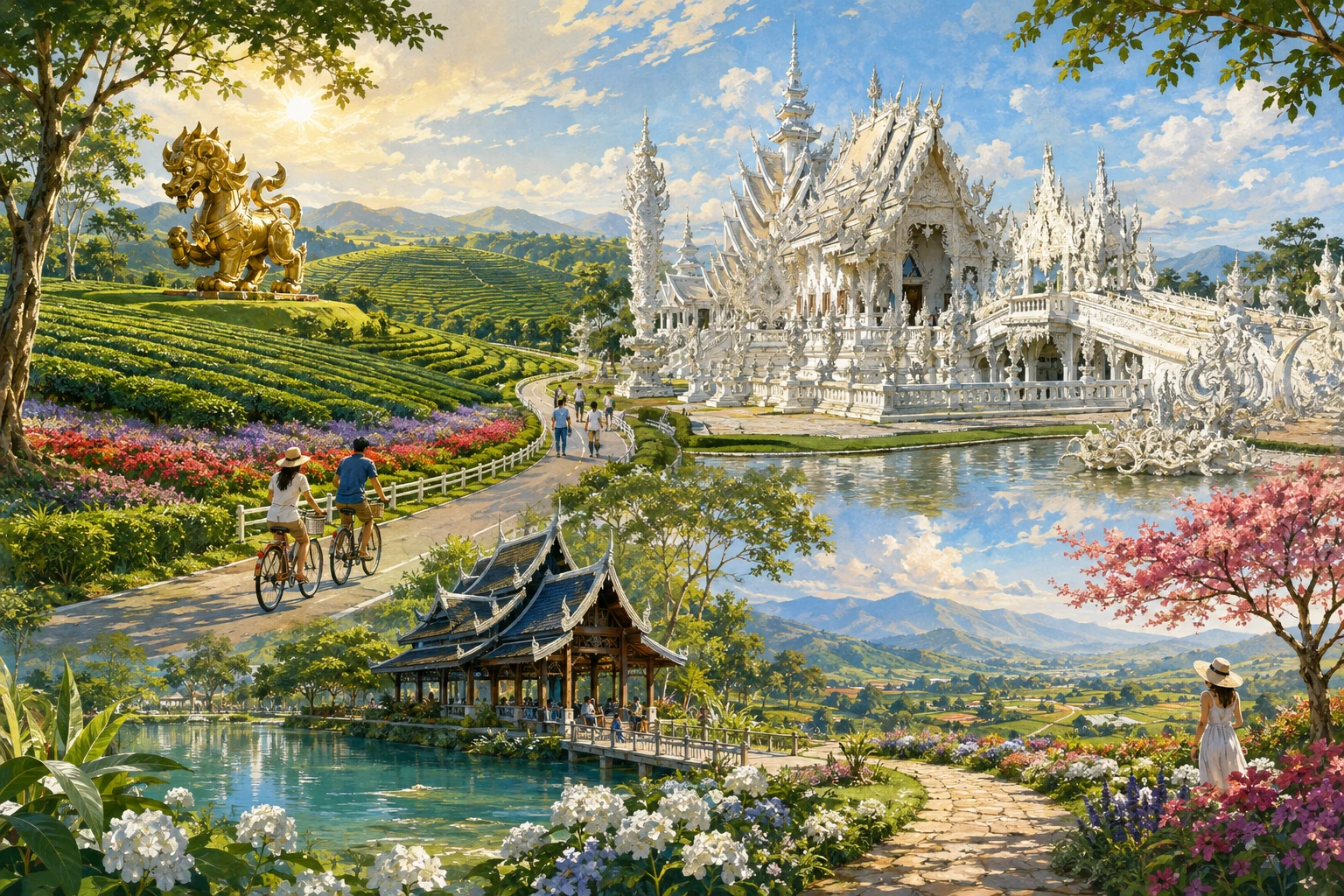
Chiang Rai → Singha Park → White Temple → Khun Korn Waterfall
Best for: A flexible mix of gardens, art, and nature
Time: Full day
Do not miss: Checking waterfall conditions in rainy weather
Customize a Chiang Rai dayTour striking temples, take to the river, choose ethical wildlife, learn northern cooking, and try Thailand's national martial art.
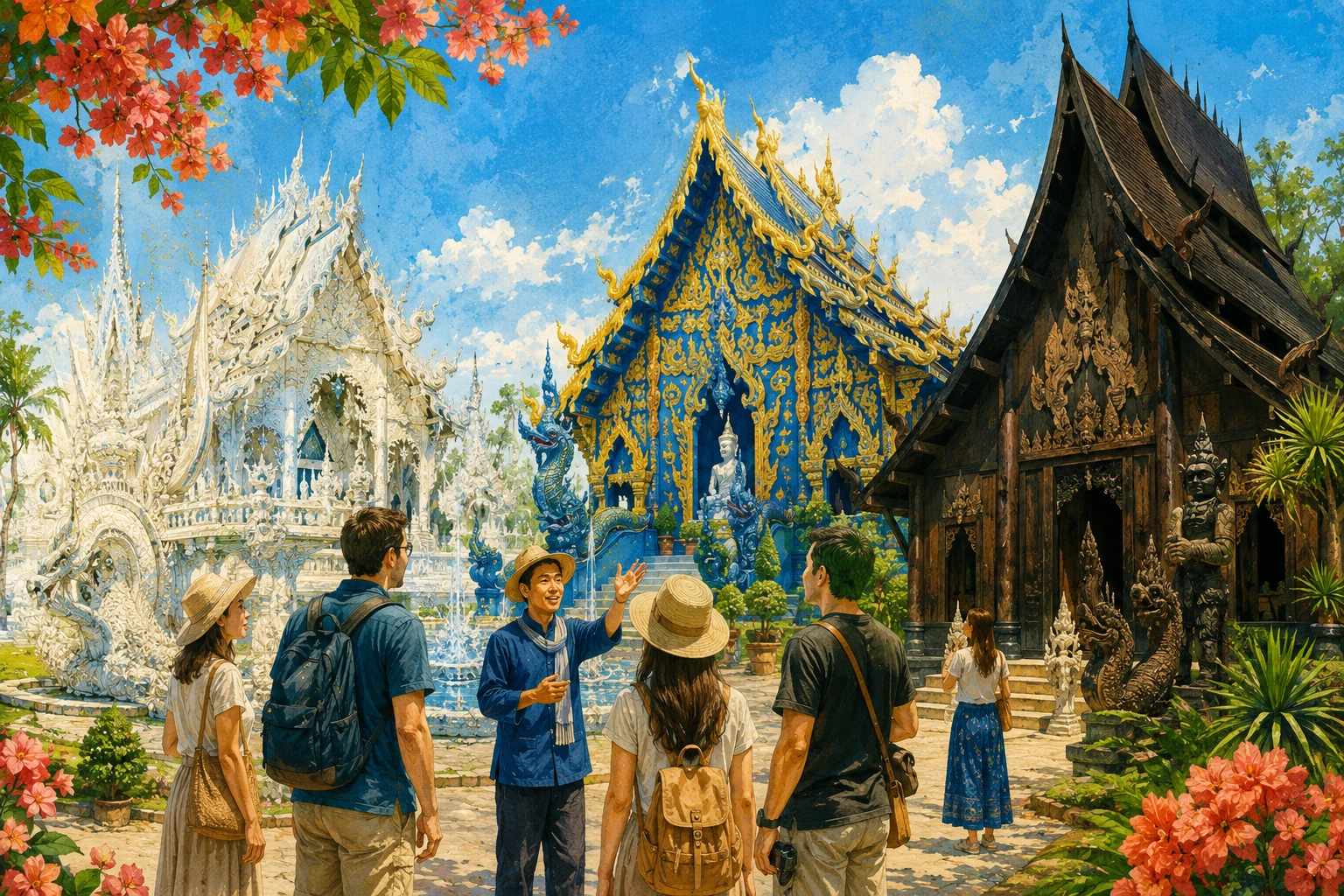
Link Chiang Rai's three most distinctive art landmarks with a guide who can explain their symbolism, artists, and very different visual languages.
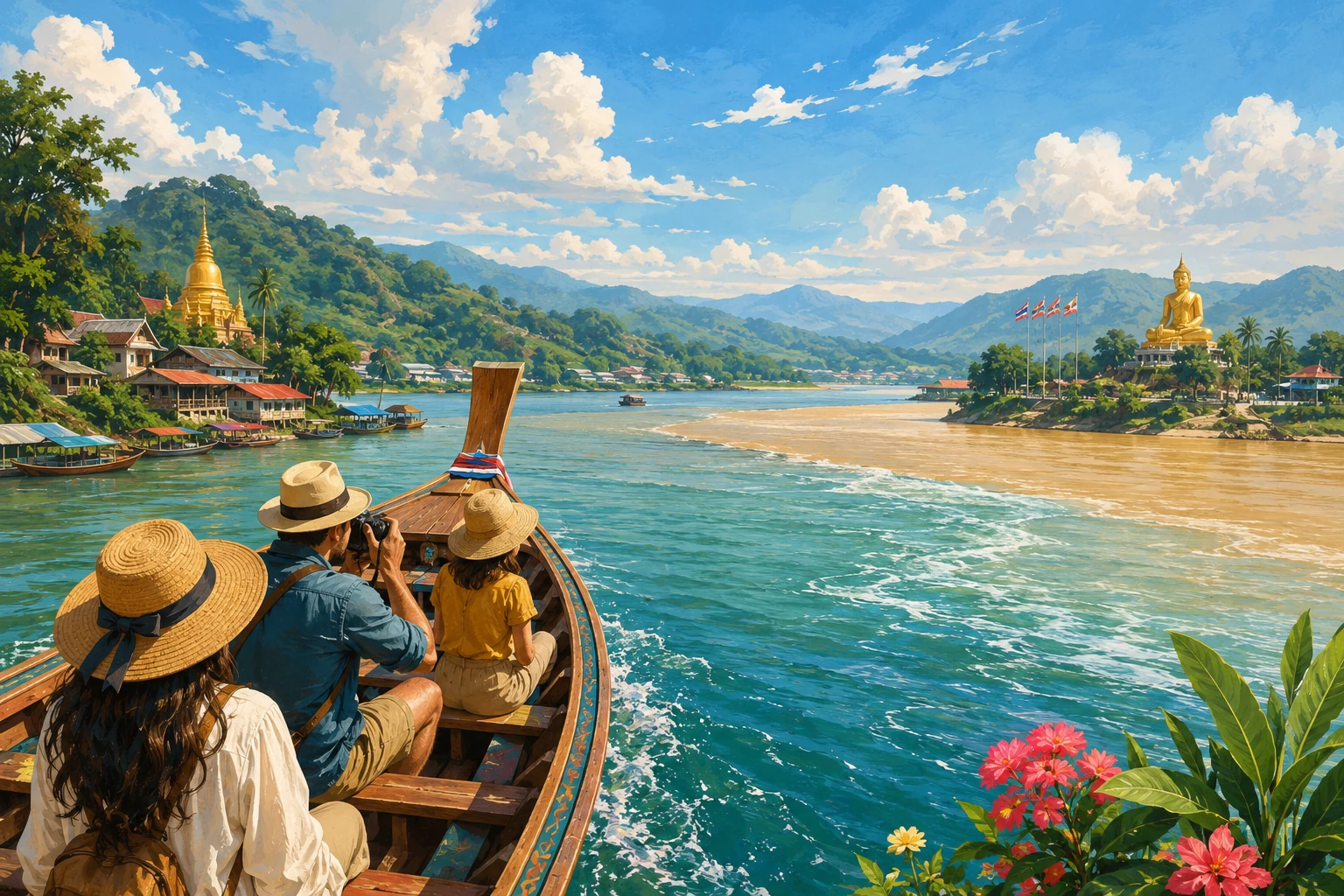
See the border landscape from river level on a longtail-boat segment, then add viewpoint and museum time so the experience is more than a quick border photo.
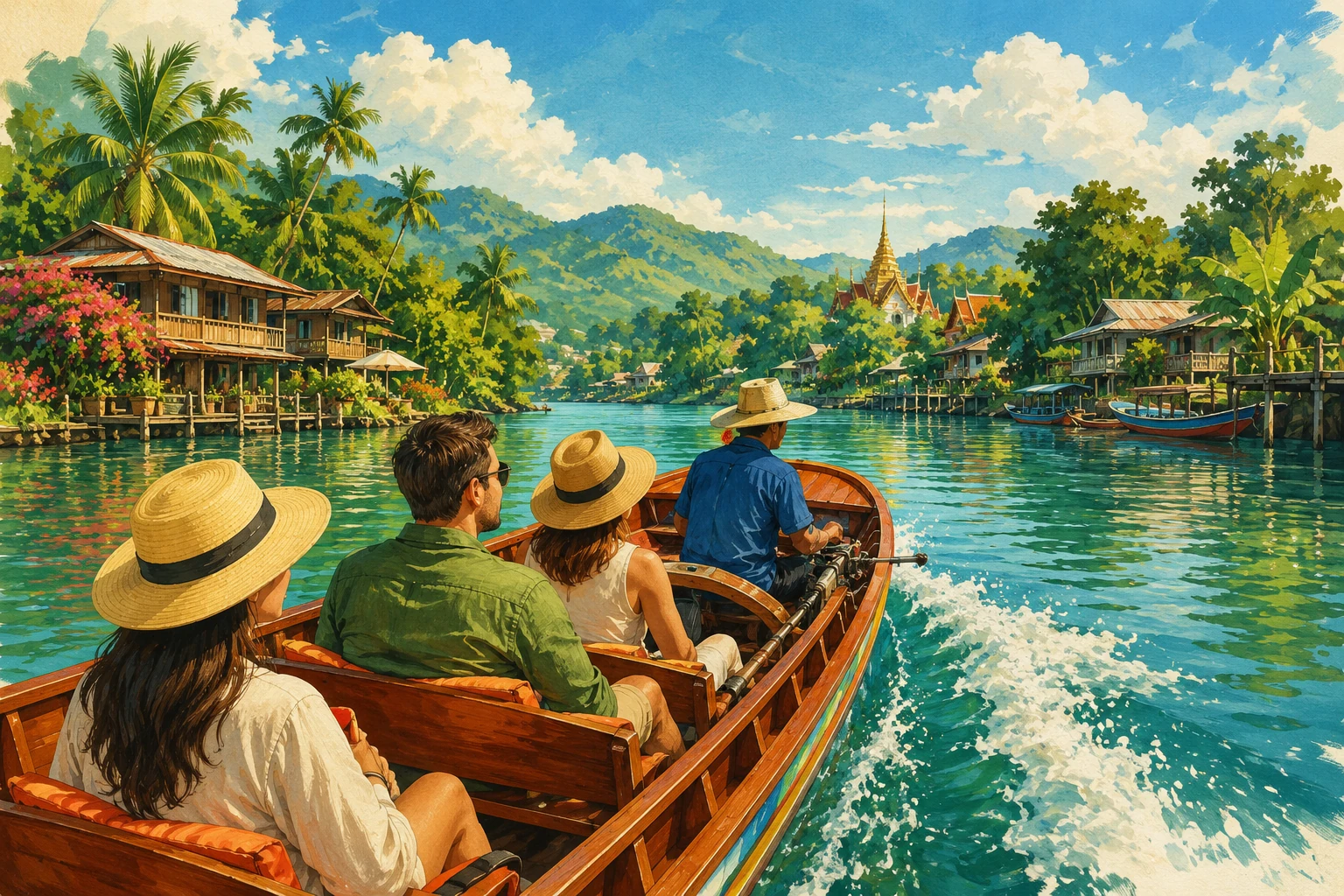
Leave the road for a slower view of green riverbanks, rural settlements, and northern hills, often paired with hot springs or a temple stop.
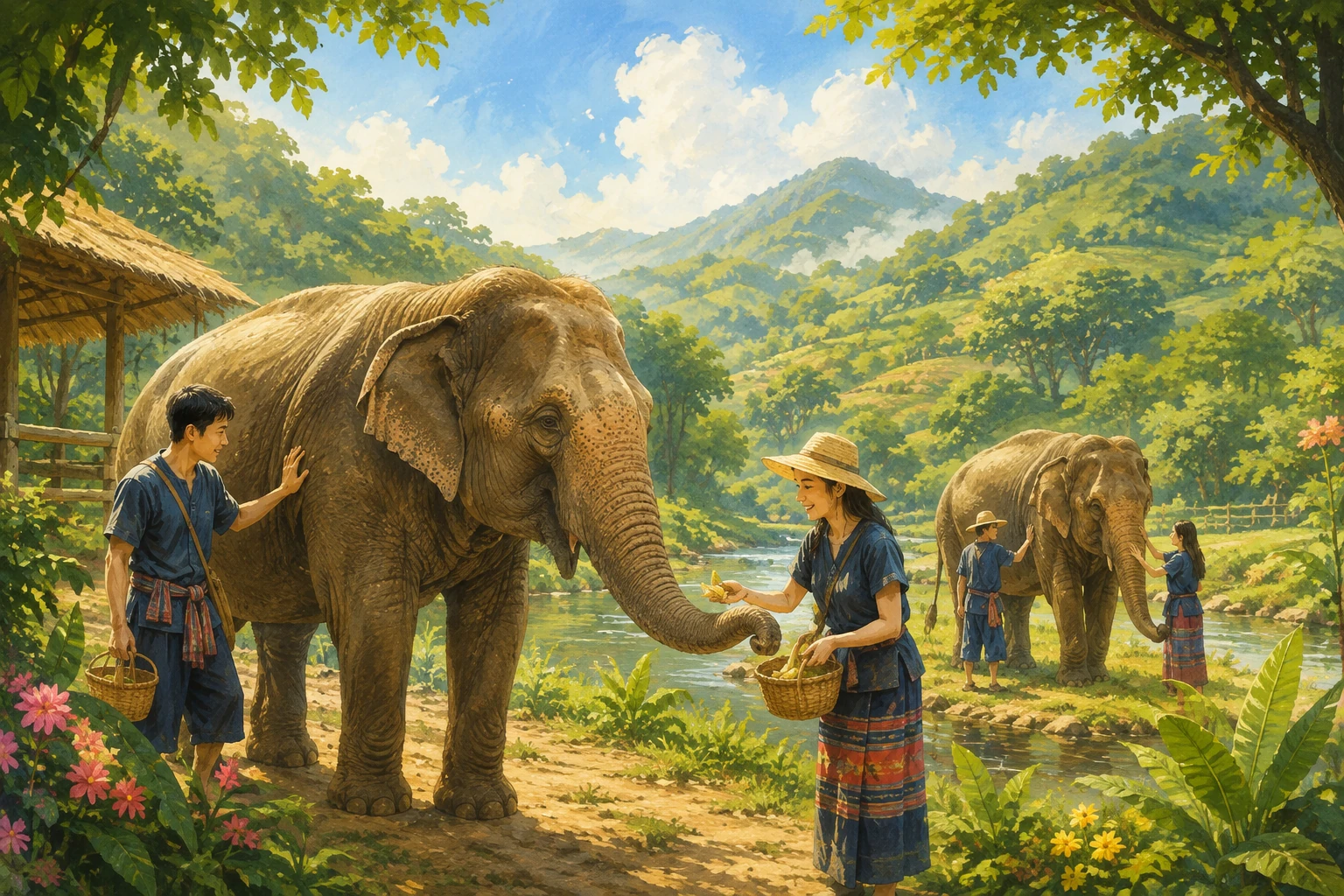
Choose an observation-led sanctuary that centers welfare, natural behavior, education, and responsible feeding instead of riding, shows, or forced bathing.
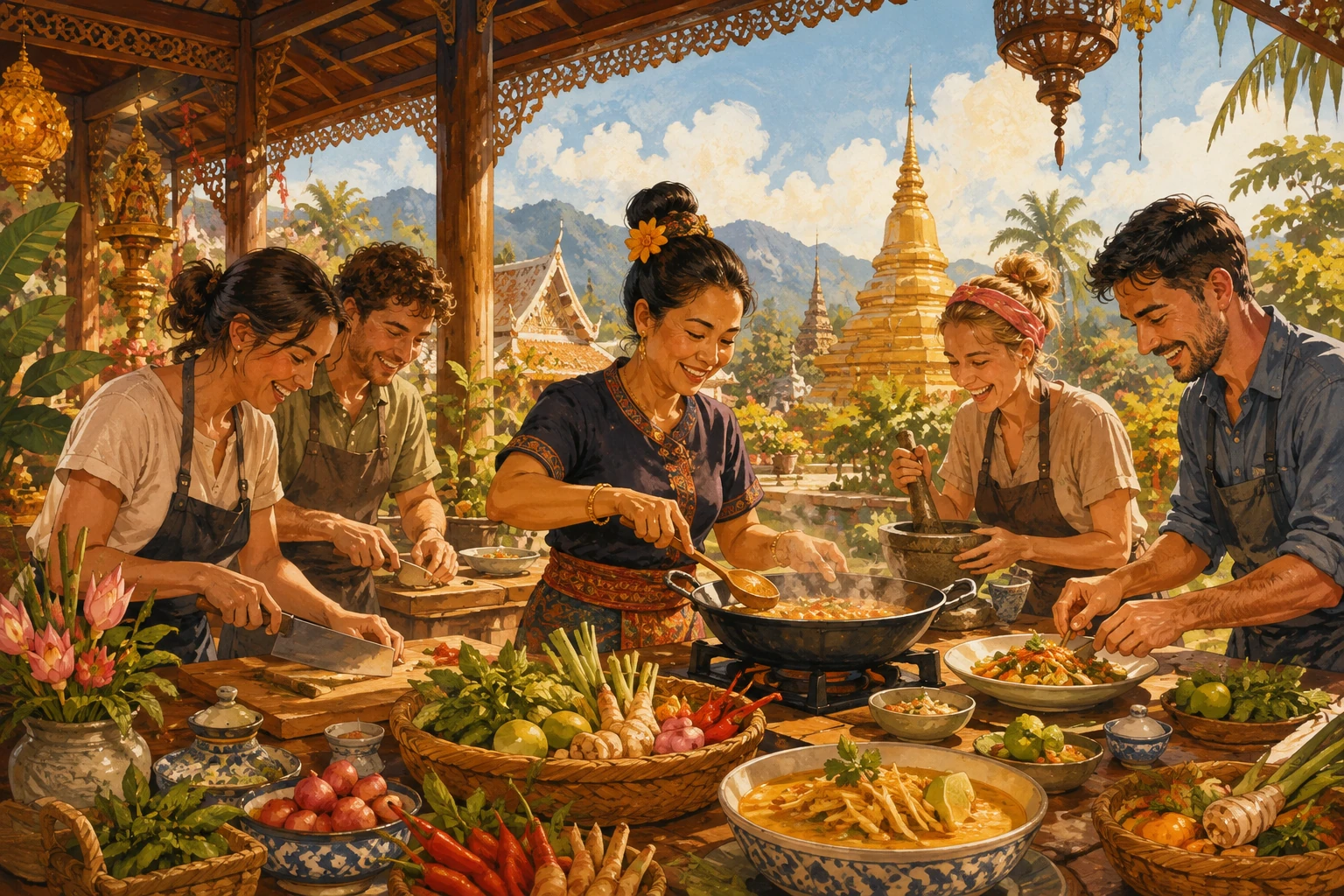
Start at a local market, learn the ingredients behind curries and stir-fries, then cook several dishes in a small hands-on class outside the busiest tourist circuit.
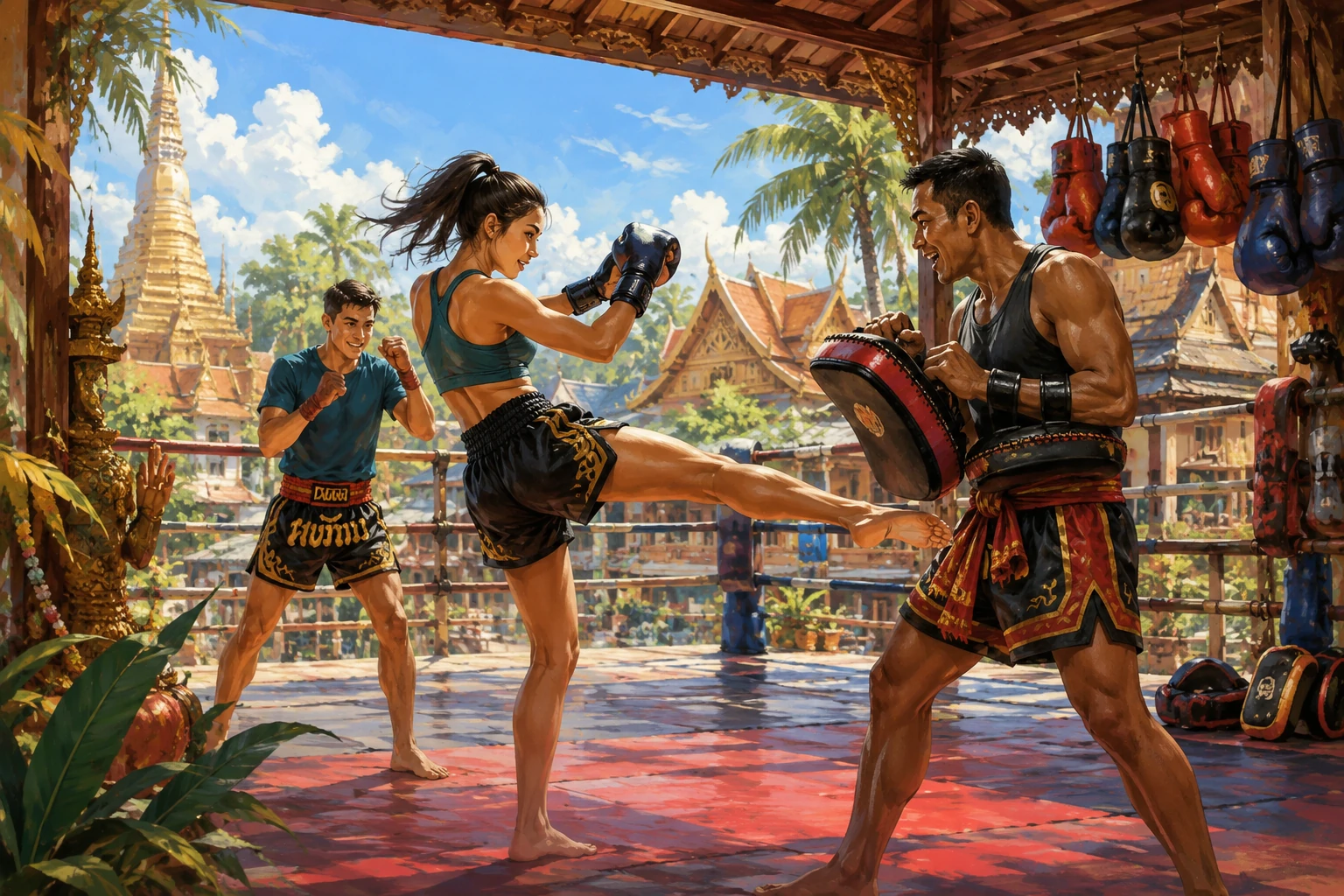
Learn stance, basic punches, kicks, knees, and pad work at a local gym in a session adapted for first-timers and different fitness levels.
Local rhythm: Separate long countryside days with a slower city morning, riverside pause, or evening market.
Choose a real Chiang Rai base based on the trip you want — central walkability, riverside calm, or practical airport and northern-road access.
Best for: First visits, walking, restaurants, transport, and easy evening markets
Why stay here: This central base puts the Clock Tower, bus terminal, Night Bazaar, and many cafés within an easy walk
Good to know: The most central streets can feel busy and less retreat-like
Find central Chiang Rai hotelsBest for: Quieter evenings, resort-style stays, river views, and Blue Temple access
Why stay here: Riverside properties trade immediate downtown access for space, calm, and a more scenic setting
Good to know: You will use a taxi or ride app for most central dining and sightseeing
Find riverside hotelsBest for: Early flights, road trips north, longer stays, and travelers with a car
Why stay here: The northern edge of the city is practical for CEI airport and departures toward Mae Chan or Mae Salong
Good to know: It is not a walkable base for the Clock Tower or Night Bazaar
Find Ban Du hotelsBase tip: Central Chiang Rai is compact, but most headline sights still require transport; choose atmosphere over tiny distance differences.
Six practical choices for a first Chiang Rai trip.
Enough time for the city, art temples, one northern route, and a slower river or food experience.
Cooler, drier days suit temples and mountain drives; early mornings can feel fresh.
Choose central walkability, a calm river setting, or practical airport and road-trip access.
Walk the compact center, use rides for separate sights, and book a driver or tour for countryside days.
Reserve structured experiences while keeping one city evening flexible.
Use cooler hours for temples and outdoor sights, then slow down before the Night Bazaar.
Small practical habits that make Chiang Rai easier, calmer, and more rewarding.
Headline sights lie in different directions, so grouping them matters more than ticking boxes.
Tip: Keep city, southern landmarks, and far-north routes on separate days.
Central Chiang Rai is walkable in pockets, but the major temples and countryside sights are spread out.
Tip: A private driver can be efficient when four people share the cost.
White Temple may feel like an art attraction, but many sites remain active religious places.
Tip: Cover shoulders and knees and remove shoes where requested.
Northern winter mornings and mountain areas can feel much cooler than Bangkok.
Tip: Carry a light layer from November through February.
Regional burning can affect visibility and air quality during parts of the late dry season.
Tip: Review current air-quality readings before outdoor-heavy days.
Markets, rural cafés, local boats, and small vendors may not accept foreign cards.
Tip: Carry small notes without keeping all money together.
The central Clock Tower becomes an evening focal point with scheduled light-and-music displays.
Tip: Combine it with dinner and the nearby Night Bazaar.
The Golden Triangle is a living border region with complex migration and drug-trade history.
Tip: Choose experiences that add context rather than staged cultural encounters.
Avoid the route-planning, timing, animal-welfare, weather, and transport mistakes that weaken a first Chiang Rai trip.
A long return drive compresses temples and countryside into a rushed checklist.
Instead: Stay at least two nights when your itinerary allows.
Golden Triangle, Mae Salong, White Temple, and the city lie in different directions.
Instead: Use separate north, south, and city routes.
Heat, bright glare, and group arrivals can flatten the experience.
Instead: Arrive early and continue south or back toward the city.
Riding, tricks, and forced contact are incompatible with welfare-led tourism.
Instead: Look for observation, education, and transparent animal-care standards.
Mae Salong and Doi Tung involve winding roads and scenic stops.
Instead: Leave margin, avoid late starts, and use an experienced driver.
Buses do not form a simple sightseeing network between rural landmarks.
Instead: Arrange a tour, driver, or carefully planned rental vehicle.
Focusing only on White Temple and the Golden Triangle misses markets, local temples, river life, and evening atmosphere.
Instead: Reserve one relaxed city half-day and evening.
Heavy rain affects waterfalls and roads, while dry-season smoke can obscure views.
Instead: Check current conditions and keep one flexible day.