CONNECTIVITY
Get an eSIM
Set up mobile data before arrival for maps, hotel details, translations, and regional transport updates.
THAILAND HERITAGE GUIDE
Ancient temples, lotus ponds, quiet cycling lanes, and the first capital of Siam.
Plan Sukhothai around the cooler hours: explore the central ruins early, slow down for the museum or countryside at midday, and return to the old city when the light softens.
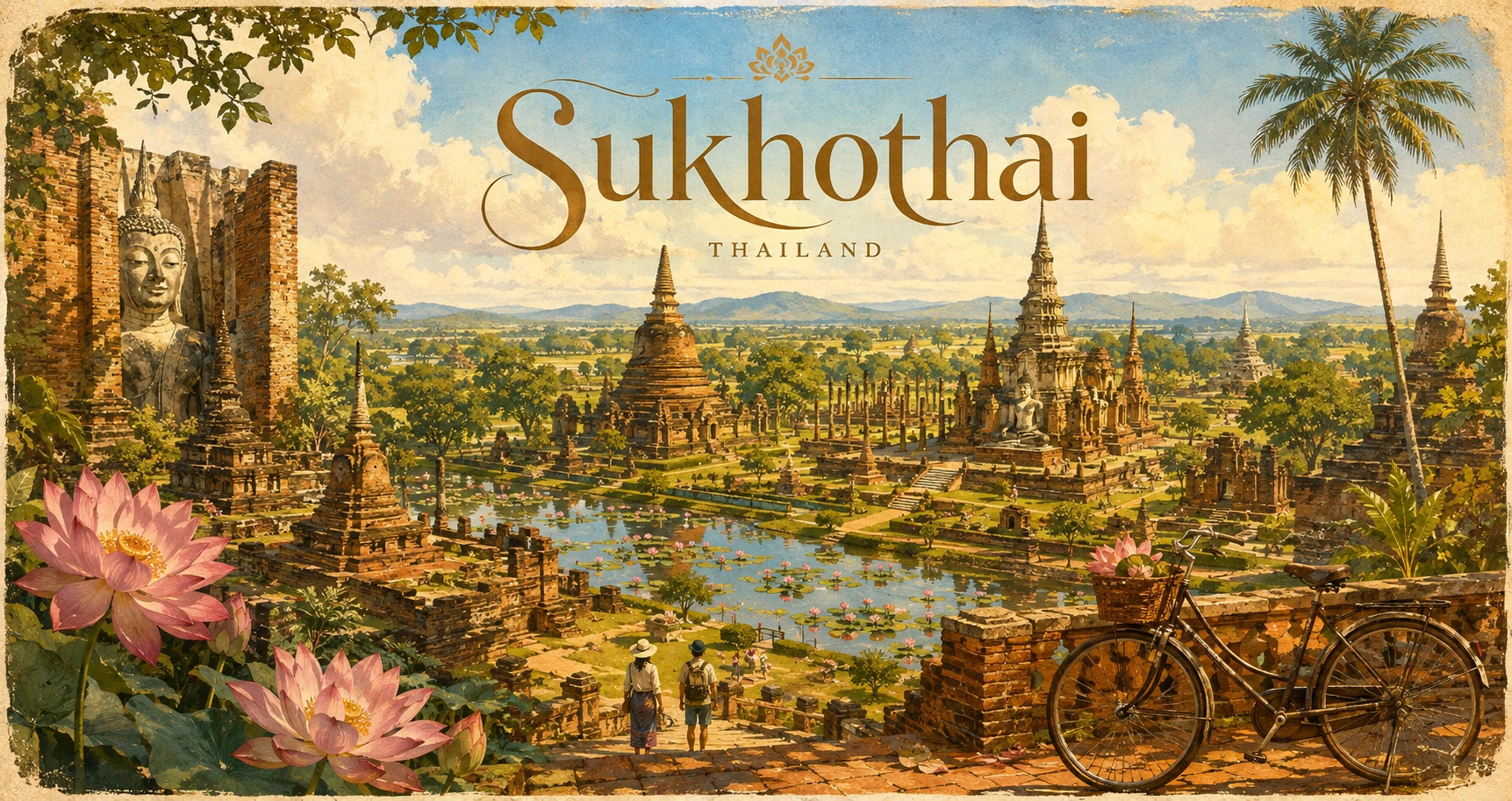
Sort out connectivity and the Bangkok–Sukhothai journey first — then build the temple days around cooler light and realistic regional transport.
CONNECTIVITY
Set up mobile data before arrival for maps, hotel details, translations, and regional transport updates.
GETTING THERE
Compare Bangkok to Sukhothai flights before coordinating airport transport and your first hotel night.
OVERLAND
Compare the shared intercity bus option between Bangkok and Sukhothai when flying does not suit your route.
ARRIVAL
Plan the connection between Sukhothai Airport, New Sukhothai, and the historical park before arrival.
Sukhothai pairs monumental Buddha images and lotus-bud chedis with museum context, forested outer temples, and a quieter sister city to the north.
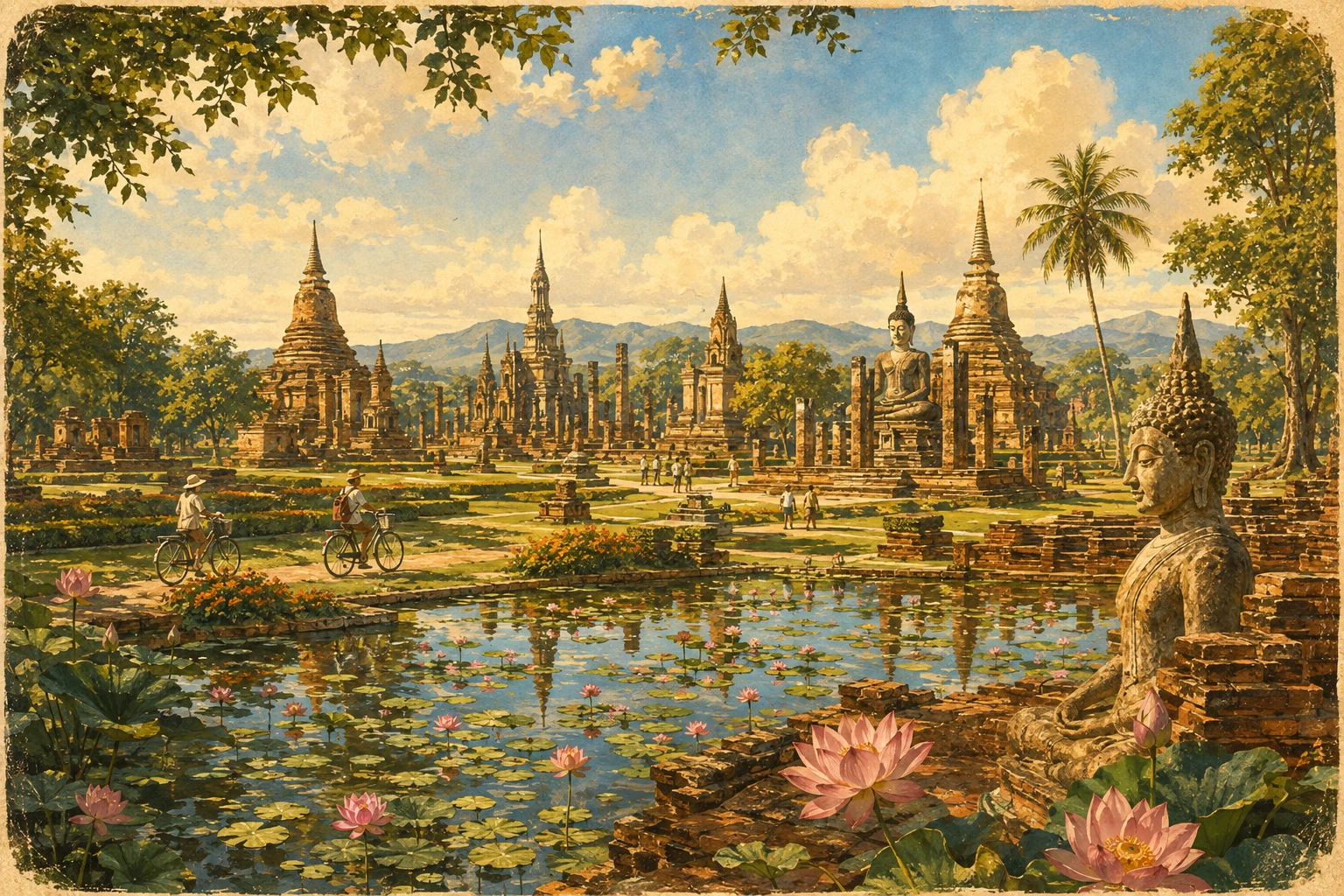
Thailand's first capital survives as a broad landscape of lotus ponds, brick chedis, Buddha images, and quiet lanes. Start early and explore the central zone before the heat builds.
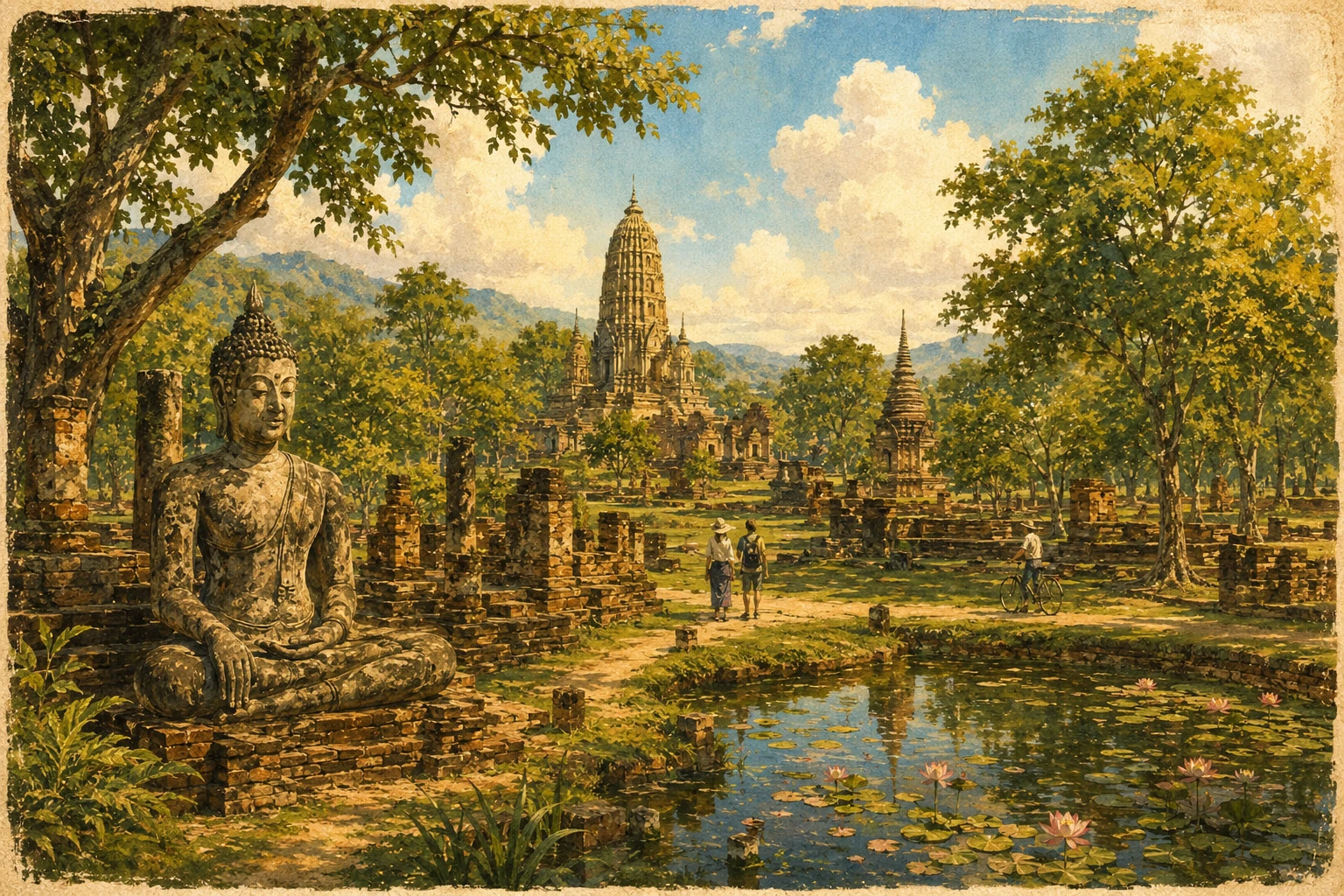
The spiritual and ceremonial heart of the old kingdom combines lotus-bud chedis, standing Buddhas, columns, and reflective water at the center of the historical park.
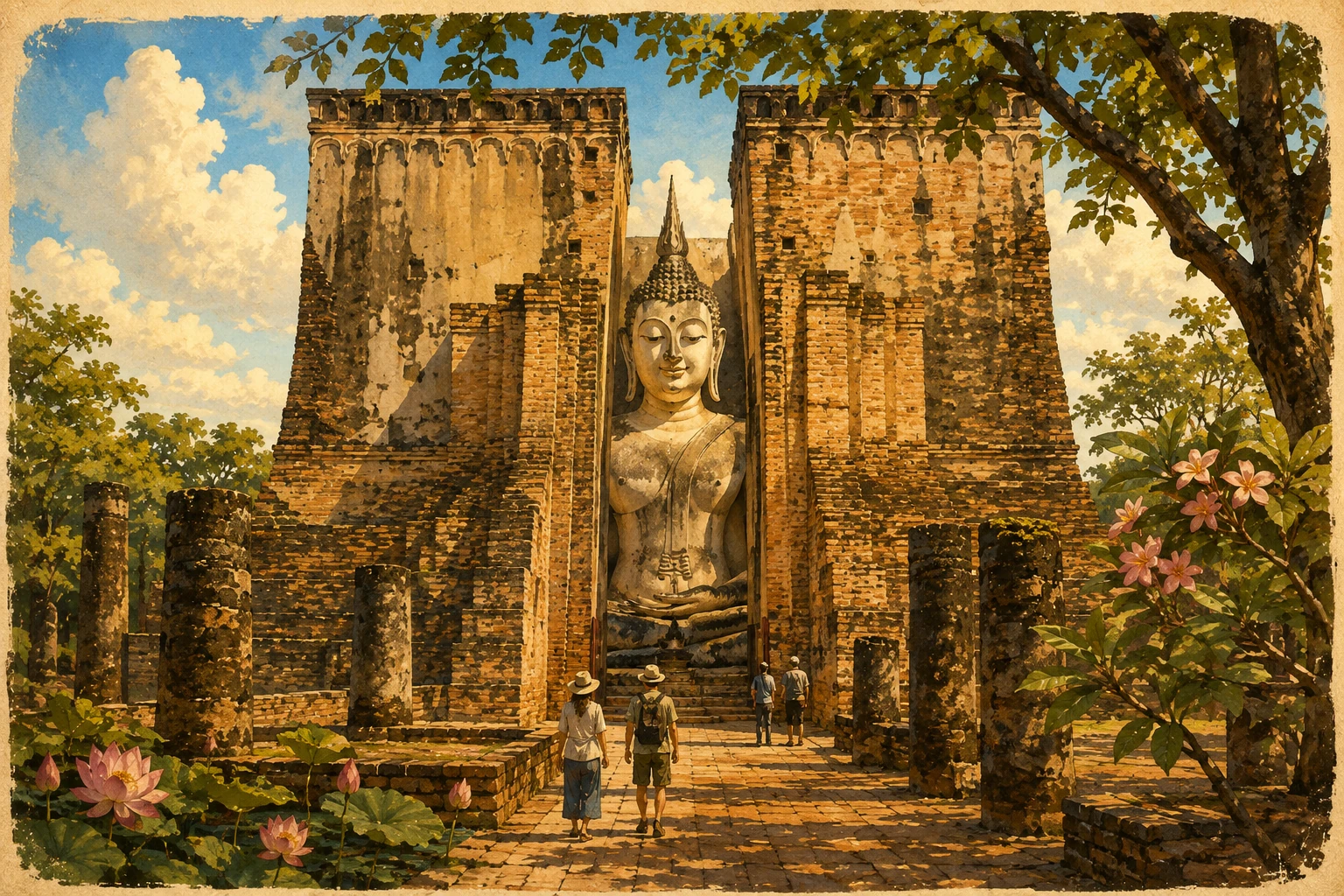
A monumental seated Buddha fills a narrow open-roofed mondop outside the central zone. The enclosed scale and long, elegant fingers make it one of Sukhothai's most memorable sights.
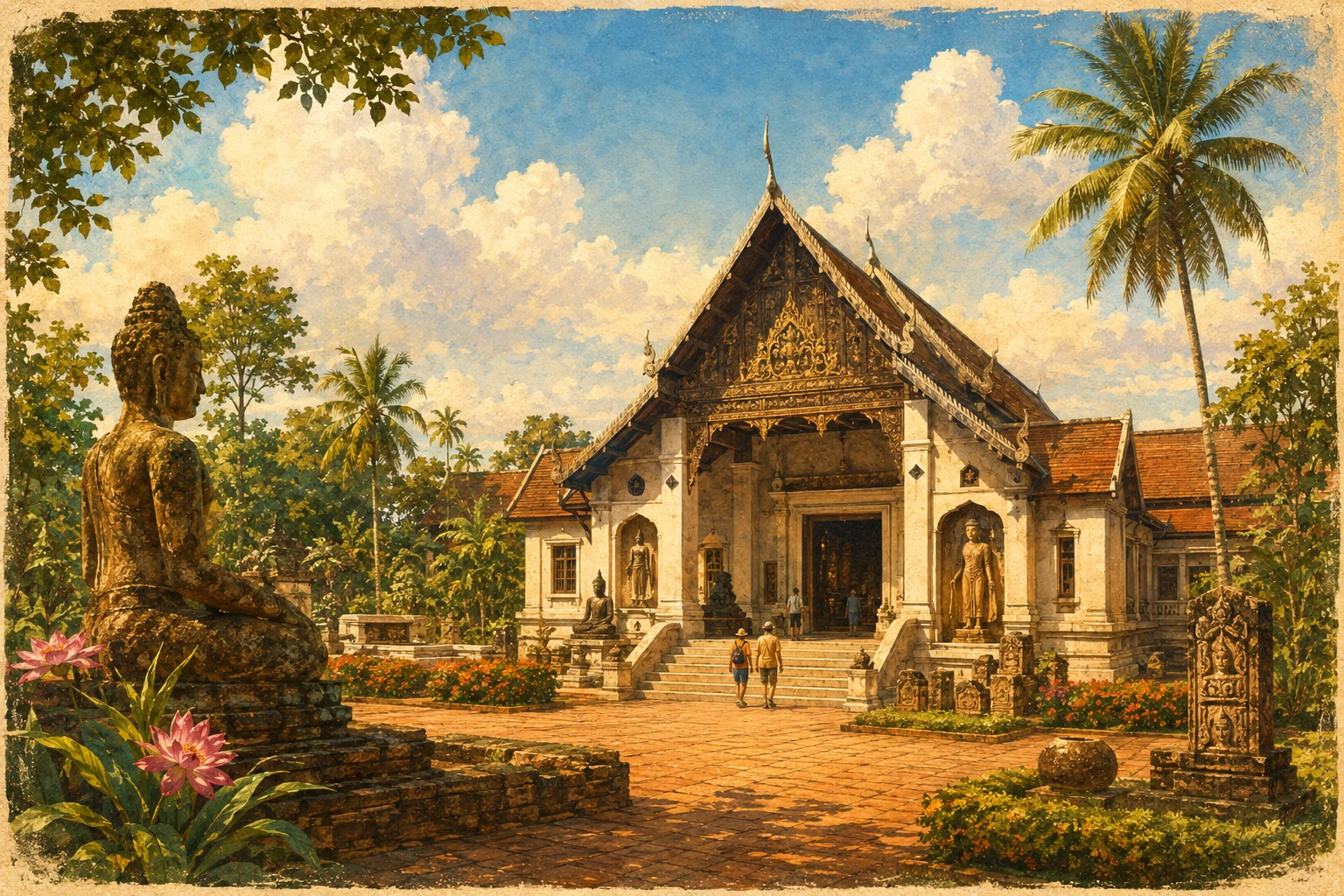
The museum provides essential context for the ruins through sculpture, ceramics, inscriptions, and objects connected to Sukhothai's art, belief, and political history.
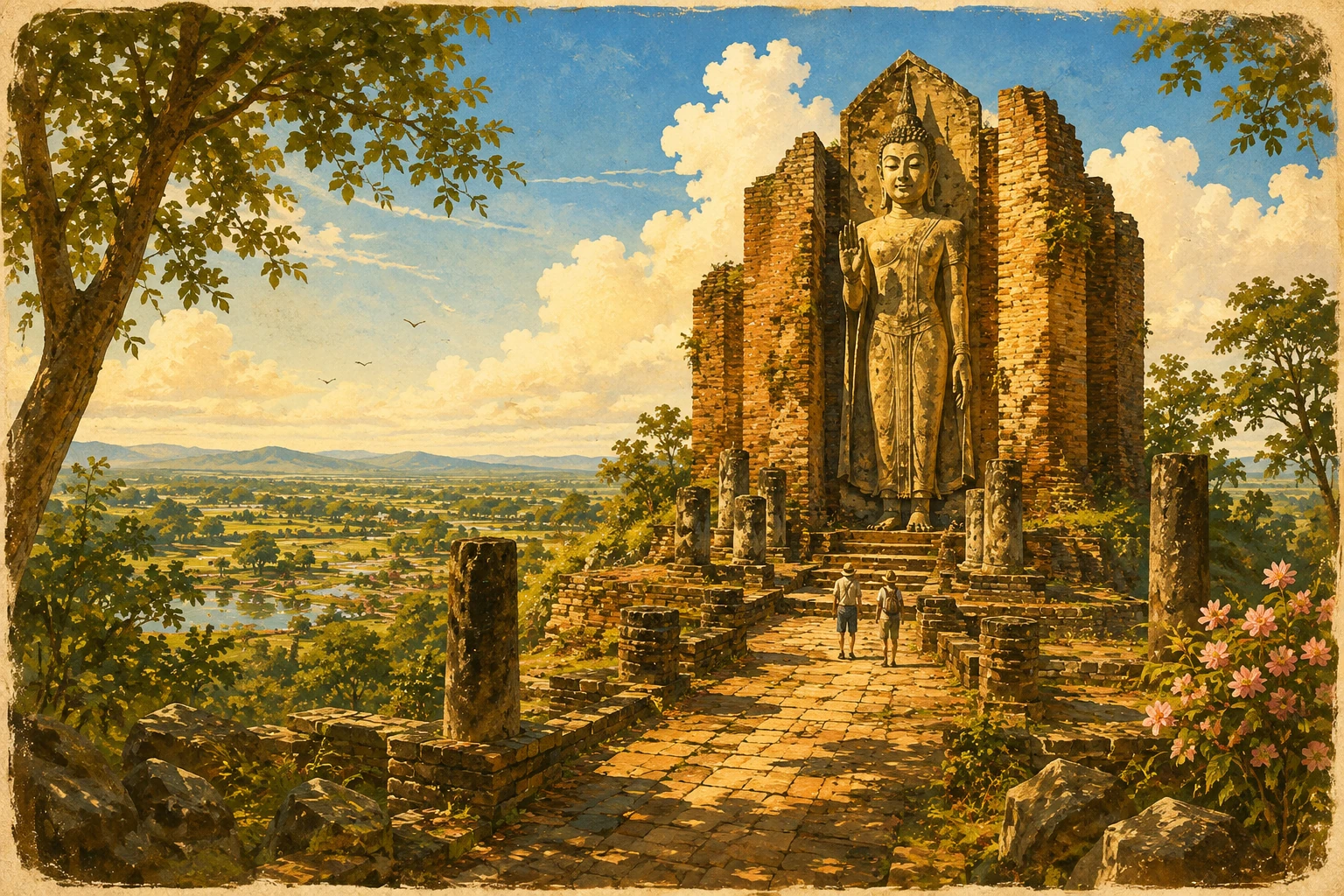
A stone path climbs through the western zone to a tall standing Buddha and a broad view over the old city plain. It feels more remote than the central temples.
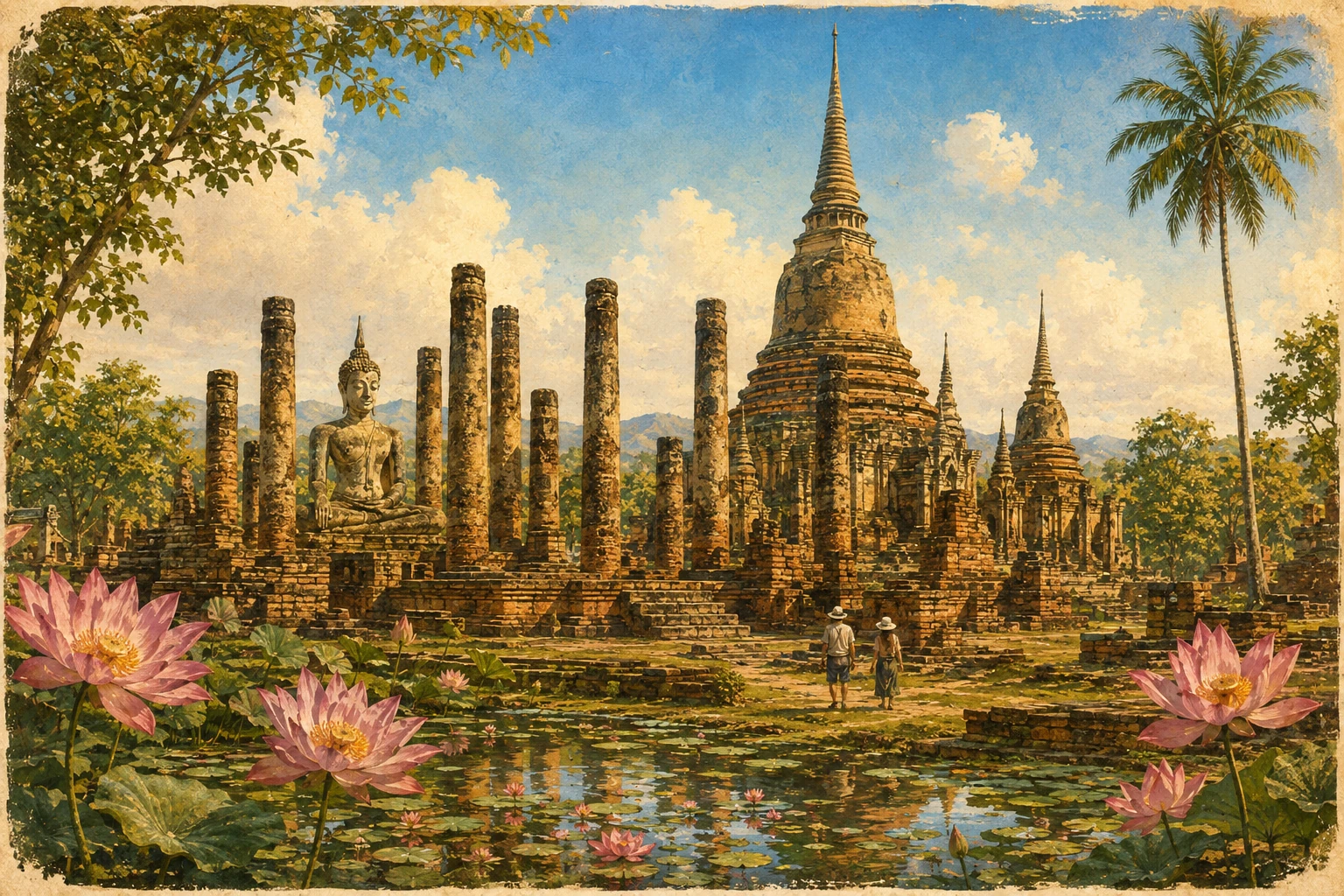
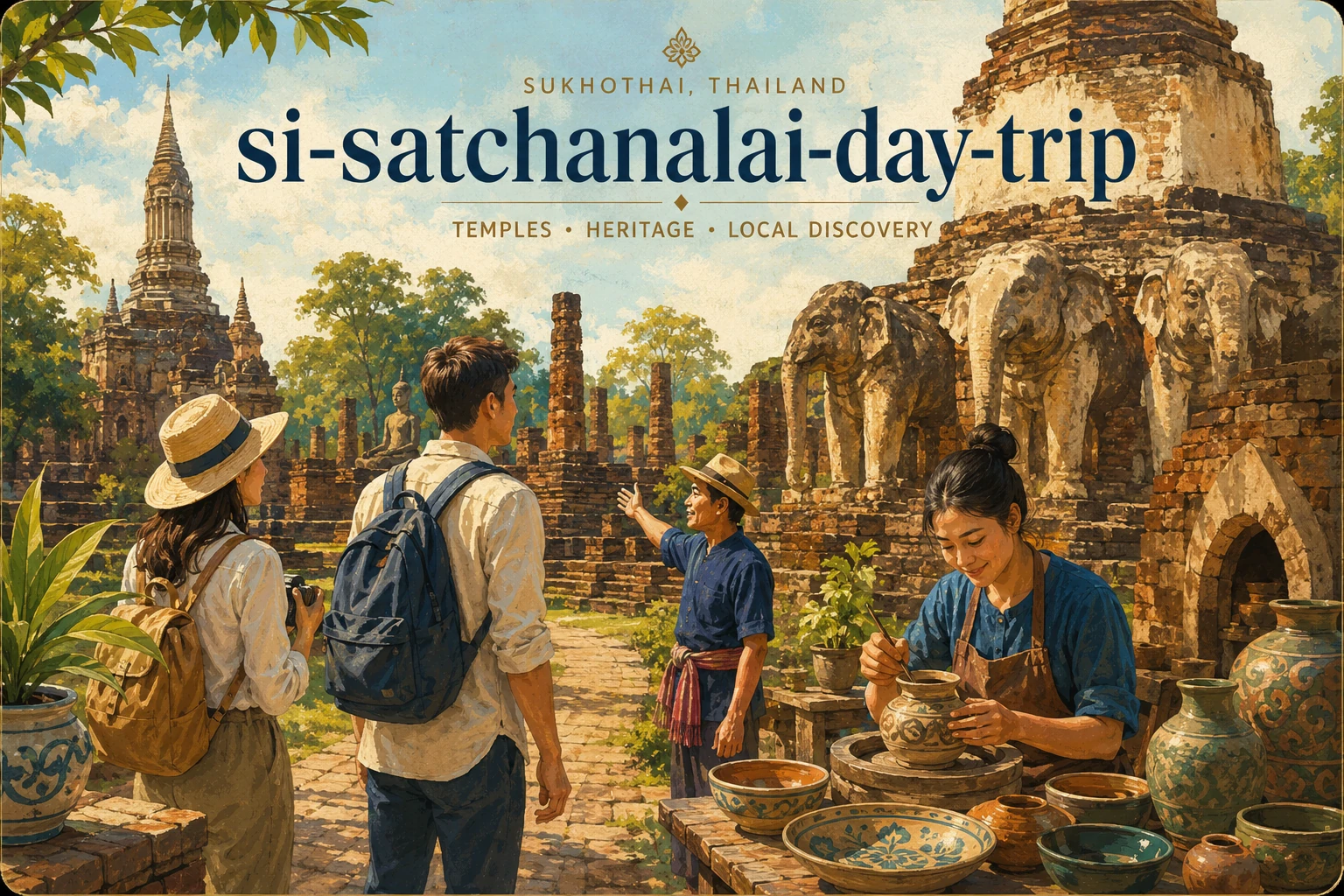
Sukhothai's quieter sister city preserves forested temple ruins, elephant-guarded chedis, and historic kiln sites roughly an hour north of town.
Temple tip: The central, northern, western, and Si Satchanalai zones are not one compact walk; choose the right transport for each.
Four balanced routes for the central ruins, Wat Si Chum, the countryside, and a full Si Satchanalai day.
Ramkhamhaeng Museum → Wat Mahathat → Wat Sa Si → Wat Si Sawai
Best for: First-time visitors
Time: 4–5 hours
Do not miss: Starting before the midday heat
Book classic Sukhothai tour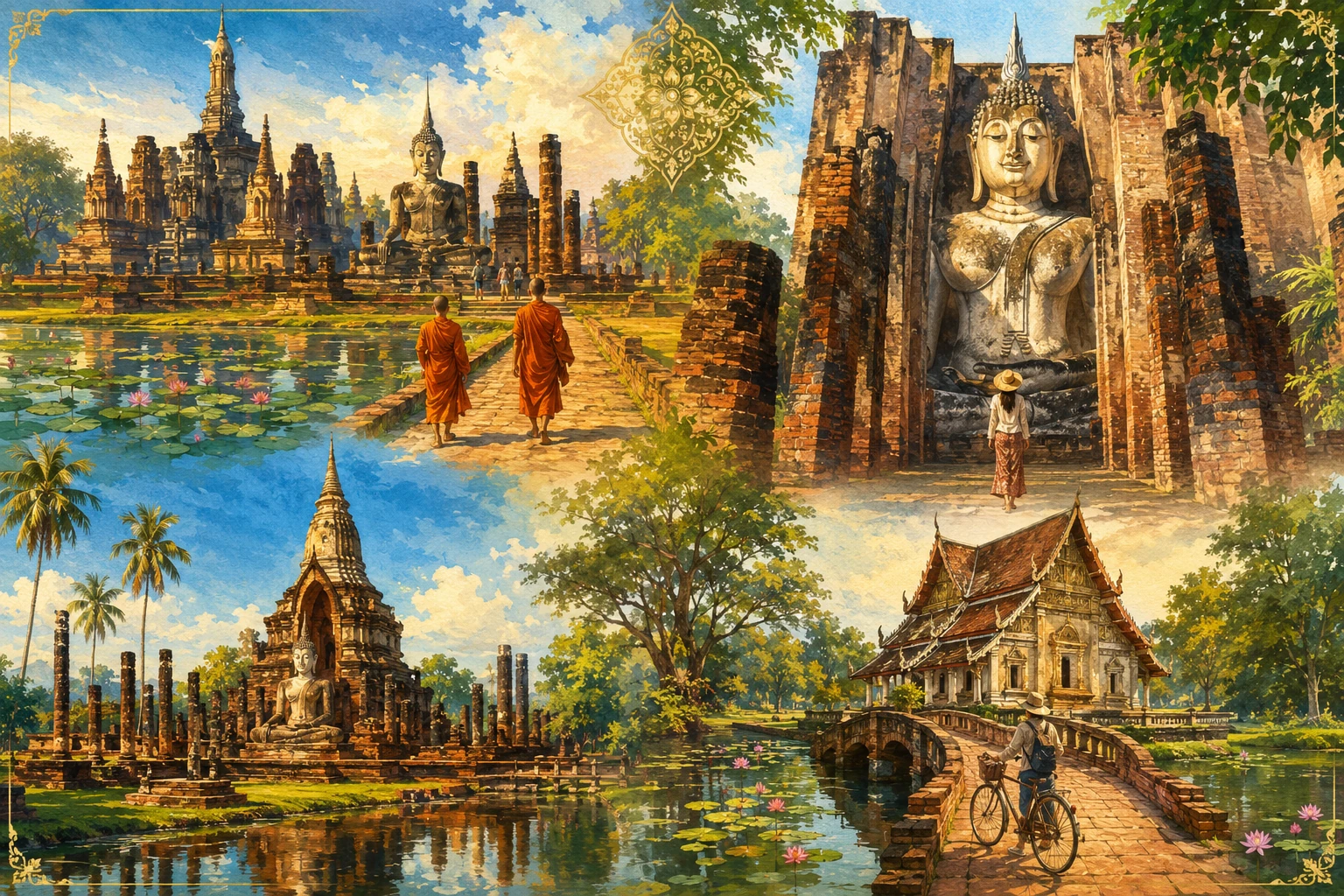
Central zone → northern gate → Wat Phra Phai Luang → Wat Si Chum
Best for: Temple architecture and photography
Time: Half day
Do not miss: Leaving time for the northern zone
Plan UNESCO route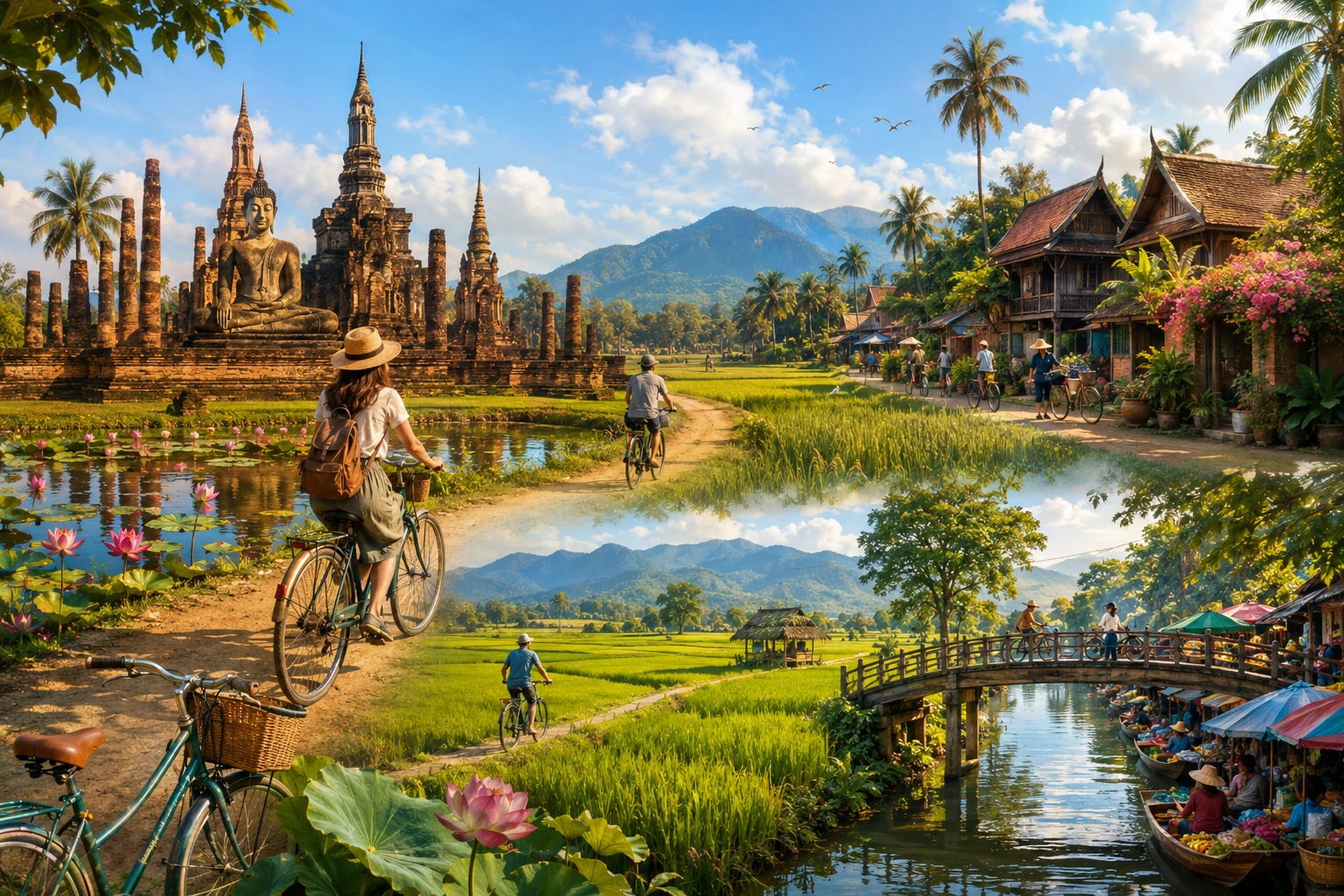
New Sukhothai → canals → local villages → rice fields → old city
Best for: Local life and active travel
Time: Full day
Do not miss: A guided ride on low-traffic lanes
Book countryside cycling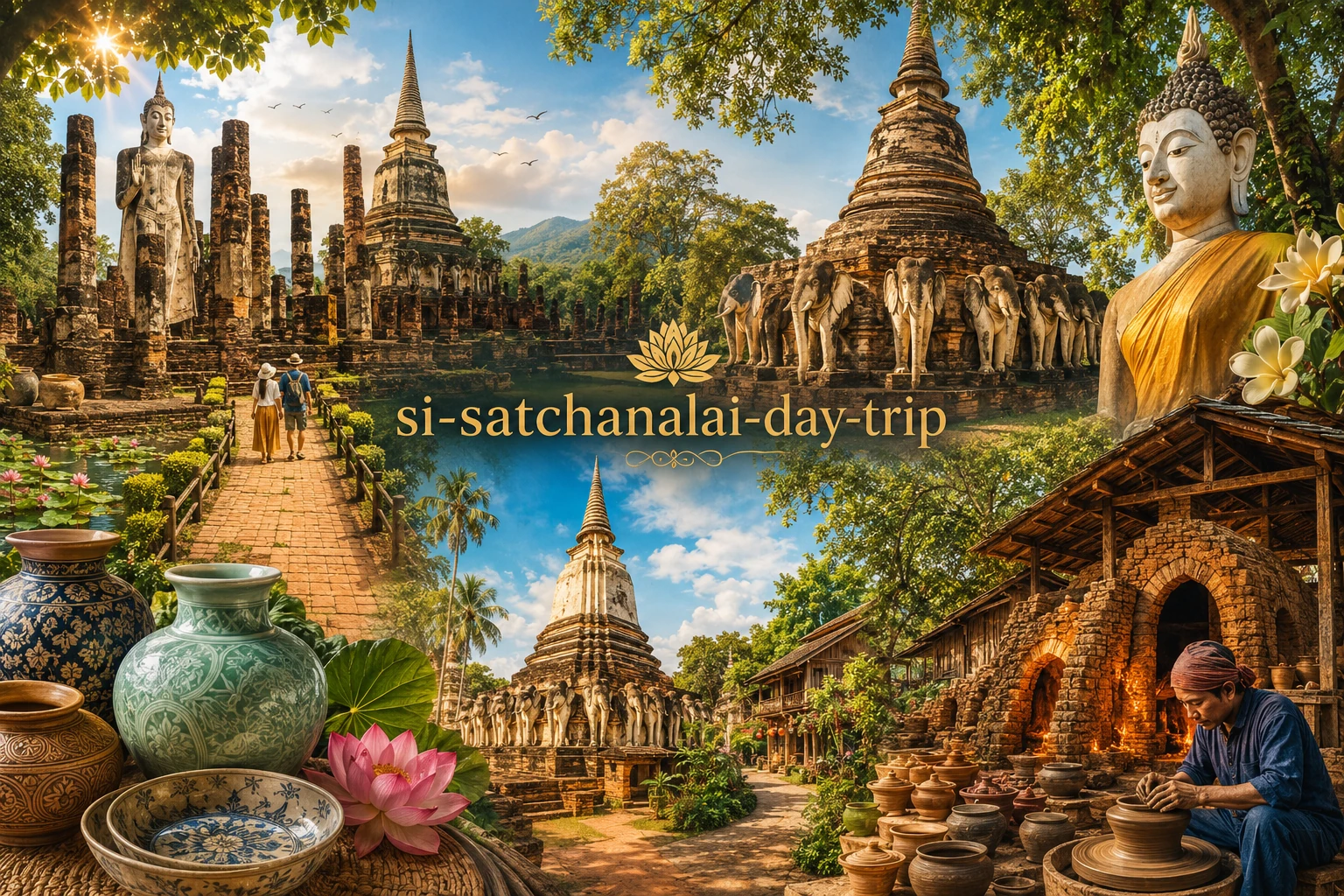
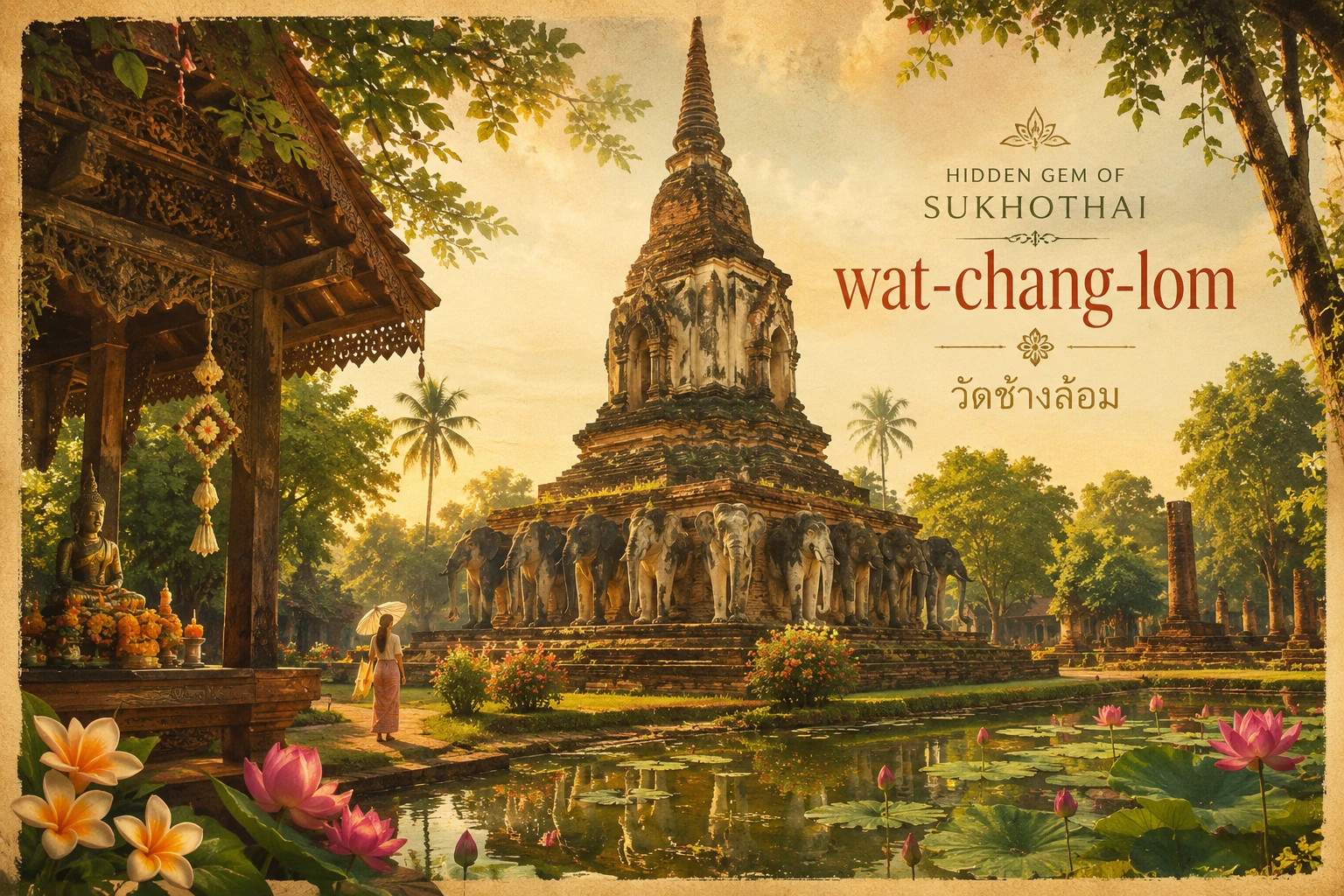
Sukhothai → Si Satchanalai → Wat Chang Lom → kiln site → pottery workshop
Best for: History lovers with an extra day
Time: 6–8 hours
Do not miss: The elephant-ringed chedi at Wat Chang Lom
Book Si Satchanalai day tripCycle between rice fields and ruins, book a private UNESCO introduction, and let Sukhothai's quieter evening landscape slow the trip down.
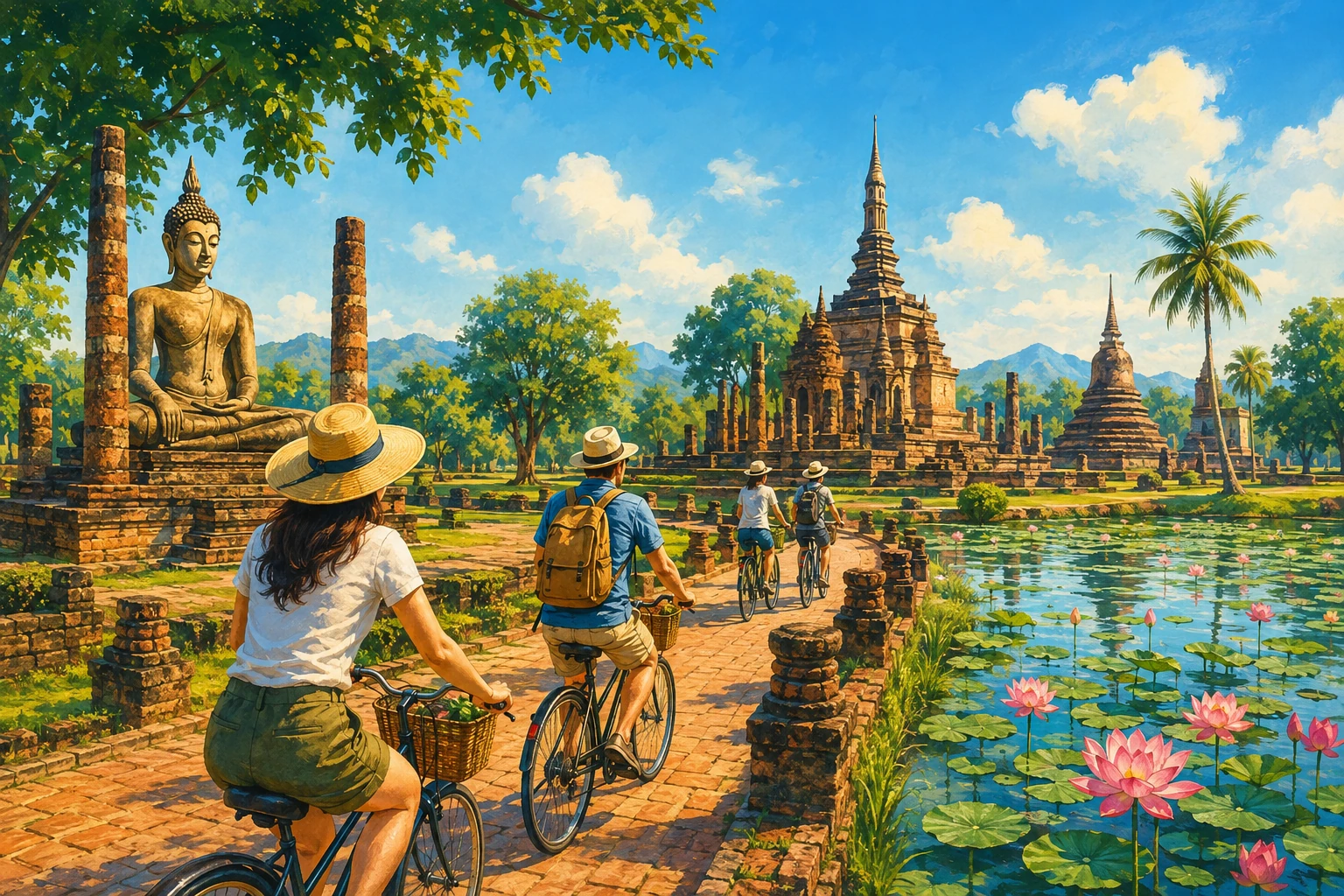
Ride from rural lanes and rice fields into the UNESCO park with a local guide who connects village life, Buddhism, architecture, and the old capital's history.

Follow canals and small communities before reaching the ancient city, with park entry, local explanations, refreshment stops, and lunch built into the day.
Combine Wat Mahathat, Wat Sa Si, Wat Si Sawai, and the Ramkhamhaeng Museum at a flexible pace with transport and historical interpretation.

Use a private guide to shape the visit around the central, northern, or western zones and spend longer at the temples that interest you most.

Cycle irrigation lanes, villages, workshops, and rice fields for a closer view of everyday life beyond the ancient monuments.
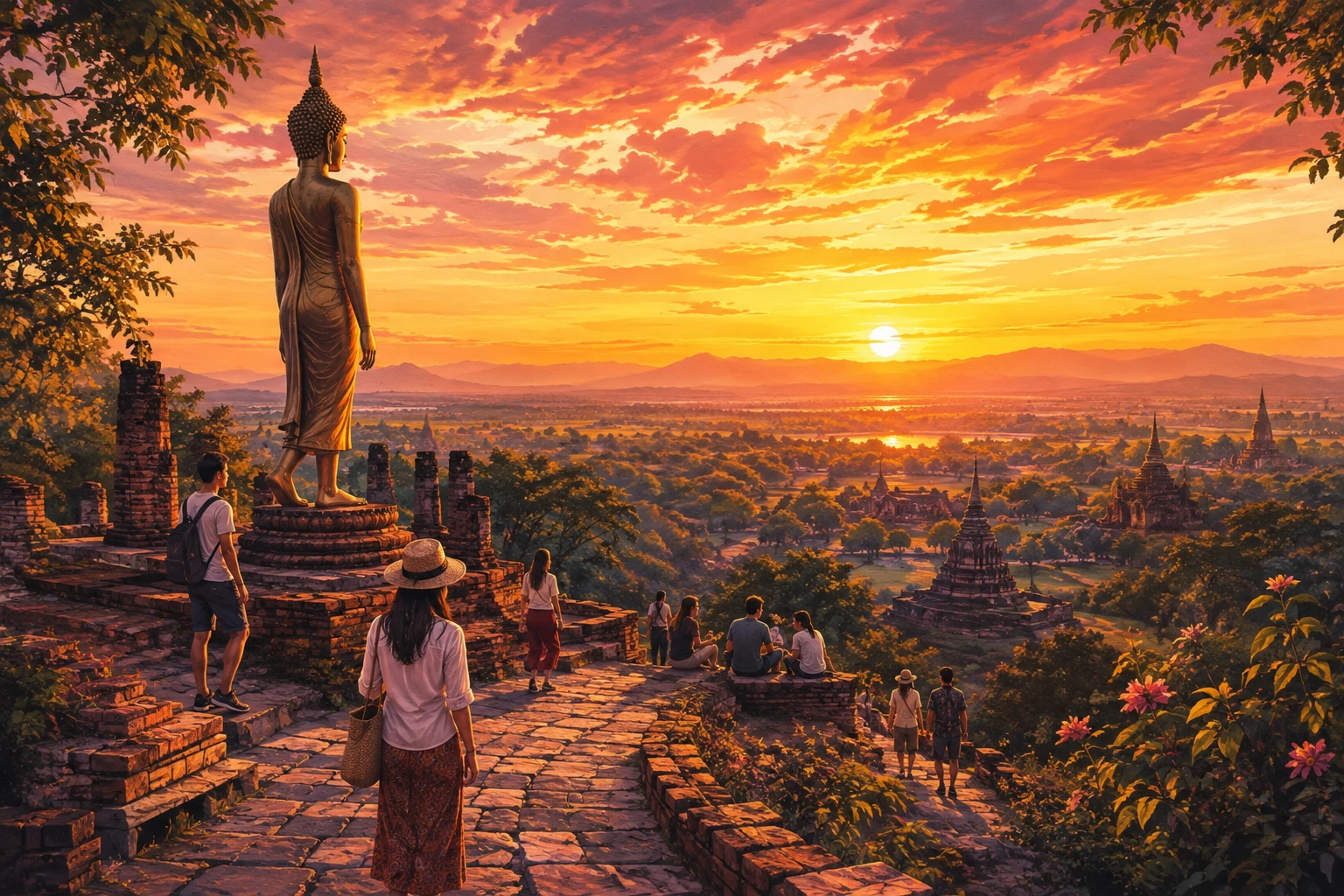
End the day on quiet farm roads and canal paths, learning about local agriculture before stopping in open countryside for the changing evening light.
Local rhythm: Guided cycling is especially useful here because it connects the monuments to village life, farming, and regional history.
Choose a real Sukhothai base based on park access, transport convenience, or a northern overnight near the airport and Si Satchanalai route.
Best for: Temple mornings, bicycle access, quiet evenings, and a first Sukhothai visit
Why stay here: Hotels and guesthouses near the park let you enter early, rest during the hottest hours, and return for golden light
Good to know: Nightlife, shopping, and transport choices are limited compared with New Sukhothai
Find hotels near the historical parkBest for: Bus connections, local restaurants, markets, and better everyday services
Why stay here: The modern town is practical for onward travel and offers more food and evening options
Good to know: The historical park is roughly 12 kilometers away, so plan a songthaew, taxi, or tour
Find New Sukhothai hotelsBest for: Airport access, Si Satchanalai plans, and a quieter regional overnight
Why stay here: This northern base suits travelers arriving by air or continuing toward Si Satchanalai rather than repeating the same road
Good to know: It is not convenient for daily visits to the main Sukhothai Historical Park
Find Sawankhalok staysBase tip: Mueang Kao is best for temple mornings; New Sukhothai is better for buses, food, and everyday services.
Six practical choices for a first Sukhothai trip.
Enough time for the main historical park, countryside or cycling, and one slower museum or outer-zone visit.
Cooler, generally drier weather suits long temple walks and bicycle days; mornings can feel pleasantly fresh.
Choose direct park access, practical bus-town services, or a northern stop for airport and Si Satchanalai plans.
Cycle compact zones, then use local transport or a tour for outer temples and regional day trips.
Secure the limited pieces while leaving temple timing flexible around heat and weather.
Split the sightseeing day instead of forcing every exposed temple into the hottest hours.
Small practical habits that make Sukhothai cooler, calmer, and more rewarding.
Wat Mahathat and nearby temples establish the visual language of Sukhothai before you branch outward.
Tip: Enter at opening time and save the museum for the hotter hours.
The central zone is ideal for cycling, but outer temples and midday heat can make distances feel larger.
Tip: Combine a bike with a songthaew, guide, or tuk-tuk when needed.
Temple zones have long exposed stretches and limited shade between monuments.
Tip: Refill before the western and northern zones.
Many ruins remain religious places as well as archaeological sites.
Tip: Cover shoulders and knees and never climb on sacred structures.
Bike hire, local transport, markets, and small eateries may be easiest with cash.
Tip: Carry small notes separately from your main wallet.
The local noodle style is a genuine regional specialty rather than a generic tourist dish.
Tip: Look for busy, focused shops in New or Old Sukhothai.
Flights and intercity buses are less frequent than on Thailand's main tourist corridors.
Tip: Confirm departure points and leave a time buffer.
The northern park, kilns, and road time do not fit comfortably into a rushed half-day add-on.
Tip: Use a guide or driver if you are not confident with regional transport.
Avoid the heat, distance, transport, and cultural mistakes that weaken a first Sukhothai visit.
The exposed park becomes hotter, flatter in light, and more tiring than necessary.
Instead: Use opening time and late afternoon, with a shaded break between.
Important temples sit outside the central enclosure and require extra distance.
Instead: Choose zones deliberately and arrange suitable transport.
New Sukhothai and the historical park are separate bases roughly 12 kilometers apart.
Instead: Choose convenience or temple access knowingly.
The monuments and Buddha images remain culturally and religiously significant.
Instead: Follow signs, dress modestly, and keep feet away from sacred images.
The drive, ruins, elephant chedi, and pottery history deserve more than a hurried stop.
Instead: Reserve a full day or leave it for another trip.
Regional buses, songthaews, and flights do not run with Bangkok-level frequency.
Instead: Confirm the last practical connection before sightseeing.
A flat route can still be demanding in strong sun and humidity.
Instead: Start early, take water, and choose a guided or shorter ride.
The city's appeal comes from slow light, spatial scale, and the contrast between ruins and countryside.
Instead: Stay at least two nights and allow one unhurried park day.